Author: Bill

  • Note Cards: Naïve Experts and The Power in Asking Stupid Questions

    Note Cards: Naïve Experts and The Power in Asking Stupid Questions

    I had the benefit of spending the entire week with my good friend Bryan Chung recently as he came to Indianapolis for a week-long IFAST “internship” and to take some continuing education that would typically be considered outside his field of expertise. The result of his visit has been a very powerful educational experience for me not only because Bryan is an incredibly intelligent guy, but he provides a fresh perspective on many of the things that I think, believe, and rely on in my interactions with my patients and clients that IFAST. I’m pretty sure he also benefited by being exposed to information that forced him to consider how his actions may also impact the long-term health and capabilities of his patients after what would be considered a successful procedure as a plastic surgeon.

    Bryan Chung MDWe function in the complex domain in dealing with humans, it’s very easy to get locked into patterns of behavior in our interactions. Our perspectives and beliefs are only strengthened when we perform in isolation without an ongoing challenge or a reminder to continually ask ourselves why we do things the way we do and how our outcomes are affected. While we may appear to be successful on a regular basis, without a conflicting or critical perspective it’s easy to lose sight of those aspects of the client interaction that may be beneficial in differing circumstances.

    I think Bryan benefited from his exposure to the environment IFAST as it lent consideration to potential life-altering consequences in regard to the many procedures that he may perform. For example, it’s not uncommon for plastic surgeons to borrow seemingly redundant body parts to fill gaps in damaged soft tissues or to reposition muscles and nerves to restore movement.

    What potentially happens when you remove a sternum?

    How does repositioning a pectoral or lat muscle alter movement?

    What compensations will arise if I disconnect an external oblique?

    Did you know they can make a jaw out of fibula?!

    While these procedures are necessary, there are many unseen consequences from a purely mechanical and coordinative perspective that may be ignored when the initial goal is to merely maintain and restore foundational health.

    From my perspective, Bryan’s visit has given me the opportunity to spend time with someone who is unafraid to ask stupid questions. Now, of course, the reality is that Bryan doesn’t ask stupid questions. I don’t think he even has the capacity to do such a thing. But what he can do is ask a question from a naïve perspective. Bryan is truly an expert in what he does. He views all things based on what he has learned through his own studies and his own experiences. He problem solves based on what he already knows. This provides him the ability to see things in a way that I cannot and then to ask a question that I can’t even formulate.

    [Note:  this is another reason why we all need to mentor Padawans]

    The result is not only novelty of thought but potentially an entirely innovative solution to a common problem or an alteration of my beliefs. Remember that when we’re functioning in the complex domain where the human system lies, it is not uncommon to have multiple solutions for the same problem. This is why it is so important for professionals in the same field (and outside of our fields) to be able to discuss our particular viewpoints without personal attacks or turf wars. We can all be correct depending on circumstances without anyone being wrong. Get comfortable with that.


  • Self-Regulation Failure:  Impact on Health

    Self-Regulation Failure: Impact on Health

    Through the use of daily rituals, increased planning, and execution of daily behaviors, I’ve made some pretty interesting changes in my ability to self-regulate.  My health markers have improved, my body fat has been in the single digits for about a year, and my personal productivity is at an all-time high.

    I thought it would be interesting to see what it looks like when I fail to keep on schedule and allow my behaviors to deviate from my typical regularity.

    A quick review…

    I’ve been keeping things simple by making small changes in behavior over time.  Lock one in and then add the next and the next and so on.  For example:

    Consistent bed times and wake times (including monitoring via OURA ring)

    Management of intensive stressors (two intensive training sessions per week, two moderate to easy, light daily movement activities)

    Blood sugar management via consistent eating plan with avoidance overeating and minimal alcohol

    Inflammation management via consistent eating plan and supplementation (curcumin, EPA/DHA, D3, and a couple other things)

    Brain health and performance supplementation (Cerevan and Neuro Coffee)

    A regular study, reading, and writing schedule (to promote learning and creativity)

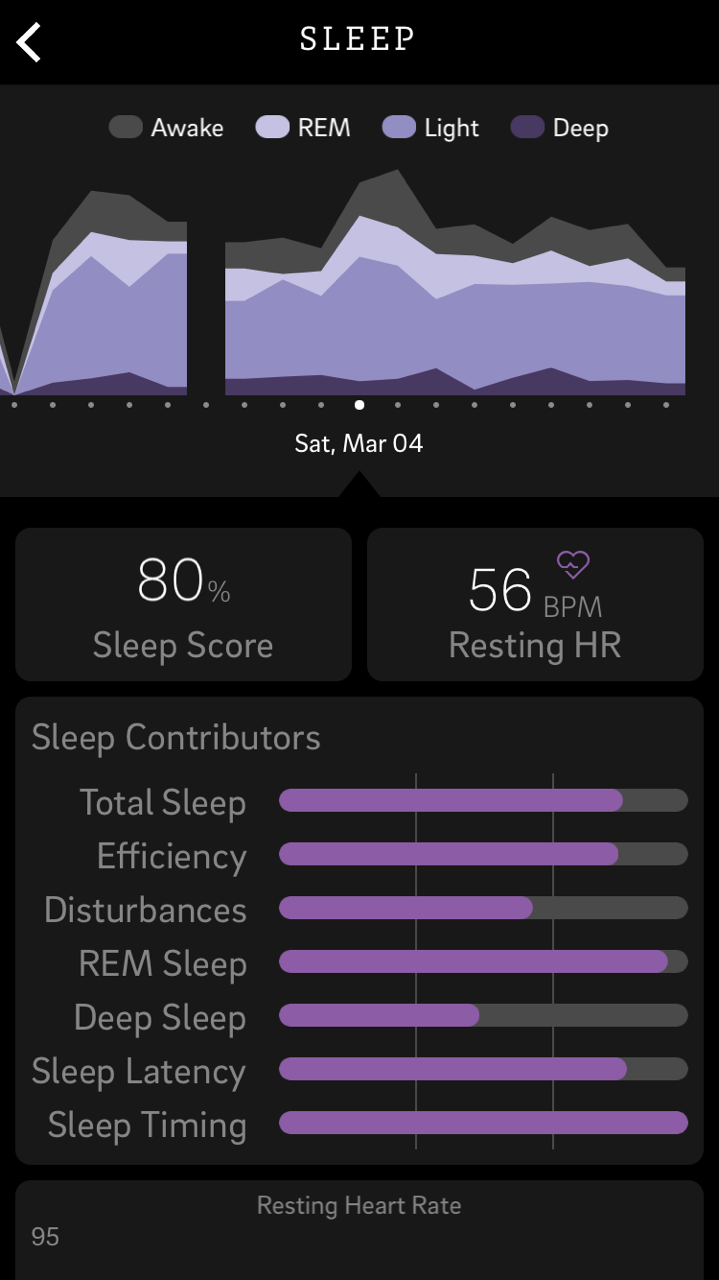
    My monitoring and adjustment of behaviors has allowed me to hit personal records for deep sleep, REM sleep, lean body mass at my current body composition (I’m heavier but waist size is unchanged), and based on my to-do list I’ve been quite productive.  Here’s an example of the results.

    Self reg success

    This weekend was an IFAST Family reunion of sorts.  Whenever we sponsor a continuing education course, the change in schedule, eating, and social activity tends to gets a bit off course.

    Here’s what happened…

    Wake time is still perfect but sleep time was off.  When the family is in town, I gladly sacrifice sleep to spend as much time as I can with everyone.  The IFAST Family is huge now and there’s so many “kids” to catch up with.

    An intensive day of learning demand a great deal of effort and energy.  This adds a bit of cognitive stress that I need to absorb.

    I fell off the wagon (well, more like DOVE off the wagon) in regard to blood sugar management.  Eating plan was on point all day but the evening’s eating included pizza, a couple of margaritas (ROCKS, no salt!), some red velvet cake, some more red velvet cake, and some red velvet cake (not a typo).

    With getting to bed late and the time change, I knew my markers would change when I couldn’t lower my resting heart rate as I was falling asleep.

    Here’s the result:

    self reg fail

    Here are my thoughts in regard to my response to this weekend’s altered behaviors.

    My efforts over the last year will result in a minimal impact on overall health. I’ll absorb these stressors easily.  In about two days, I’ll be back to normal.

    However, my thoughts go to looking at the concepts of self-regulation and consistency.

    What if my behaviors this weekend were the daily or weekly norm?

    How quickly would my health degenerate?

    How difficult would it be to manage my weight?

    Would I be able to control my attitude and emotions?

    How would all this add to my perceived stressors?

    How would this impact my overall happiness and satisfaction with life?

    I’m not beating myself up for my dive from the wagon of self-regulation.  I can take it.  I’m prepared for it.  I’m already back on schedule.

    Food for thought.

  • Padawan Lesson:  Systemic Interaction

    Padawan Lesson: Systemic Interaction

    A healthy human system is not all that fragile. Resilience and robustness are byproducts of complexity. It is only when a system cannot cope with environmental and task demands that the system simplifies itself and appears to be fragile.

    A narrowed example to explain a broader perspective…

    According to Zatsiorsky,  we have 230 joints controlled by 630 muscles resulting in 244 degrees of freedom (www.amazon.com/Biomechanics-Skeletal-Muscles-Vladimir-Zatsiorsky/dp/0736080201/ref=sr_1_sc_1open_in_new).  While the structural constraints represent limitations on our movement capacity, it also represents tremendous redundancy in our movement system.  As long as we remain within the limits of our capacity and respect the normal constraints of the human movement system, we tend to move through the world successfully with seemingly no internal awareness or concerns.

    We have degeneracy built throughout our system meaning that we have multiple structures that while different can perform similar tasks resulting in successful outcomes.  Consider the concepts of muscle chains or coordinative structures. These are structures that work together to produce a specific outcome.

    To focus on the muscles, if we perform some sort of repetitive task we know the sequence of activity and timing within the muscles can vary from repetition to repetition even though the end result may appear perfectly consistent to the naked eye. If any single muscle in the coordinative structure should experience fatigue, the remaining muscles are capable of picking up the slack and maintaining the intended level performance. It is only when capacity is reduced or exceeded, such as the case of fatigue or perhaps some other centrally-driven emergent behavior, the system is no longer capable of reciprocal compensation (the ability to shift demands to different components of a muscle synergy for example).

    At this point, I think the system would move into a more defensive strategy to protect itself against the now threatening demands of the task and environment. As I’ve mentioned before I think this is where we’ll see a simplification or a reduction of the complexity of the system, in this case the reduction of the degrees of freedom of the movement system. Many movement professionals would see this as dysfunctional movement at this point. Keep in mind that my opinion is that humans are not machines, and therefore, behaviors are purposeful based on perceptions whether or not they are real, accurate, or adaptive.

    This isn’t limited to just the movement system as I think all aspects of an integrated system would respond in a self-organizing manner. Consider outputs of the central nervous system such as anxiety (increase energy output and vigilance in response to threat), depression or fatigue (reduction in energy output and conservation in response to threat), and pain (salience detection in response to threat). I see these as defenses to reduce the degrees of freedom or the variability of the possible behaviors (in this case psychological) generated from the central nervous system.

    Scope of practice limits how we will approach restoration of variability, resiliency, redundancy, and capacity to the system. As movement professionals, we obviously observe the human system via its structural constraints (biomechanics) with consideration to the adaptability of functional constraints (neuro, psych, endocrine, immune, etc.), but we must also concern ourselves with how we interact verbally and nonverbally.  I’m not recommending that movement professionals try to turn themselves into amateur psychologists or supersede the recommendations of a medical doctor. I’m merely stating that we need to consider that the entire system responds in similar ways by simplifying, conserving, and redirecting resources to survive.

    How you interact with the system on all levels matters and determines a successful outcome.


  • From my notebook:  Building Your Model with Chessboards and Coffee Cups

    From my notebook: Building Your Model with Chessboards and Coffee Cups

    “The master has failed more times than the beginner has even tried.”
    -Stephen McCranie

    I’ve written a bit about models before. I think that having an evolving model of complex systems (humans) is imperative. We certainly have one whether we consciously intend to or not, but intention provides a much stronger, resilient, and adaptive model. In turn, the frequency of success will increase.

    Scope of practice, experience, mentors, understanding, etc. will determine how you structure and apply your model. Ongoing study, application, and evidence determine how your models will evolve.

    Observation and exposures help build the model. One of the better ways to build a model for each new Padawan evolved from an ambitious student seeking the ability to see more at a glance. His question to me was “how do you do that?” His perception was that I had skipped a few steps in coming to my conclusions in determining the appropriate intervention for a particular client.

    My response was that I saw it as soon as they walked in the door. (Everything is an assessment!) I proceeded to explain what I saw and how each step in the evaluation was either confirmation or refutation of my suspicions. I don’t express this idea as if I can do something special. It is merely that my model is more developed than the typical student’s. Thankfully, it has nothing to do with intelligence either. It’s about exposures, reps, successes, and failures. It’s about paying attention. Modeling demands constant testing and retesting.

    Each failure is an opportunity to eliminate a possibility and then ask the next question. Edison failed 1,000 times trying to invent the light bulb. Each failure was actually an opportunity to recognize the fact that he found another way NOT to invent a light bulb.

    Question: How can we accelerate building a model safely without putting a patient/client/athlete at risk or wasting time?

    Enter the concept of chessboards.

    We assess and document the initial measures on the client’s arrival. The end result produces a grid that becomes a representation of the client. No single test is more important or representative of anything meaningful. It requires an examination of the relationships among the tests as a whole. Otherwise, it’s too easy to fall into the trap of reductionism and structuralism. The grid is your chessboard.

    21DF484E-BE99-4DEC-BC97-2CE2C4526A0B

    The analogy is from the movie searching for Bobby Fischer. There’s a great scene where Josh Waitzkin’s teacher dramatically clears the chessboard and challenges him to “see” the pieces on the chessboard and make the next move. Just like Josh, the Padawan has to “see” the current chess pieces (the representation of the client) and give it a meaning. But how do you know what is important?

    Enter the concept of coffee cups.

    In his book On Intelligence, Jeff Hawkins discusses how prediction works in the brain. He explains how the brain is constantly making predictions from memories about everything in your environment. If our prediction is accurate, then we tend to behave as if we don’t notice our surroundings as much. However, when something is novel or doesn’t fit our prediction, it draws our attention.  His example was of sitting in his own office recognizing his surroundings with all of his predictions being true. He typically wouldn’t particularly notice anything special. However, if someone places a blue coffee cup in the room, it will draw his attention because it didn’t fit the current prediction model of what should be in the room.

    So, I ask the Padawan as he looks at the representation of the client, “Where are the coffee cups?”

    What stands out? What is meaningful?

    How can you impact the current presentation and where do you start? Can anything on the chessboard address multiple concerns? If so, what do you expect to happen next? How will that potentially affect the client’s complex movements? What is your next decision based on your predicted outcome? What if your prediction is wrong?

    [Note: complex movements are comparators not decision-makers]

    Not only does this process improve the Padawan’s current model, but it increases his exposures without the anxieties of having to be correct or with the fears that you may put a patient at risk or simply make a wrong decision. Pattern recognition improves. Clinical decision-making is refined. If you want to get technical, we could say that we’ve taken advantage of neuroplasticity and made new connections.

    It is these connections after all that created our model in the first place.

    Much like an Air Force pilot spending hours in the simulator to get comfortable with exposure to potential failures and learn appropriate actions, the Padawan has an opportunity to perform safe-to-fail experiments without putting the patients at risk. These experiments are essential in working with complex systems (humans) as cause and effect can only be identified in hindsight, thus the importance of a strong, ever-evolving model.

    What does your chessboard look like and what are your coffee cups?


  • From my Notebook:  How Long Will It Take to Recover From [Insert Injury Here]?

    From my Notebook: How Long Will It Take to Recover From [Insert Injury Here]?

    This is a really quick one inspired by an IFAST client that recently suffered a sprained ankle.  She’s got a pretty solid grade 2 sprain based current signs and symptoms.  She came in early this week with a pretty solid intolerance to weight bearing.  Ty was able to modify her training to keep it productive and protective of her injury due to the severity.

    Two days later, the same client comes in wearing the standard protective boot issued by her ortho doc.  She proceeds to knock out her full workout including some velocity-based squatting.  I caught her at the front door on her way out to follow up on how she was doing.

    “It’s just uncomfortable, no pain really.”

    Without question, her recovery will be quicker than most who’ve suffered a similar injury. Her perceptions will allow her to overcome the self-limiting beliefs that stagnate recovery and prolong a return to play for many athletes.

    I’ll take 100 more athletes like this one please!

    This prompted a quick mind map that you’re free to steal if you ever need to explain the complexity of return to play to a parent or coach.  It’s certainly not complete, but it may provide some guidance and demonstrate the complexity the question “how long will it take to recover from [insert injury here]?” and why one athlete comes back and others take much longer or never make it back.

    It’s not as simple as healing time = ready to play.

    Injury recovery