Author: Bill

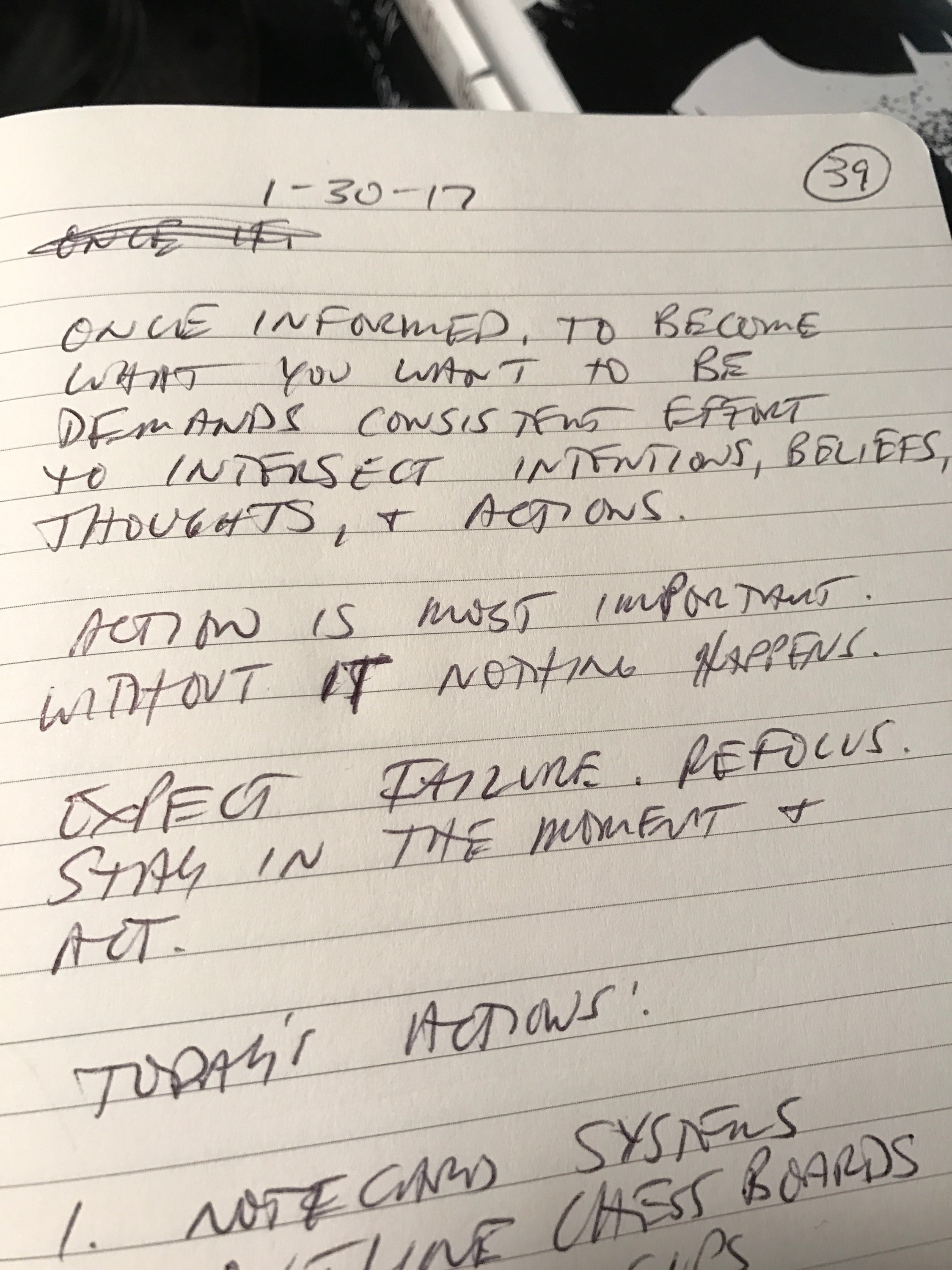
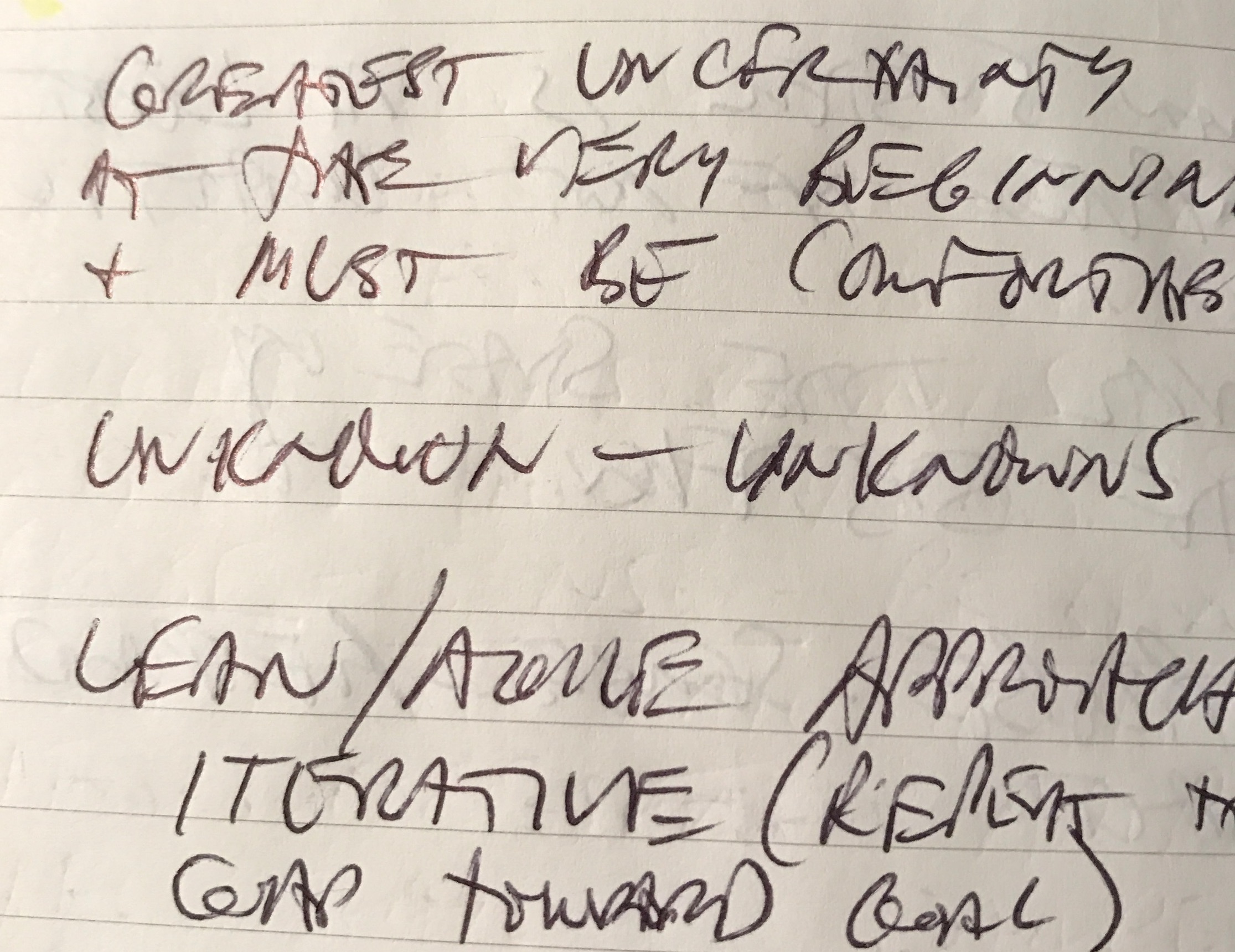
  • From My Notebook:  Comfort and Progress in the Realm of Uncertainty

    From My Notebook: Comfort and Progress in the Realm of Uncertainty

    Padawan:  “How do you know what to do?”
    Bill:  “I don’t yet.”
    Padawan:  “Doesn’t that make you uncomfortable?”
    Bill:  “Not anymore.”

    The Human System is complicated (structural constraints e.g., biomechanics), complex (functional constraints e.g., autonomic response), and at times chaotic (think crisis mode).  This often results in a great deal of uncertainty in regard to how we may best choose to influence the system via training or rehab to achieve the desired goal.

    Consider the following as a short, incomplete list of possible uncertainties:
    How sensory inputs are processed
    Internal biology
    State of tissues
    Life experience
    Emotional state
    Understanding of self and environmental influences
    Memories
    Exposure to stressors

    To make progress we need some level of understanding of how the system (human) responds to any measure of ongoing external and internal inputs or outputs.

    The point of greatest uncertainty is the beginning of an interaction whether it be a client, patient, or athlete in question.  At this point we know little to nothing about this specific system although we do tend to make some assumptions based on our biases and the model we have formulated based on our own experience and acquired knowledge (think foundational sciences).

    It is at this point where we must observe the system for what and where it is at the moment always with the understanding that as each moment passes the system is changing.  In physical medicine, unless we have some way to measure the internal environment (i.e., HRV, EEG, Galvanic Skin Response), we observe primarily based on the structural constraints and a minimal amount of functional constraints (estimates of energy production during exercise) as they are relatively consistent and movement-based behaviors.  Certainly, our own brains provide an element of empathy that may extract some information as well, but if we’re hoping to determine the adaptability of the system, the motor system provides us our best representation of the system as a whole.

    Our observation leads us toward what we deem the appropriate intervention.  Again, we must welcome our biases and limited understanding of the system.  Treatment and training decisions are never based on absolute understanding but rather coherence.

    Test > Intervention > Retest > New state > Intervention > Retest > New State and so on.

    Each iteration closes the gap between the current, ever-changing state or level of performance and the end goal whether it be to broaden variability in the rehab setting or narrow it to enhance sport performance.

    The environment of unknown-unknowns (complexity) demands that our strategy remain adaptable and flexible.  Remember that complex adaptive systems may react to a particular input strongly, weakly, or not at all.  The same input may result in a different response when delivered a second time (thus the keyword adaptive) or produce an entirely different response when applied to unique system (a different human).  Stimulus (locus or magnitude) does not guarantee a response (locus or magnitude), and one size does not fit all.

    Peer-reviewed research possibly and science certainly assists in the decision-making process, but the reality is that the subject (client, patient, or athlete) is their own within-subjects research project because of their idiosyncratic functional constraints.  The evidence lies in the outcome and provides answers in hindsight.

    Theory + Practice = Success

    But this is not to imply that we remotely even know what will happen or how the system will respond.  We don’t know what element of the system is too rigid (too stable) or too variable (too unstable).

    So how then do we progress?

    Consider that rigidity (reduced variability) limits system adaptability and undesired instability represents compensatory strategy.  The first goal then is to provide an avenue to allow the system to self-organize by restoring sufficient system variability to the limited subsystems within the entire system.

    In protective states that include pain, depression, or anxiety, as well as limited motor capabilities, consider focusing on a developing a greater degree of variability than we would in a performance training environment.  Too much variability inserted into a performance state may actually reduce the ability to generate the desired output (think run fast and jump high).

    As an example, in the rehab environment, movement is our representation of variability of the system.  It is the measurable based on convenience and scope of practice.  The hope is that within the interpretation of our measurable also lies the representation of the rigid limiting subsystem (sometimes it does not).  Our goal then is to maximize movement variability in an attempt to maximize system variability, and in this case, adaptability.  This strategy is necessitated by the fact that the true limiting subsystem may be an unknown.  Providing a maximum level of adaptability across systems (if movement is representative of such) attempts to ensure that variability is restored to the limiting, previously rigid subsystem.

    Specialized performance often benefits from limited variability of subsystems.  For instance, too much aerobic development may interrupt anaerobic adaptations necessary to maximize the rate of energy output required for top sprinting performance.  “Normal” hip rotation may represent the need to increase neural demand to actively stabilize the hip joint thus taking away valuable neural drive away from propelling the sprint in a straight line down the track.  However, if this same sprinter gives up adaptive potential to perform but suffers an injury as a result, it may necessitate increasing aerobic adaptations and restoring movement variability (possibly representative of increased system variability) to allow appropriate healing and restoration to occur.  Once resolved, the resumption of training will inherently narrow adaptive potential again (SAID principle), but with the benefits of hindsight and monitoring, it is the hope that any further risk of injury is mitigated.

    Bill:  “Why is it okay not to know?”
    Padawan:  “Because sometimes we do not exist in absolutes and the system is continually adapting.”
    Bill:  “If it’s continually adapting, how to you know what to do?”
    Padawan:  “We make logical assumptions based on foundational sciences derived from our clinical tests to at best make reasonable practical applications.”

    Special thanks to Adam Loiacono in the creation of this blog.


  • Note Cards:  Hierarchies and Why Breathing Wins

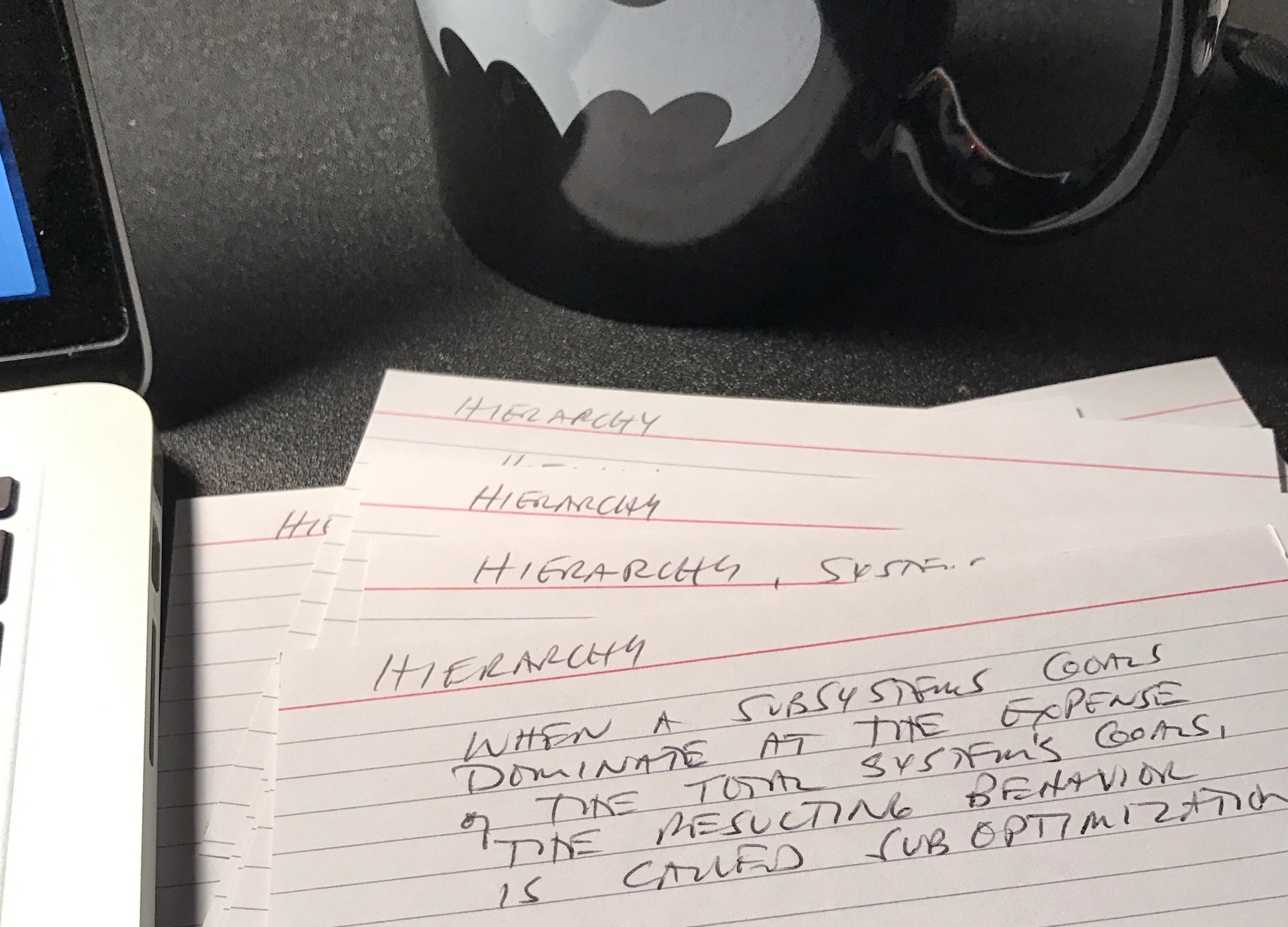
    Note Cards: Hierarchies and Why Breathing Wins

    Humans are not machines.  We are complex adaptable systems.  When challenged or perturbed (think physical training), we have the ability to recover, restore, and repair ourselves.  This capacity to rebuild our own structure and even increase our complexity (increase adaptability) or specificity (idealize physiology for a specific environment) via hyperplasia of organelles (increase mitochondria), hypertrophy (increase muscle mass or organ size), or alter motor (movement) or cognitive (learning) potential is referred to as self-organization.

    A naturally occurring by-product of self-organization is the development of subsystems within the system structured in hierarchies.  Hierarchies provide the system with stability (resistance to perturbation) and resilience (recovery from perturbation).  Each self-organizing subsystem is specialized to fulfill specific needs of the system in coordination with the total system properties and goal (task completion or coping with an environment).

    Consider a number of the subsystems that we tend to identify in the human body:
    Circulatory System
    Digestive System
    Endocrine System
    Immune System
    Lymphatic System
    Nervous System
    Musculoskeletal System
    Reproductive System
    Respiratory System
    Urinary System
    Integumentary System (skin)

    Each of these subsystems is a system in its own right and can be broken down further into their components and further to the cellular level (also a system).  This perspective is the converse of how the hierarchy evolves – from the lowest level upward.  Cells make up tissues, tissues make up organs, and organs make up components of the human system.

    The hierarchical structure of our subsystems provides an element of simplification of our incredibly complex human system.  Systems farther up the hierarchy serve the lower subsystems.  For instance, every cell benefits from the oxygen provided by the respiratory system as delivered by the circulatory system. As long as these systems remain self-organizing, then the degree of required centralized control (think CNS) is minimized and focus is maintained on the primary goal of the system depending on the environment and task performed. If the CNS were responsible for controlling the function of every organ system and every cell all at once, the entire system would eventually fail because of the extreme demands.

    However, any system dominance may lead to failure in the hierarchy resulting in suboptimization of the system and inability to cope with or adapt to the environment.

    This brings us to breathing.

    If I had to establish any one system at the top of hierarchy, respiration would consistently be there.  Your individualization, the environment, and the required task will certainly influence the idiosyncratic nature of how your personal system hierarchy is organized (it’s changeable based on demands and learning), but breathing will always be priority.

    Think about it.  Bad things tend to happen if you can’t breathe.

    You may say that the nervous system (the brain) rules and for good reason.  It processes all of our sensory inputs and gives meaning to our interpretation of the world, but keep in mind that you have the capacity to influence how it does so simply by taking a few deep breaths.  Breathing wins.

    Breathing influences your internal environment.  Hyperventilation results in blowing off too much carbon dioxide. Raises your blood pH. Reduces oxygen delivery to your tissues, your brain, and their cells.  The kidneys will compensate for elevated pH by excreting more bicarbonate.  Now when you do move more to try to move more and get healthy or just feel better, you’ve lost your buffering capacity when acidity increases due to the very exercise that is supposed to make you feel better.

    Your adaptive capacity is lowered.  Your pain threshold is lowered. Perception and tolerance to stress is reduced.  Anxiety increases.

    From a mechanical standpoint, reduced air delivery to your tissues results in hypoxia.  This will trigger an increase in anti-gravity muscle tone (extensor tone).  Your movement repertoire is now limited because you can no longer manage airflow if you bend or lean or shift into certain positions, postures, or movement.  Your brain won’t let you go where you can’t breathe.  Your ability to vary and reduce load on structure is compromised (think why does my back hurt?).

    It’s an interesting dichotomy in that certain types of performance are enhanced under these conditions.  If you need to lift heavy things, run faster, or jump higher, this enhancement of muscle tone is beneficial to meeting the goal.  If you’re trying to manage health and can’t shut it off when it’s time to do so, there are negative consequences.  Breathing wins.

    Reductionist approaches that point to structure as the cause for limitations in movement, pain, or reduced performance appear to be myopic unless breathing is first addressed.  You can keep trying to wiggle that joint, foam roll, or stretch that muscle and even temporarily feel better, but if it’s “tight” to make sure your brain gets its air, it will remain “tight.”  Your brain is air hungry.  While it weighs just a few pounds, it consumes a quarter of your oxygen.  Breathing wins.

    Not all patients, clients, and athletes are limited by their breathing patterns, but breathing remains our most powerful pathway to access regulation of the system.  It is the top of the hierarchy.  Breathing wins.

    “If breathing is not normalized – no other movement pattern can be.”
    -Dr. Karel Lewit

    References:
    Thinking in Systems by Donella H. Meadows. Chelsea Green Publishing. 2008.
    Recognizing and Treating Breathing Disorders:  A multidisciplinary approach. 2nd Edition. Elsevier. 2014.


  • Note Cards:  The Wisdom of Annie Savoy, Nonlinear Thinkin’ and Models

    Note Cards: The Wisdom of Annie Savoy, Nonlinear Thinkin’ and Models

    From the Movie Bull Durham…

    Crash Davis: You think I could make it to the show as a manager?

    Annie: You’d be great, just great. ‘Cause you understand non-linear thinking even though it seems like baseball is a linear game ’cause of the lines and the box scores an’all — but the fact is that there’s a spacious-“non-time kind of time” to it…

    Annie had sought spiritual enlightenment by immersing herself in numerous religions and substituted serial monogamy with younger men for mature relationships in hopes of finding some form of linearity. The end result was a realization that in her quest for simplification, she gained the understanding that while a simple domain is attractive for obvious reasons, humans are complex regardless of the attempts to simplify. She also learned that misjudgment of the complex as simple leads to confusion, chaos, and failure.

    The straight lines of linearity are attractive because they are simple and predictable. Error is minimized.

    Writing a perfect training program for an athlete or client at one time seemed simple as well. Do THIS and the result will be THAT. No adjustments required. Linear and predictable.

    You may still think you have the capability to create such perfection, after all, you took that course or read that book that taught you how to write training programs.

    Well, good luck with that.

    But if that were true, all of your clients would be painfree, perfectly mobile, lean, jacked, world-class, and satisfied never seeking more advice outside of your control (yes, they do that, don’t they. Damn you internet!).

    In the best of circumstances, you may be able to pull that off temporarily. Complex systems (humans) are nonlinear in nature. Complexity, while unpredictable and uncontrollable, promotes adaptability and survivability (Think health). Your model of client interaction (rehab, training, coaching, etc.) must reflect this complex domain (see Cynefin).

    Some general thoughts in no particular order of importance:

    [Key element] Human behavior (posture, movement, expression, autonomic, etc.) is emergent based on self-organization, nonlinearity, and feedback. Our practice must be agile and adaptable to allow best practice to emerge (see Cynefin).

    The overall goal should be to enhance all aspects of the human. Enhance health, growth, resilience, and longevity. All properties developed in moderation promote adaptability/variability. Performance training will narrow variability intentionally to demonstrate specificity, however, maintenance of all elements to some degree will mitigate potential illness and injury (you won’t prevent it. It’s too complex for our understanding right now).

    Don’t marry yourself (react emotionally) to single system. Keep expanding your model to prevent stagnation in learning and application. Personally challenge all of your assumptions and hypotheses by comparing them to the evidence and the outcome. Share your hypotheses with other coaches and therapists. Discuss and don’t argue. Complex, nonlinear systems may have more than one correct answer to a problem.

    “All models are wrong. Some are useful.” – George Box

    Be willing to discard elements of your model that don’t hold up to scrutiny.

    Write or draw out your model in detail to clarify your process. This will also enhance the agility of your modeling and thinking.

    Don’t be afraid to make safe-failures or safe-mistakes (the kind that don’t hurt people).

    “Error embracing is the condition for learning.” – Donella H. Meadows

    Value what the client brings to interaction. Do not destroy the human’s ability to adapt. Complex systems (humans) can change dramatically for the good or for the bad. Interventions must be applied in small measureable doses (even when hard to measure). Monitor frequently and change the program as the client leads you. You may find that this happens within a single session or over a period of weeks.

    At best, regardless of your self-perceived understanding, interacting in the complex domain successfully is done so through observation and coherence. We observe how the system (human) behaves or responds and then make logical decisions. Pay attention.

    An inherent property of complex systems (humans) is the evolution of hierarchies as they promote resilience. Interventions within your model should target a top-down sequence as the higher sub-systems support and enhance the lower subsystems (Why do you think breathing is so important on so many levels?). Rushing to a reductionist conclusion to lower-levels in the hierarchy may occasionally result in apparent success. Don’t believe your own press and keep your ego in check. In most instances, you got lucky. Lack of respect for the hierarchical nature of the system will more often than not result in mistreatment and failure.

    If you need me, I’ll be in Cancun sipping margaritas (Rocks… no salt!) by the pool.

    Resources:

    Bull Durham http://www.imdb.com/title/tt0094812/

    www.cognitive-edge.com for more on Cynefin

    Thinking in Systems by Donella H. Meadows. Chelsea Green Publishing. White River Junction, VT. 2008

  • Book Note:  Feedback Loops and Slow Cooking

    Book Note: Feedback Loops and Slow Cooking

    When presented with the goal of making a change in a complex system (human), we have to consider where in the system we can intervene to promote the desired change.

    There are two types of feedback loops that are important to consider:  Balancing feedback loops and reinforcing feedback loops.

    Balancing feedback loops are self-correcting.  For our purposes, think homeostasis and allostatic mechanisms.

    Baroreceptor reflexes regulating blood pressure, maintenance of substrate concentrations in the intracellular and extracellular fluid in our filtering systems, maintaining body temperature via vasodilation or sweating, and regulation of gas concentration in the blood via respiration are all balancing feedback loops.

    The more intensive the training, the harder our allostatic mechanisms need to be able to work to meet the imposed demands.  This represents the variability of the system.

    Reinforcing loops are self-reinforcing.  This is the training effect.  These loops promote a growth of the system in a very specific manner.  This is an important point to remember.

    The more I use it (specificity) or the harder I push it (intensity), the stronger it gets but in return, I narrow the scope of adaptability.

    There are certainly situations where this is ideal for growth and performance purposes as long as we accept the trade-off of reduced system variability.  It is also important to understand that left unchecked, reinforcing feedback loops will eventually destroy the system.  Balancing feedback loops have limits.

    In training, this may be represented by the onset of injury or illness.

    While trying to enhance the balancing feedback loops through restorative means (cryo, compression, manual therapies, physical agents, nutrition, sleep, etc.) may be beneficial in the short-term, the limits of the balancing loops will eventually fail.

    The better strategy is to “slow cook” them to borrow a phrase from Buddy Morris.  Intentionally reduce the gain from the reinforcing feedback loop is the better strategy to stay within the limits of the balancing feedback loops.

    If you set a PR in training, it’s probably best to shut it down for the day and redirect the remainder of your training for that day to less intensive means.  Your system has no experience at that level of performance, and you have no idea whether it has the capacity to restore within the typically allotted time frame.

    There are certainly other strategies that can be implemented to keep reinforcing feedback loops in check, but this may be the most important.  Complex systems (humans) are inherently unpredictable.  Small changes in inputs can result in massive impact, little impact, or no impact.  The same input on one day may have a different result on another day.

    It is best to “slow cook ‘em.”

    Resource: Thinking in Systems by Donella H. Meadows


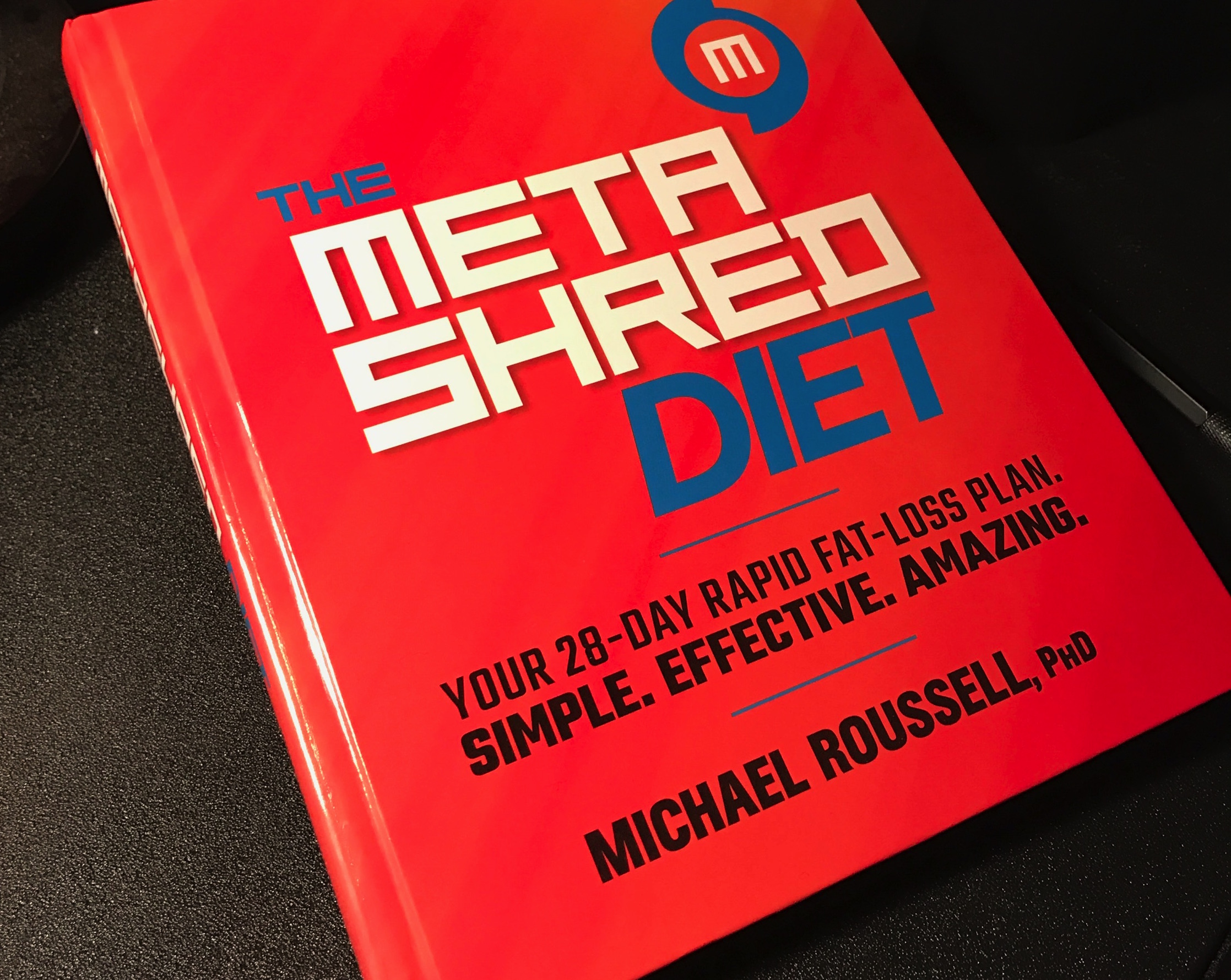
  • My Incredibly Biased Review of The MetaShred Diet by Michael Roussell, PhD

    My Incredibly Biased Review of The MetaShred Diet by Michael Roussell, PhD

    From my Black Casebook:

    IMG_3933

    I need to start this review by being fully transparent. Michael Roussell, PhD is my friend.  I get to call him Mike. We’ve been friends for 10 years since we both spoke at the JP Fitness Summit and sat next to each other at lunch.  I made sure that my lunch that day was Mike Roussell approved.  He wasn’t Dr. Mike at that time but rather PhD candidate at Penn State who had somehow found a way to buy a fixer-upper house with his wife and support himself as he climbed his personal academic ladder.  He knows how to embrace the struggle.  I love that about him.

    He’s also deadlifted 500 pounds (the most genuine photo of pure joy I’ve ever seen) and has a genetic predisposition for extremely large calf muscles (yes, I’m jealous).

    My favorite little known fact about Dr. Mike is that he quit medical school… because he was bored.

    No, seriously.

    But I’m so glad he did.  I think the path he chose has made him so much more although I think he’d probably be just as impactful as a famous physician.  (I know his Mom was proud when he became Dr. Michael Roussell even though he’s “not the real kind of doctor that helps people.” [inside joke… sorry])

    While I joke with Mike a great deal, truth be told, he’s made a huge impact on so many people long before The MetaShred Diet was a reality.  The depth of his understanding of metabolism and the impact of nutrition make him an in-demand, go-to professional in addressing clients’ needs who suffer from any number of metabolic disorders and diseases.  It’s this understanding that we, the reasonably healthy, benefit from when it comes to applying the principles of The MetaShred Diet.

    Okay.  ‘Nuff said.  Here’s My Incredibly Biased Review of The MetaShred Diet by Michael Roussell, PhD

    I hate diet books.

    Most play you by magnifying some small element of nutrition that gets blown out of proportion.  You end up a limited concept that is temporarily executable but ultimately unsustainable.

    The MetaShred Diet does not read like a diet book.  Sure it has meal planning, recipes, and organization concepts that you should expect, and that I’ll get to in minute, but the tone reads like you’re having a deep conversation with a trusted friend who understands you better than you understand yourself.

    Dr. Mike is a nutrition guy, but what separates him from all the others is that he understands what drives our behavior.

    He understands why we make the choices that we do.
    He understands what factors can influence making better choices to support out desired outcome.
    He understands how a few small changes can result in bigger, positive changes in your life (not just your body fat).
    He understands that it’s the process that makes the difference not the details (he takes care of the details for you by the way).

    The first sections of The MetaShred Diet may be my favorite, and it will change how you look at all nutrition information from the day you read it onward.

    Dr. Mike is the master of debunking.

    Our text message from last week
    Our text message from last week

    All the things you thought were true or absolute are not so.

    Here’s my favorite statement from page 16… “There is zero scientific data available to qualify that any rate of fat loss is unhealthy… There is no such thing as a rate of weight loss that is unhealthy or dangerous.”

    In other words, you can lose more than the often recommended “don’t lose more than 1-2 pounds a week.”  A lot more actually.

    Don’t worry.  He explains why.

    I can also speak from experience that this is a true statement having been on the precursor to The MetaShred Diet myself.

    Thought you understood the concept of Calories in vs. Calories out?  Think again.  The next time one of your friends comes at you with this one you’ll be loaded for bear with a hefty dose of reality.  It’s not that simple.

    What to know what the real impact of meal frequency, carbohydrates, hormones, stress, sleep, and daily routine have on your fat loss?  It’s all in there in an easy to understand format.  The science is deep but the language straight forward.

    Bonded by the Brain

    I think one of the things that bonds Dr. Mike and I is that we both appreciate the impact of the brain on how we function, make decisions, and make changes.  One of our favorite books is Your brain at Work by David Rock.  In it, Rock explains the concept of decision fatigue which explains how every decision you make draws on your energy reserves.  Something as simple as deciding what clothes to wear or which way to drive to work takes energy that you may need for some other task.

    Consider how this concept influences your decisions about your eating plan.  Especially later in the day when you’re already tired and somewhat low in energy.  If you don’t have enough energy to defend yourself against bad eating choices, what do you do?

    You have to have contingencies.

    When Bill Walsh was coach of the San Francisco 49er’s, he revolutionized professional football by literally having a script of contingency plans for every imaginable situation.  Not just what play to run inside the 20-yard line, but what to do if it rains or what call to make with four seconds left with the ball on your own 45.  He literally planned for every scenario before the game even took place.

    The power in such a strategy eliminates indecision and the failure associated with bad choices.  Dr. Mike knows that we all face times where things don’t go perfectly.  We need contingencies just like Bill Walsh anticipated.  Dr. Mike provides has you covered in cases of “emergency” as well.

    I’ve used these contingency plans myself with great success.

    Last year Dr. Mike helped me go from a soft and somewhat muscular 206 pounds down to a lean and ripped 169 pounds for my 50th birthday (and a Men’s Health Magazine photo shoot). Smack dab in the middle of my program, I had an 11-day trip to China for speaking engagements.

    Talk about needing a strategy.

    I needed strategies for eating at restaurants in a foreign country, how to fill the gaps in nutrition, and how to get enough rest to keep me burning fat in a stressful situation.

    Done.  See chapter 9.

    Don’t Think… Execute

    How do you make behavior change easy?

    Inform yourself and then execute.  Minimize decision making.  Remember it drains energy and makes behavior change harder.

    I’ve never read a “diet” book that made the process of fat loss easier.

    When I went through my personal physical transformation with Dr. Mike, he sent me exactly what I was to do each day.  This included daily meal structure, how to monitor meal size, and then he sent some of the most delicious recipes I could imagine.

    Did you know that Dr. Mike is an amazing chef?  Me neither.  He didn’t just make up the recipes like a lot of other books do.  He measured, experimented, and cooked them all himself.

    Favorite meal:  Superfood Parfait on page 155.
    It’s like loaded ice cream.  A close second is the Denver Scramble on page 182.

    Favorite snack:  Chocolate-Cherry Indulgence on page 176.
    I call it… Heaven.

    So he put the whole thing in The MetaShred Diet.  Structure, planning, and execution.

    All the details are covered.  No thinking required.

    Epilogue

    Yes, I am biased.

    I am biased because Dr. Mike is my friend.

    I am biased because I’ve had first-hand experience on the program and continue to use the principles and the structure it provides with ongoing success.

    Of course, I think you should buy this book.  That’s why I’m writing this.

    You’ll find that the concepts will spill over to every aspect of your life. I sleep better, I am better organized and more productive, AND I wear smaller clothes than I used to.

    Inform yourself and act.

    You can get The MetaShred Diet straight from the publisher HERE!