Author: Bill

  • How to Move Better, Feel Better, and Avoid Pain with Mini-Mobilities from ALL GAIN, NO PAIN

    How to Move Better, Feel Better, and Avoid Pain with Mini-Mobilities from ALL GAIN, NO PAIN

    What are Mini-Mobilities?

    In ALL GAIN, NO PAIN, I explain that Mini-Mobilities are brief, simple activities that emphasize parts of the body that can get a little achy, sore, or tight from increased intensity. By frequently moving these areas, you can reduce pain and muscle tension to accelerate gains in movement and comfort.

    Regaining and reinforcing comfortable movement is more about learning or relearning how we move. Performing your mini-mobilities several times a day provides repetition of good movement and awareness that our brain values in just a few seconds at a time. They also break the cycle of inactivity that can reinforce restricted movement associated with prolonged sitting or standing and work or rest environments that may increase physical loads and drain your stress bucket.

    Just about any movement can be considered as a Mini-Mobility, but we can be much more targeted with our efforts for a bigger return on investment.

    How do I determine which Mini-Mobilities I need?

    It’s really quite simple.

    In Chapter 8 of ALL GAIN, NO PAIN, you’ll find a process of self-assessment to determine your own personal movement challenges where you may feel restricted or limited.

    For some, it may be a breathing-related challenge. For others, perhaps a limitation in hip or shoulder movement. Once you determine your specific needs, it’s then just a matter of how best to address your challenges by performing an activity that targets it.

    There is a trick to enhancing the benefit of any Mini-Mobility activity and that is to start with a Reset explained in Chapter 10. In many cases, performing a level appropriate Reset (you can find these listed in Appendix 3) can “shut off” undesired muscle tension and free up movement that may appear to be limited from your movement assessment. In this case, I suggest that your reset exercise becomes your Mini-Mobility activity.

    Follow your quick reset with an activity that targets your problem area. A simple way to attack your challenge can be simply performing the limited movement assessment for repetitions as if it was an exercise. For example, if I’m sitting in a meeting and it’s time to do my Mini-Mobility, I can knock out a series of Seated Hip Shifts (Chapter 8) and no one is the wiser that I just got in my “mobility session” without having to interrupt the meeting. If you have a couple minutes to yourself, select one of your favorite Readiness activities that targets your challenged movements.

    When do I do them?

    The key to restoring your movement capabilities is consistency.

    Rarely does effortful or painful pulling, yanking, and hard stretching make an impact over the long term as you body may actually “tighten up” against the discomfort. Lightly approach your end ranges of movement but never force muscles and joints to length. Over time, you’ll notice increasing gradual improvements in your ability to access more comfortable movement.

    How often you may need to perform your Mini-Mobilities depends on your individual needs. The more sedentary your job or the more limited you appear to be from your movement assessment, the more frequently you should perform your sessions. In the past, I’ve done a quick mobility exercise almost every hour of the work day if I’ve been dealing with a real problem area. This may seem like a lot but since it requires only a couple minutes, it makes a great break from sitting, or in my case, it fits perfectly between patient treatments or client training sessions.

    A simple strategy to assure your Mini-Mobilities are completed is to schedule them. My OURA Ring has a reminder on it to let me know that I’ve been sitting too long, and it’s time to get up and knock out a set. Set an alarm on your smart phone or on your email or daily calendar if your spend a lot of time on a computer.

    The key is consistency. Get it done.

    A Day of Mini-Mobilities

    Here is my Mini-Mobility Schedule for today

    7 am:  Resets + Lazy twister
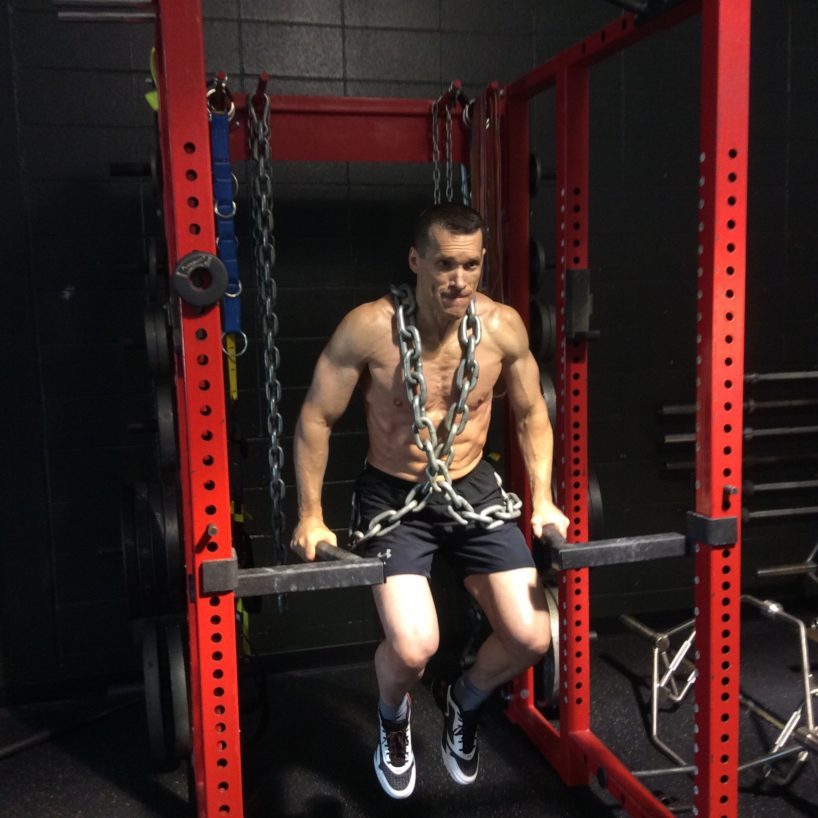
    9am: Resets + Readiness + Workout
    12pm: Lazy Twister
    3pm:  Lazy Twister
    6pm:  Lazy Twister
    9pm:  Night time ritual/Resets + Lazy Twister

    What if everything is limited?

    Sometimes it may seem that everything is limited, and you just don’t know where to start. If that’s the case, focus on Level 1 resets as your initial strategy.

    When you have a lot of apparent movement limitations, Level 1 resets are more supportive and help reduce a great deal of muscle tone in the upper back, trunk, and hips that impacts your overall movement. Once you’ve done this, then pick one or two Readiness exercises and stick with those activities until you make the desired progress based on your assessment tests.

    It’s is best to focus your efforts on a limited number of movement challenges and make great progress versus trying to do it all at once and dilute your efforts (unless of course you exercise for a living).

    How to do Lazy Twister from ALL GAIN, NO PAIN
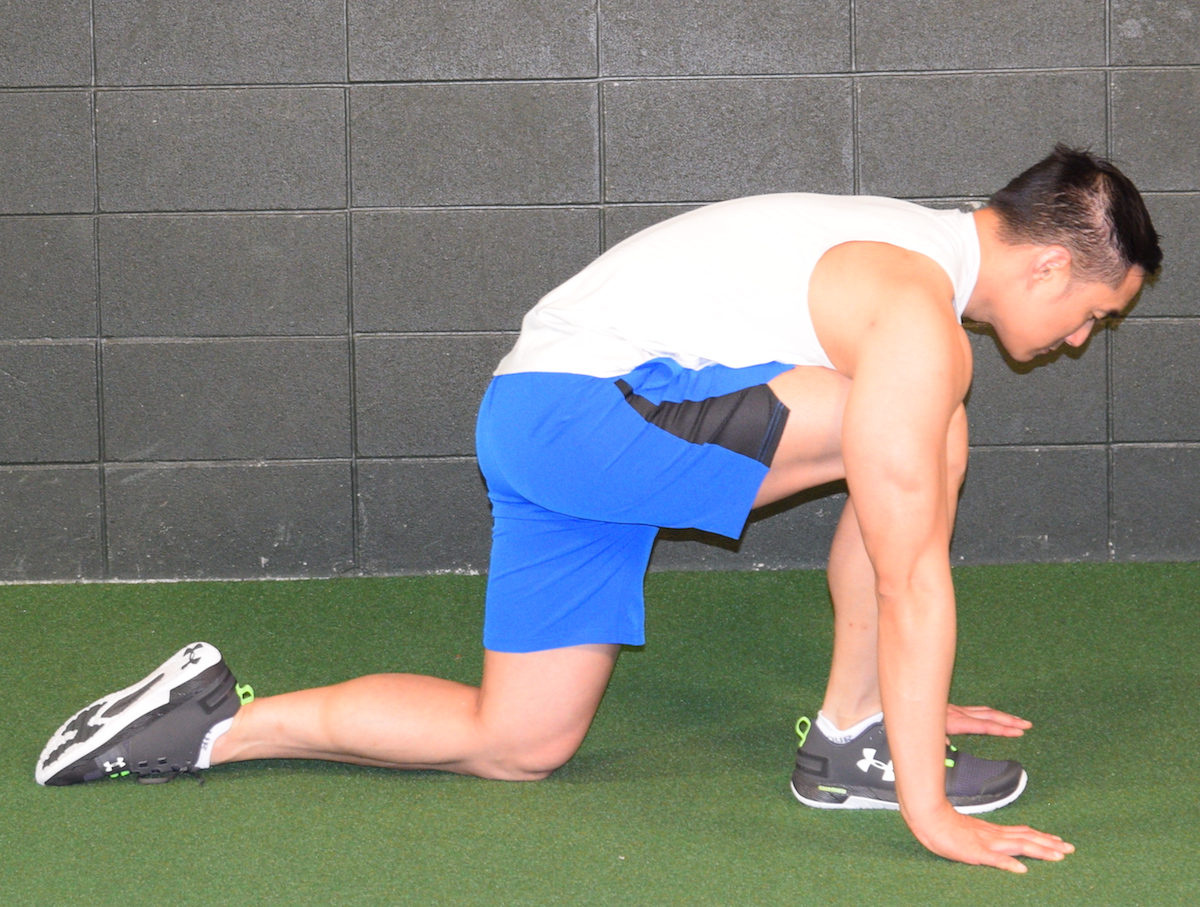
       

    Set-up

    • Position yourself on all fours on the floor
    • Hands should be directly below the shoulders and knees directly below the hips
    • Head should rest in line with the ear, shoulders, and hips

    Performance

    • Push long through the arms as if to push away from the floor
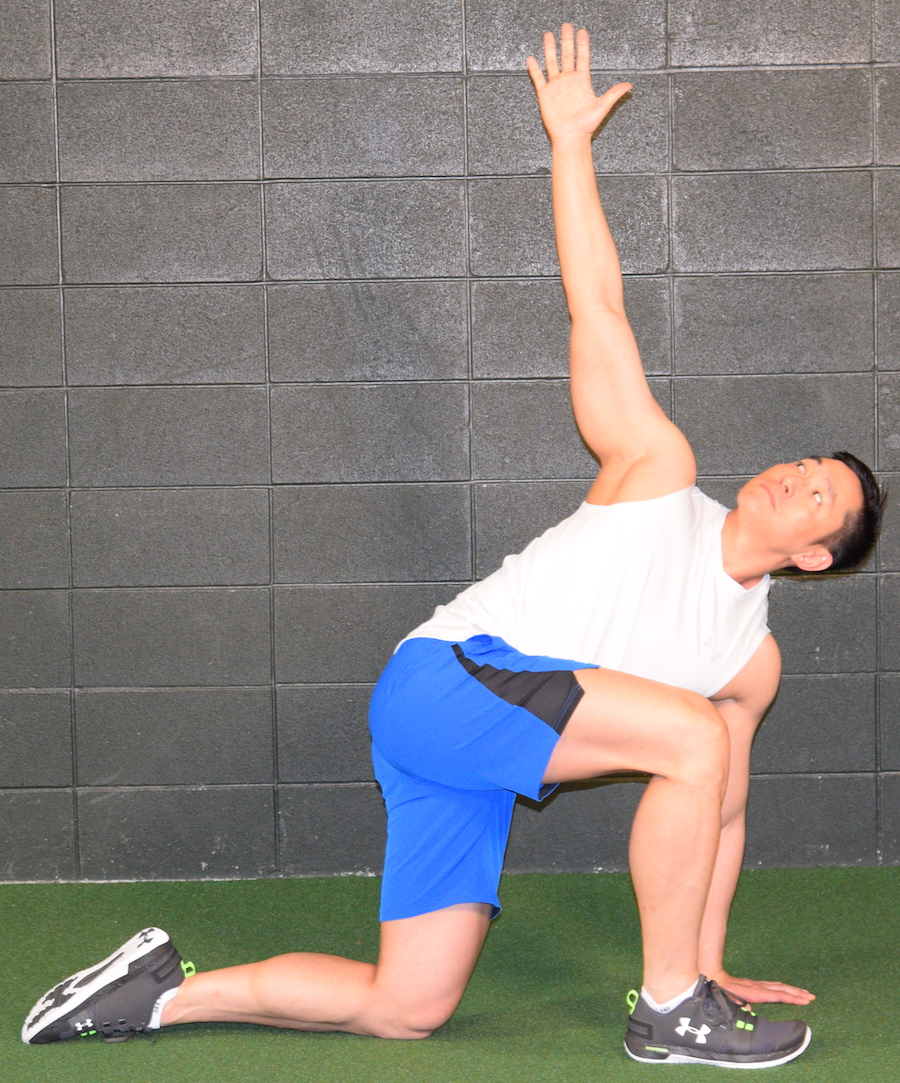
    • Bring your right knee forward to bring the right foot to rest next to your right hand
    • Turn your shoulders to the right and reach to the ceiling with your right hand
    • Perform one full breath in through the nose and out through the mouth
    • Return to the starting position
    • Repeat on the other side
    • Perform 5-10 repetitions on each side

    Coaching Cues

    • Keep your spine “long”
    • Push away from the floor with your arm
    • Adapt the position of your foot to your personal level of flexibility and do not force into pain
  • Longevity:  Can Getting Stronger Help You Live Longer?

    Longevity: Can Getting Stronger Help You Live Longer?

    Here’s a short article on the benefits of strength training for longevity from Outside Magazine.

    This reinforces the importance of the All Gain Principles!

    To Delay Death, Lift Weights

  • How to Make Consistent Progress in Your Fitness Program:  The Power of Review and Reflection

    How to Make Consistent Progress in Your Fitness Program: The Power of Review and Reflection

    Making consistent progress in your fitness program is always a challenge.

    I think the emphasis tends to be placed too heavily on the exercise program itself. As I repeatedly state in ALL GAIN, NO PAIN, intensity is easy. Because it’s easier at first to work a little harder the exercise portion seems to take priority over all other aspect and skews the perspective of what actually helps determine progress, and therefore, change.

    Don’t misunderstand me. The exercise program IS important, but the keys to progress are knowing where you are in the process. Making comparisons from workout to workout and week to week let you know when you’re on track and when you need to make changes to stay or get back on track. No program is ever perfect.

    Much like a sailboat tacking in the wind, there are consistent course corrections that need to be made to reach the intended destination.

    Information, such as your Key Performance Indicators (See Chapter 20 of ALL GAIN, NO PAIN), need to be interpreted and compared, so effective, objective decisions can be made without the influence of emotions getting in the way.

    I typically use the same series of questions that I got from my friend Andrew Paul, athletic performance coach of the Oklahoma City Thunder, to help guide my thinking and program adjustment.

    What does this confirm that I am already doing very well?

    What are things that I am beginning to do and I should double down on based on this information?

    What has been an emerging thought with me that I haven’t put into practice yet and based on this information I need to investigate further?

    What am I not doing?

    What are the things presented that haven’t been on my radar?

    These questions provide me with concrete course corrections and what endurance coach Steve Magness calls the “next logical step.”

    All too often, we make the mistake of doing what our emotions drive us toward or what we want to be doing instead of what we should be doing.

    I think it’s virtually impossible to be objective with ourselves, that’s where coaches are essential. In many cases, we must be out own coach and make an effort to see what is truly before us.

    Answer these questions honestly. Track your progress objectively. Take the next logical step.

    Your comeback starts today.

  • Success is a Planned Event

    Success is a Planned Event

    I just got back from speaking at Ranfone Training Systems in Connecticut this past weekend. All that I can say is that is was as close to a perfect experience that I’ve had in doing such things.
     
    As yesterday was a travel day, I read extensively to pass the time (reading for me is not really passing the time actually as I had intent on my topics of choice) on mostly brain-related material (fun!) inspired by my friend Pat Davidson’s brain presentation (it certainly pointed to some holes in my game).
     
    I also took some time to reflect on where to go next.
     
    It’s always difficult to narrow things down as I want to learn and do EVERYTHING. I think one of those things about being in the mature class (getting older) is the realization that I cannot learn everything and do everything. BUT that does not mean that I can’t learn and do a lot more.
     
    Organization has never been my strong point so I’m always on the lookout for tools to help me stay on track. I’ve tried the software-based systems, but, perhaps because of my age and era, paper and pen works best for me.
     
    I’m going to work from a paper planner starting with the Self Journal pictured above. I’ve also ordered 2 other planners to which I’ll make comparisons until I find one that I like the best (OR perhaps it’s time to design my own!).
     
    Point being, without some form of systematic approach, it’s very difficult to assure that the behaviors necessary to achieve anything are executed to the degree necessary for change.
     
    It is repeated the same behaviors over and over that result in the creation of an outcome. That can be good or bad. If it’s success that you aim for, lock in the behaviors that support the desired outcome. Repeat them. Document them. Review them. Keep them in mind.
     
    Soon, it will be easier than you imagined, and you’ll see success on your horizon.
     
    Your comeback starts today.
  • ALL GAIN, NO PAIN Key Performance Indicators:  Work the Process

    ALL GAIN, NO PAIN Key Performance Indicators: Work the Process

    ALL GAIN, NO PAIN has been out a little over a month now, so it’s time to take a look as your measures of progress, or as described in the book, Key Performance Indicators (KPI’s for short, Chapter 20).

    What KPI’s are you currently tracking to measure changes and progress?
     
    Food intake?
    Assessment tests?
    Exercise weights?
    Sleep?
     
    My update example:
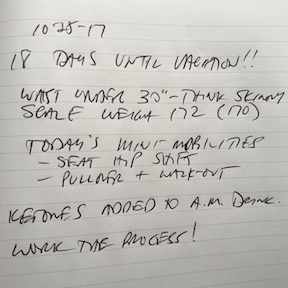
    I’m currently 18 days out from vacation, so I tightened up the eating a bit from my usual MetaShred Style plan from Dr. Mike Roussell. My KPI’s (my scale weight and waist measurement) are both trending downward as expected. If I think skinny enough, I can get the tape measure under 30 (keep in mind that before the transformation I was wearing 36″ waist pants).
     
    My Seated Hip Shift is one of my ongoing self-tests and remains challenging, but it is improving with mini-mobilities throughout the day.
     
    I still need to remind myself every day that this is a process.
     
    It is the consistency of behaviors that ultimately produce results. I still have good days and not so good days where I miss my mark, but I work to keep the overall trend in the right direction.
     
    You can’t change everything at once. We just don’t have the brain power to do so. Small changes made consistently over time wins the race.
    Pick one KPI. Measure it. Monitor it. Make adjustments. Repeat. It’s a process.