Author: Bill

  • ALL GAIN, NO PAIN Personal Project Management

    ALL GAIN, NO PAIN Personal Project Management

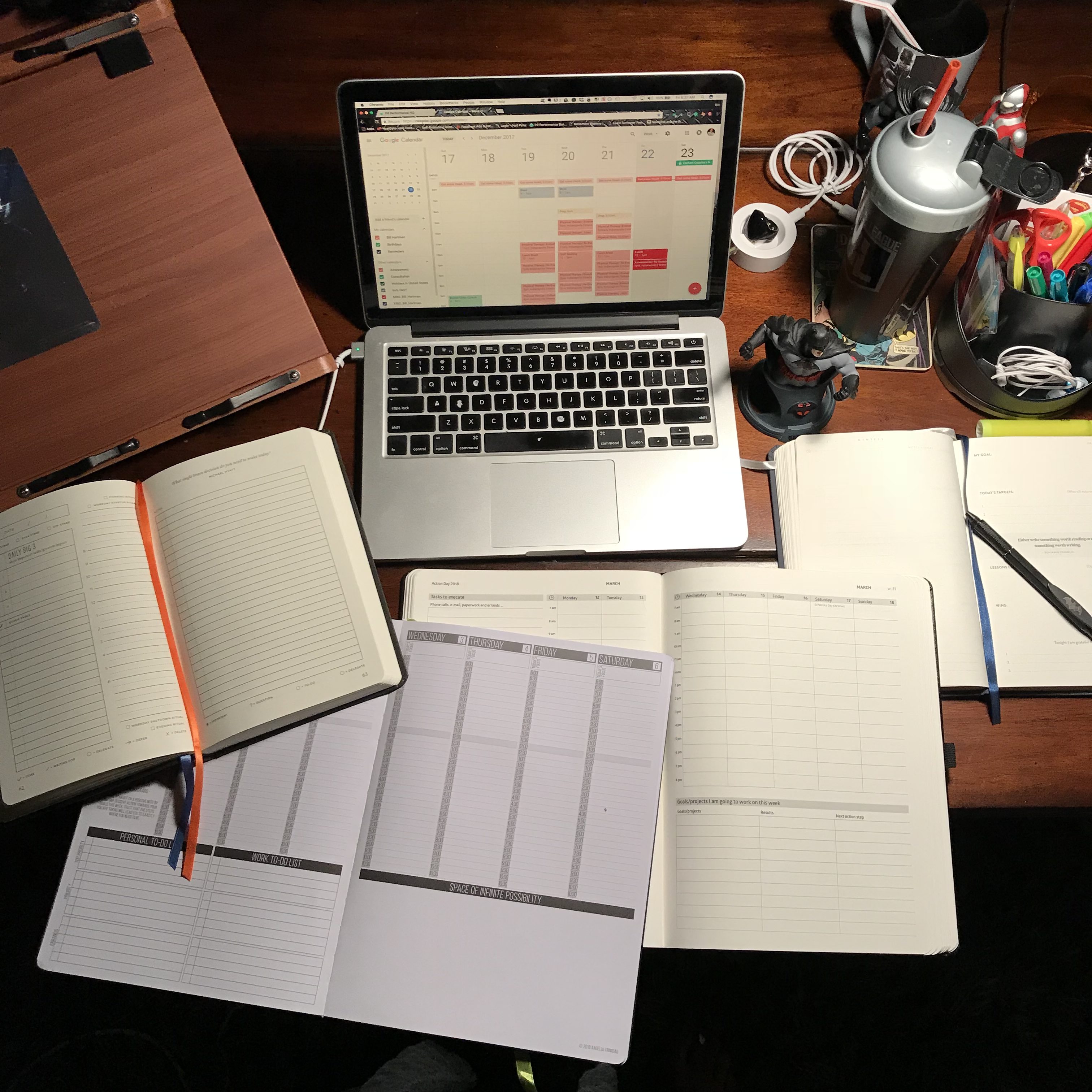
    I’m not a fan of digital mediums for my organization, and I’m dissecting each of these planners based on wants, needs, and ease of use. I’ll lay it out on the blog and pick a winner for the first quarter of 2018.

    The Finalists:
    Action Day Planner
    Passion Planner
    Self Journal
    Full Focus Planner

    How are you staying organized?

    Let me know in the ALL GAIN, NO PAIN Facebook group. If you need the link to the group, you can find it in ALL GAIN, NO PAIN.

  • Breathing Exercises to Move Better and Reduce Pain

    Breathing Exercises to Move Better and Reduce Pain

    “If breathing is not normalized –  no other movement pattern can be.” – Karel Lewit

    Throughout ALL GAIN, NO PAIN you’ll see the emphasis on breathing.  Breathing is cued in the Reset Exercises, Readiness Exercises, and even many of the strength training exercises contain cues of when to breathe. Without the emphasis on breathing, it becomes an exercise in futility to try to regain and then sustain normal, comfortable movement.

    As you breathe, many of us are aware that our lungs draw are in and out, and you may even be aware that your muscles provide the rhythmic driving force to do so. Most would think that this process is limited to the chest where we can feel the movement most prominently.

    Actually, as you breathe, the entire body moves through a repetitive cycle. Your pelvis moves which moves your hips, your shoulders move, and your head and neck move. We don’t really perceive it as it is subtle, and we’re used to it, but it does happen.

    If for some reason, this gentle cycle of movement is restricted, so is the movement of your shoulders, hips, and neck in accordance with the degree that your breathing has become rigid or patterned.

    Daily stress of just being a human in our world represents a powerful driver that our primitive brains respond to in immediate defense. Defense leads to our “human musculoskeletal stress pattern” as coined by Dunnington (see ALL GAIN, NO PAIN for reference). Breathing must adapt to the pattern and our powerful learning brain takes it from there to lock in these rigid patterns of breathing and movement as our norm. After all, from a survival standpoint, it’s much more important to continue to get enough air than it is to touch your toes.

    Your brain is an air hog.

    At about 2% of your body weight, it consumes about a 20% of the oxygen you breathe.

    It will induce any strategy necessary to get that air. It will increase muscle tension (usually on the back side of your body) and even twist your body to one side to make sure it is satisfied. It does not care if you’re uncomfortable or limited in your movement. It just wants its share of air.

    It won’t let you move into a position or posture where it cannot get enough air – at least for not very long or you’ll end up holding your breath to get there.

    By building an effective breathing pattern during movement and exercise, we satisfy the brain’s desires AND teach the body to move effectively simultaneously. Over time, we learn to do both consistently and it sticks as our new normal.

    Take your time as you learn to move air during exercise. Moving from normal inhalations to full exhalations as you perform progressively challenging exercises provides the full spectrum of breathing patterns as there is never one ideal way to breathe, there are many.

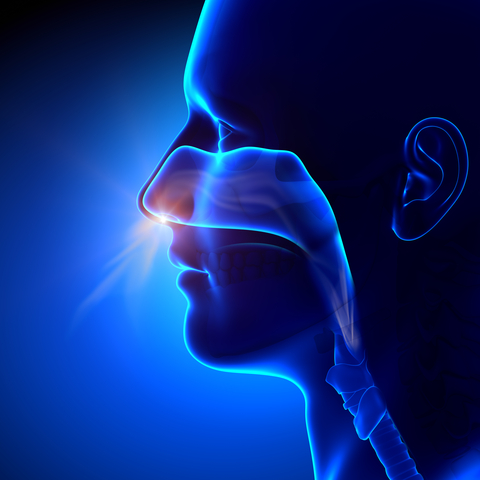
    Lying on your back with your knees bent is an easy position to begin your breathing training process.  Below is an example of how the rib cage and abdomen expand uniformly during an inhalation through the nose and an exhalation through the mouth. Don’t worry about perfection. Just get better every day.


  • How to Eat Whatever You Want Over the Holidays and Not Feel Guilty

    How to Eat Whatever You Want Over the Holidays and Not Feel Guilty

    ‘Tis the season the season of temptations.

    Food and drink are abound and the little elf sitting on your shoulder whispers in your ear, “Go ahead… indulge.”

    Before you know it, your “I’ll just have one cookie” turns into six (or more… I love cookies).

    Maybe you start the evening with your mental calorie count going off in your head, but socializing, laughing, and genuinely enjoying yourself results in a loss of place or confusion as to what you’ve actually consumed.

    Your next thought is “Well, I’ve really screwed up my eating plan, might as well just forget about it and eat whatever I want.”

    I can dig that. Been there. Done it. Lived through it.

    If you read fitness and diet articles on the internet, you’re about to be inundated with countless strategies to keep you on plan or to keep you from gaining weight.

    Ever get the “eat before you go to the party” strategy? The premise is that if you eat before you go, you won’t have the desire to eat all the fun foods. Clearly, they’ve never been to my Mom’s house for the holidays. There’s always room for more cookies (Strategy:  wear stretchy pants!).

    Screw it. I say enjoy yourself.

    Here’s the problem with all of those articles intended to help you stay on track. They steal your joy.

    Oh, and they often don’t work.

    If you’re the type that enjoys the sense of self-discipline of sticking to your guns through the holidays and avoiding the indulgence, I’m also very cool with that, but please don’t wear it like a badge of honor. Focus on the internal satisfaction and reward rather than seeking validation from others to stroke your ego.

    The reality is that the short-term gluttony of the holidays is really no big deal in long-term scheme of things. A blip of time if you’re pursuing a lifestyle that supports longevity and health.

    Truth is that you don’t need a strategy to avoid gaining weight during a holiday. You need a lifestyle for all the other days of the year that allows you to enjoy yourself on holidays.

    Playing the long game is the answer.

    This Does Not Give You Permission…

    Just because I’m supporting a relaxed attitude about holiday eating behaviors, that doesn’t mean you take a dive off the wagon of focus on your goals.  Enjoy the holiday party. Enjoy your family and friends (and Mom’s cookies).

    Then get back on it. Reset and go. Get back on plan.

    Here’s what I read this morning from my good friend, Marcus Aurelius.

    “When forced, as it seems, by circumstances into utter confusion, get a hold of yourself quickly. Don’t be locked out of the rhythm any longer than necessary. You’ll be able to keep the beat if you are constantly returning to it.” Meditations, 6:11

    No need to feel guilty for enjoying the one life you have.

    But don’t forget the self-satisfaction and reward of the positive changes you’re making as you work your way through the ALL GAIN, NO PAIN Principles.

    Marcus was correct. Keep the beat.

    Your comeback starts today.

  • Sleep Experiment:  How to get more REM Sleep… AND when things don’t go as planned

    Sleep Experiment: How to get more REM Sleep… AND when things don’t go as planned

    I’m in the midst of a small sleep experiment on myself.

    My tracking is indicating insufficient REM sleep of late.

    One of the major limiting factors of REM sleep is a lack of total sleep or basically how long you’re actually sleeping at night. The duration of REM sleep in each sleep cycle increases throughout the night, so if we don’t sleep long enough, we tend to limit the accumulation of REM sleep. While we may consider ourselves getting 7 hours of blissful slumber based on the time in bed, we have to consider things like sleep latency which is how long it takes to go from full wake to the first stage of nonREM sleep.

    There’s also periods of waking up that can steal valuable sleep.

    On the front end of the night, our sleep cycles favor long periods of deep sleep. This is a key to getting a truly restful and restorative night’s sleep.

    I have some things I try to avoid that I know just destroy my deep sleep.

    • Large meals late in the evening
    • Alcohol before bed
    • Late blue light exposure (compute screen mostly)

    The large meal thing was very interesting to me as not only does it interrupt my deep sleep but it’s clear that I’m stimulating a great deal of metabolic processes considering my lowest resting heart rate can be 10 beats higher (low 60’s vs low 50’s) after a late big meal.

    As long as I stick to my guns and hit my bed time, deep sleep usually looks pretty good.

    My total time in bed is a solid 7 hours and a few minutes, so theoretically, I’m in the ballpark for getting enough total sleep. Because of the deficit in REM, however, I wanted to see how things may change.

    So far, I’m picking up some more REM sleep, but it’s less than anticipated. I’m tracking via my OURA Ring and now I’ve just added the Fatigue Science Readiband for the last couple of nights as a comparison. I’ll let you know how things progress.

    When Things Don’t Go as Planned

    Adding sleep on the back end means that my wake time is now a bit later than typical. I’ve added 30 minutes to my wake time, so instead of waking between 4:30 and 5:00 AM, it’s now between 5:00 and 5:30 AM.

    Not a big adjustment you say?

    I respectfully disagree.

    My whole morning just feels off. Kind of like wearing my shoes on the wrong feet.

    Everything feels late.

    My morning ritual is disturbed and I like my consistency. I’ve also come to love my wake time. Just getting up before 5 AM, feels like a victory (Jocko Willink has a great description of how he feels about getting up before everyone else). I don’t have that feeling right now. I feel like Marcus Aurelius is standing over me shaking his head in disappointment…

    “At dawn, when you have trouble getting out of bed, tell yourself: ‘I have to go to work — as a human being. What do I have to complain of, if I’m going to do what I was born for — the things I was brought into the world to do? Or is this what I was created for? To huddle under the blankets and stay warm?’” – Marcus Aurelius (as translated by Gregory Hays)

    I realize it’s just going to take a little reorganization, a little more discipline, and a mindset adjustment, but it’s uncomfortable.

    On the flip side, it may be the best thing for me. Maybe I’ve lost time due to a lack of concentration related to fatigue. Maybe I’ll take my focus up another notch.

    I’m sticking to the plan for now.

    Learning occurs at the point of struggle. I’m embracing the struggle.

    Your comeback starts today.

    [By the way, if you go to Chapter 13 in ALL GAIN, NO PAIN, you’ll learn how to determine the perfect amount of sleep for you.]


  • Overcome the Fear Associated with Transforming your Body

    Overcome the Fear Associated with Transforming your Body

    A moment of panic.

    We were getting cleaned up to go to a wedding of a friend this past weekend. Aside from the typical prep, this occasion would require me to put on a suit and tie which is not my typical dress. I’m either dressed like a misplaced golfer for my work at IFAST, or I’m in workout clothes because I’m about to hit the gym, I just got home from the gym, or I’m too lazy to change after being at the gym six hours ago.

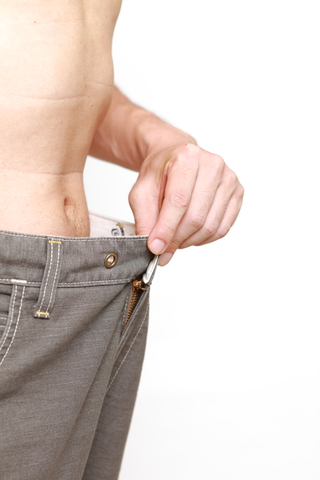
    Panic arose as I went to put on my suit and button my pants. I felt like child trying on Dad’s suit as the waistline of my pants exceeded my own by quite a few inches. I couldn’t go to the wedding in this! I knew my waist size had gone down a bit recently in preparation for the gluttony of vacation and the holidays, but c’mon, not this much! I suppose I could have made up some excuse that I thought it was a costume party and I was dress like “The Incredible Shrinking Man.” So, I grabbed my black suit and the same thing happened!

    Ooops! I soon realized that I had put on my older suits that I wore before the big transformation a couple years ago (note to self… stop by Goodwill and drop off the old suits).

    Thankfully, after about 15 minutes of frantic searching (I don’t know where anything is in my house, I just live here) I was able to locate a more recently purchased suit appropriately tailored for the downsized version of myself. Emergency trip to Men’s Warehouse averted.

    I got dressed up, but while I did, I chuckled to my inner self as to how interesting the physical change has been, and how I was able to overcome the initial doubts we all have when we start a new program or make any lifestyle change for that matter. We see people making amazing changes at IFAST all the time, but I must admit that it’s a bit different when you’re looking at yourself now compared to then.

    Overcoming the Fears and Doubts

    We are not all that different from each other when we are trying to change our behaviors for the better. Change is hard. So hard in fact, that it takes a rewiring of your brain to make things stick.

    We all ask the same questions ruminating around in our heads.

    Will this work?

    What if I fail?

    Am I wasting my time?

    Is there a better program that I should follow?

    Do I know know enough to even get started?

    Do I deserve to get in shape?

    Can I live without ice cream forever?

    As you sit on the fence of self-doubt, remember that we are wired for negativity first thanks to our emotional and fear centers in our brain. It’s a self-preserving protective mechanism that keeps us from doing dangerous things to ourselves. It’s normal to have these types of thoughts.

    To overcome them, we only need a quick consult from the more objective, rational prefrontal cortex right behind your forehead. It is there that we can simplify our concerns to two simple options.

    Option 1:  Do something

    Option 2:  Do nothing

    There’s nothing wrong with Option 2, but it’s not likely to get us where we want to be.

    Truth be told, changing your body and health for the better is not all that complicated when you mix it down to the simple rules.

    Simple Rules:

    • Eat real food to support your activity levels.
    • Exercise to retain muscle and create resistance to stress (strength training)
    • Create resilience to stressors with proper restorative behaviors (sleep, meditation, endurance exercise)

    Any number of programs can provide you the guidance necessary to make the changes you desire. The key is to make lifestyle adjustments (relatively permanent changes in your decision-making and behaviors) gradually to allow your brain to rewire itself. This prevents the overwhelm, the self-doubt, and other negative emotions that keep us from achieving our goals. That’s why I set up ALL GAIN, NO PAIN the way I did (What? You didn’t think I wasn’t going to mention my book, did you?).

    You may not need ALL GAIN, NO PAIN at all. Every day people transform their bodies without it. The human system is very adaptable.

    Just start.

    However, if you’re coming from a history of pain, it may be the best place to start.

    I wanted you to have confidence that you know enough to get started.

    I didn’t want you to waste time.

    I wanted you to have a successful, gym-tested program.

    I brought in the best nutrition expert in the business to help you.

    What if you fail?

    You will fail.

    Everyone does. No one is ever perfect, so expect it.

    Failure is not a permanent state.

    Take the opportunity to identify how you can make a better decision next time you’re faced with a challenge.

    Regroup and restart every day.

    Small, consistent changes over time are what makes the difference.


    Your comeback starts today. 

    (oh, and you don’t have to give up ice cream forever)