Author: Bill

  • Mentorship… Knowledge and Wisdom

    Mentorship… Knowledge and Wisdom

    “Knowledge is what you gain from experience, Wisdom is what you gain from someone else’s experience.”

    I have no idea to whom to attribute the above quote. It sounds Einstein-ish, but I’m not sure. I’ll have to leave that open for discussion and for those who have time to search for the original thought master.

    My interpretation of the quote directs my thoughts to the importance of apprenticeship or mentorship. I refer to my interns as Padawans, obviously in tribute the Star Wars franchise, because it’s fun and as it represents a step in their developmental process in acquiring useful knowledge beyond that which is provided by their formal education.

    I don’t negate the value of their formal education, but it is the knowledge that they will gain in context (working directly with patients and clients) that will ultimately determine their ability to be successful in such a complex environment and become a master of their craft. While I was still in school, I recall asking my sister, the doctor (for some reason, this subtitle always follows her), how much of her formal education she actually used daily to treat her patients. Her response was, “About 10%.” It turns out that, generally speaking, she was probably correct.(1)

    Harold Jarche provides an excellent explanation and differentiation of the different forms of knowledge that we acquire and how this knowledge ranks in value depending on the context of the environment.(2)

    He breaks up knowledge into 3 basic categories:

    Explicit Knowledge

    This is more formalized and systematic education that we are all familiar with. Read a book, take a course, or learn a system. Easy to teach and easy to learn. This is foundational knowledge that is often taught without context. This may also be useful in situations with direct cause and effect in predictable environments. It’s very machine-like. Specific inputs result in known outputs. Perhaps some specialized knowledge is required but things remain in a specific complicated domain with direct cause and effect versus drifting into the unpredictable complex domain. I tend to think of my favorite auto mechanic in this case. He runs his diagnostic knowing that my car runs in a very specific manner via very specific parts. He fixes the problem by replacing the defective parts, and my car runs well again.

    But what happens when we are faced with unknowns in response to our inputs or interventions as in the rehab and fitness training realm? While we like to think that humans behave in predictable manner one only needs to dip their toe into the waters of the biopsyochosocial model, spend a little time actually treating patients or working with fitness clients to know that you have now drifted into an unpredictable context of complexity.

    Explicit knowledge is of limited value and often fails in this situation.

    Implicit Knowledge

    Implicit knowledge comes from personal interpretation of information and application in a complex environment. It’s not that it can’t be organized systematically, it’s just that it may be difficult to do so. In complex contexts, there are multiple potential interventions (aka, more than one correct answer) that may result in the desired outcome, and there may be multiple potential outcomes depending on the constraints of the environment, the client or patient, and the task that is involved. Over time, some implicit knowledge associated with experience may become explicit through many repetitions, but to act effectively, one would still need to gain implicit knowledge to even understand the potential options available.

    This is the value of experience and mentorship in acquiring this implicit knowledge. As the Jedi Master does his work in the complex environment, his narrative provides his interpretation of how he sees the context, what his intent may be, and then his interpretation of the outcome. This cannot be acquired explicitly.

    Tacit Knowledge

    If we considered knowledge a continuum with explicit knowledge at one end, the other end would be defined by tacit knowledge.(3)

    Tacit knowledge is much like implicit knowledge in that it is not systematized, but in many cases, it cannot be. Tacit knowledge is often difficult to even convey and may require multiple exposures to gain an understanding. To quote Michael Polyani, this type of knowledge falls into the “We can know more than we can tell” category. Tacit knowledge requires observation, interaction, and imitation.

    Every semester, I take on a new Padawan and one of the first recommendations I make is for them to internalize my explanations, my coaching cues, my stories, and even my jokes that I make as I work with patients. This leads them to develop a foundation upon which tacit knowledge and a useful model can be built. Through regular Q & A and reflection, a narrative can evolve to clarify thought, intent, and interpretation. The Padawan also benefits from his interaction with our other staff at IFAST and with our ever-growing network of IFAST Family represented by a diverse group of practitioners and coaches. This is essential within the complex environment of coaching clients and working with patients as they gain the wisdom of others experience.

    Expertise in any complex environment is derived mostly from experience (as much as 70%). Every apprentice requires a mentor and a network to truly move toward mastery.


    1. https://www.ccl.org/articles/leading-effectively-articles/70-20-10-rule/

    2. Jarche, H. Seeking Perpetual Beta:  A guidebook for the network era. Sackville, New Brunswick, Canada. April 2014.
    3. https://en.wikipedia.org/wiki/Tacit_knowledge

  • How to Build Your Brain to Overcome Cravings

    How to Build Your Brain to Overcome Cravings

    “You have power over your mind – not outside events. Realize this, and you will find strength.” – Marcus Aurelius, Meditations

    I think that if Marcus Aurelius were alive today, he’d probably write a meditation to the effect of “Never go to the grocery store hungry.”

    Sunday was a bit of a fasting day where I limit my caloric intake a bit (I don’t fast all day but eat a regular meal late in the day), so I was hungry but still had to pick up a couple things at the grocery store.

    My “couple of things” turned into nine things as it always does but having to pass through a couple of the aisles to grab my items stimulated my hunger a bit. Here’s the list of cravings that struck me as I wandered amongst the Sunday shopping crowd:

    Megastuff Golden Oreos (go big or go home) and a giant glass of milk
    Salted caramel ice cream (Damn you Ben and Jerry!)

    Upon returning home, the football game was on TV and of course I caught a glimpse of the pizza commercial that was running at the time. Add one more craving to the mix.

    I then enjoyed my meal of this amazing egg casserole quiche thing that The Gorgeous One makes that fits my current calorie and macronutrient intake.

    Was this an amazing feat of willpower?

    Not really. Well, not anymore. Here’s what happened.

    I saw the junk foods that stimulated my desire to eat them, I thought about how delicious they would be, and I recognized that while I would enjoy them, my end result would be disappointment for not sticking to my current eating plan and setting my progress back. Therefore, I chose to bypass the cookies, ice cream, and pizza and eat my regular meal.

    Sure, it was a close call, but I celebrated my victory over my cravings as I ate dinner.

    Way to go ME!

    Self-control is just another muscle that gets stronger with exercise. In fact, in her book The Willpower Instinct, Kelly McGonigal, PhD, makes a similar comparison when she describes the powerful effects of mindfulness meditation.

    “The brain appears to to adapt to exercise [Bill: referring to meditation in this case] in the same way that muscles do, getting both bigger and faster in order to get better at what you ask of it.” – The Willpower Instinct, pg. 25.

    Thankfully, it doesn’t take much meditation practice to start to make those changes in the brain. Dr. McGonigal references a study that showed that accumulating just 3 hours of meditation practice over time results in improved attention and self-control.

    When’s the best time to meditate?

    Whenever you SCHEDULE it. Yes, schedule it.

    Don’t count on ever having enough time to get to it. Just like your work, your workouts, your vacations, or anything else important in your life, you must schedule it.

    Even as little as three minutes at a time makes a difference.

    Get three minutes in the morning before you go to work. Take three minutes at lunch. Add three minutes when you get home. Finally, do three minutes to quiet your brain before you go to sleep.

    You’ll have accumulated three hours in no time.

    Do it right now. Just three minutes.

    Your comeback starts today.

    If your interested in reading The Willpower Instinct, here’s my affiliate link to the book:

  • Why Good Workouts Are Better Than Great Workouts

    Why Good Workouts Are Better Than Great Workouts

    Dean is a lot like most of us.

    Work and other obligations distracted him from taking better care of himself. Aches and pains accumulated. He felt more limited physically. He felt “old.”

    He recognized that he was on a path that would only get worse if he didn’t do something about. So he did what most of us would do. He started to educate himself and created a plan to get himself back on track to getting in shape.

    He saw the amazing things that other people were doing with their workouts. Jumps, swings, sprints, heavy weights, Olympic weightlifting, and high-intensity interval training. He read that to strip off the fat he needed to perform higher intensity workouts. That was the key. So that’s what he did.

    He started with great enthusiasm and motivation, but that soon dwindled when the aches and pains didn’t go away. In fact, he began to notice that they started to get worse.

    Each morning he felt stiffer than the day before. His intermittent knee pain was now an every day occurrence. He was tired all the time but couldn’t put together a good night of sleep.

    It turns out that he was misguided, but it wasn’t his fault.

    His sources and resources limited his perspective that all he needed to do was work harder. He watched videos of amazing feats of fitness. Borderline heroic physical efforts that left “fitness” enthusiasts exhausted and broken but looking great. Intensity was the key. Push yourself. Have great workouts every time you hit the gym, and you’ll be successful.

    This just isn’t true.

    Our exposures to social media can be particularly misleading. We only see the extremes. It makes us feel that everyone is happier and more successful that we are. Emotions are always high. Rest and recovery are rarely emphasized.

    Making progress is not about having great workouts, setting personal records, or feeling wrecked and exhausted.

    The goal is not to achieve great workouts.

    The goal is to look better and feel better. This means moving well without pain. Achieving a physical appearance that we appreciate.

    This requires good workouts… no great ones.

    Recall from Chapter 17 in ALL GAIN, NO PAIN, the All Gain Principle #3:  Manage Intensity to Manage Stress.

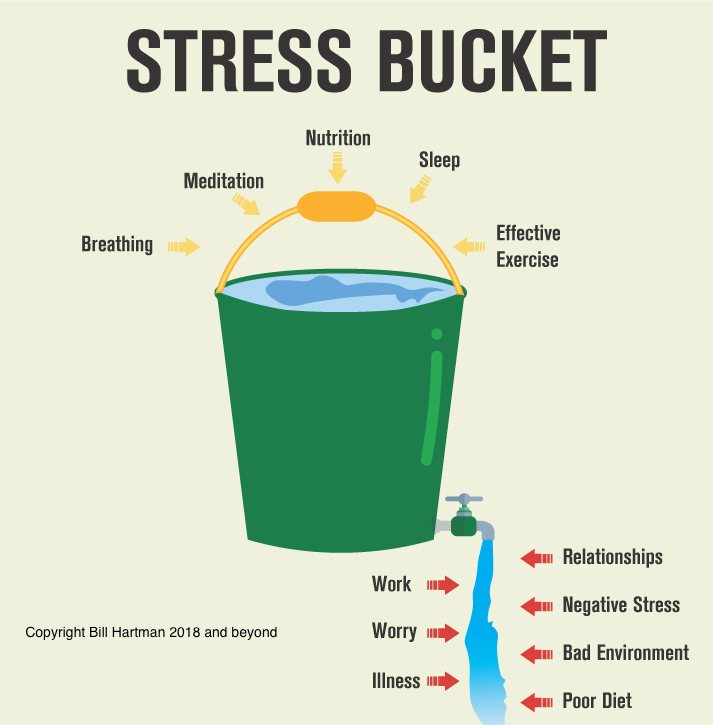
    We all have a limit to the resources that we can draw on each day. Our stress bucket is only so big. We have behaviors that drain our bucket, and we have behaviors that refill it.

    Making great workouts the goal and letting intensity run rampant can accelerate the draining of resources from your stress bucket. Even if you have your No Pain Principles in place, too much intensity, too soon can result in a return of aches and pains that may limit comfortable movement or set you up for an injury.

    This is not an excuse for a lack of effort in regard to your workouts. You should feel challenged. You’ll most likely sweat if you’re doing it right, but you shouldn’t have to feel exhausted to make progress.

    You’re hear mantras like “slow and steady wins the race.”

    This is our goal. Consistent and steady progress.

    It’s never about workouts that leave you so drained of resources that your next workout suffers or results in those familiar, undesirable aches and pains.

    Here’s a simple rule.

    When you’re measuring progress with your workouts, shoot for no more than a 10% improvement. Lift 10% more weight. Good enough for today. Do 10% more total repetitions of an exercise. Good enough for today.

    Each time you expose yourself to a new level of effort or intensity, it’s a new experience for you body. It must adapt. Too much, too soon, and you may lack the necessary resources resulting in a set-back from your intended goals (remember what the goals really are).

    My favorite mantra in regard to respecting the process of good workouts vs. great workouts comes from NFL strength and conditioning coach Buddy Morris who said in regard to training his athletes, “Slow cook ‘em.”

    Have a Good workout today.

  • Why I Drink Neuro Coffee

    Why I Drink Neuro Coffee

    Why I drink it?

    It’s been over a year since I started drinking Neuro Coffee.

    If you don’t remember my story, here it is in a nutshell.

    • I study aspects of how our brains work and affect our health as part of my work.
    • I was looking for potential ways to improve my own brain health for the long-term.
    • I exercise to increase BDNF (Brain-Derived Neurotrophic Factor) in my brain. It’s like miracle grow for the nerves in your brain (Read Spark! By Dr John Ratey for more information on that).
    • Found out about Neuro Coffee. A brain health supplement delivered in artisan coffee (Neuro Coffee increases BDNF in the brain, too. Research supports this)
    • Never drank coffee before. Smelled great. Tasted horrible.
    • Talked to the developer of Neuro Coffee (Dr. Mike is a long time friend) who said this is REALLY good coffee. He taught me how to make it.
    • I tried it. I liked it. I liked it a lot. I look forward to it every day. It is one of the things that gets me up before 5 AM every day.
    • I tell everyone about Neuro Coffee.

    Get it?

    Just about everyone and their sister drink coffee. For most, it’s part of their every morning.

    Drinking coffee that also has evidence to improve your brain health makes sense, right?

    It’s a… wait for it… a no-brainer.

    It turns out that coffee, in general, has a number of health benefits going for it.

    • Coffee increases dopamine in the brain. (Transl Psychiatry. 2015 Apr; 5(4): e549)  This makes you feel good. (It is also release in your brain during “the most intimate form of encounter”… get it)
    • You’re less likely to suffer from depression if you drink enough coffee. (Arch Intern Med. 2011;171(17):1571-1578)
    • You’re less likely to suffer from type II diabetes. (Int J Epidemiol. 2015 Apr;44(2):551-65)
    • Coffee can make you smarter. Attention, memory, and reasoning improve as does from moderate caffeine consumption.
    • 3-5 cups of coffee per day may reduce your risk of Alzheimer’s disease by 65% per one study. (J Alzheimers Dis. 2010;20 Suppl 1:S167-74)
    • It may lower your risk of heart disease or stroke.(Circulation: Heart Failure December 2017, Volume 10, Issue 12; Stroke January 2018, Volume 49, Issue 1)
    • It’s associated with a lower risk of Parkinson’s Disease. (JAMA. 2000;283(20):2674-2679)
    • It’s also high in antioxidants.

    Can you see why I’m sticking to my new coffee ritual in the morning? If you’ve read ALL GAIN, NO PAIN, then you know how important it is manage stress, control blood sugar, and reduce systemic inflammation. Neuro Coffee fits right in as part of the plan!

    It has all the benefits of regular coffee and includes a brain-health supplement to boot. No need to change a thing except maybe your brand of coffee.

    Why It’s Even Better in 2018

    A while back, I was talking to Dr. Mike about my night time ritual.

    Instead of coffee at night, I typically drink a caffeine-free herbal “tea” to chill out and set the tone for getting to sleep. I told him that it would be really cool if they came out with a decaffeinated version of Neuro Coffee so I could get another dose of BDNF in my day. (Actually, I was just trying to get another cup of coffee but I didn’t want the caffeine to keep me awake).

    Ask and ye shall receive!

    In a very short time, Neuro Coffee will be available in decaf for those who don’t want or can’t have the caffeine but still want all the health benefits of coffee, especially Neuro Coffee.

    Hello nighttime ritual.

  • The Benefits of Mentorship

    The Benefits of Mentorship

    I would be nowhere without my coaches and mentors.

    I have been lucky to have great ones throughout my life and my professional career.

    I also learned a great deal of who I do not wish to be when under the tutelage of horrible mentorship. I challenge you to endure your bad situations if you must and learn from them.

    The reality of truly getting better at what we do or what we wish to pursue is that we need objectivity. There is a tendency to become complacent and satisfied when we experience a level of success. We stagnate. We don’t change because there’s now a risk of failure or loss of our perceived position or state.

    Maybe you’re just “stuck” and need some guidance dig yourself out of a hole. The right kick in the butt, and you’re back on course and making progress

    Our coaches and mentors provide that objectivity. And the kick in the butt.

    It’s too painful to look at ourselves sometimes. Mentors can see us as we are and not as we perceive ourselves.

    But it is the only way we’ll get better… at anything.

    Kirk Hammett was already a great guitar player when he joined Metallica, but he wanted to get better, so he hired Joe Satriani as his coach. He trusted his judgment and followed through, and he got better when he was already great.

    You can read that story here and here.

    I still have coaches that I depend on. I have a network of friends, former interns, and students who have become trusted colleagues that keep me on track and check my thoughts and methods. Without them, I, too, would stagnate.

    Here’s a great TED talk from Atul Gawande on his experiences on the value of coaching, even when it’s painful.


    We live and work in complex environments where answers are rarely obvious. A coach or mentor bring their experiences to the relationship which accelerates your ability to gain understanding in a complex environment. There are no books, lectures, or videos that can provide the same.