Author: Bill

  • Padawan Lesson:  The Versatility of The Box Squat

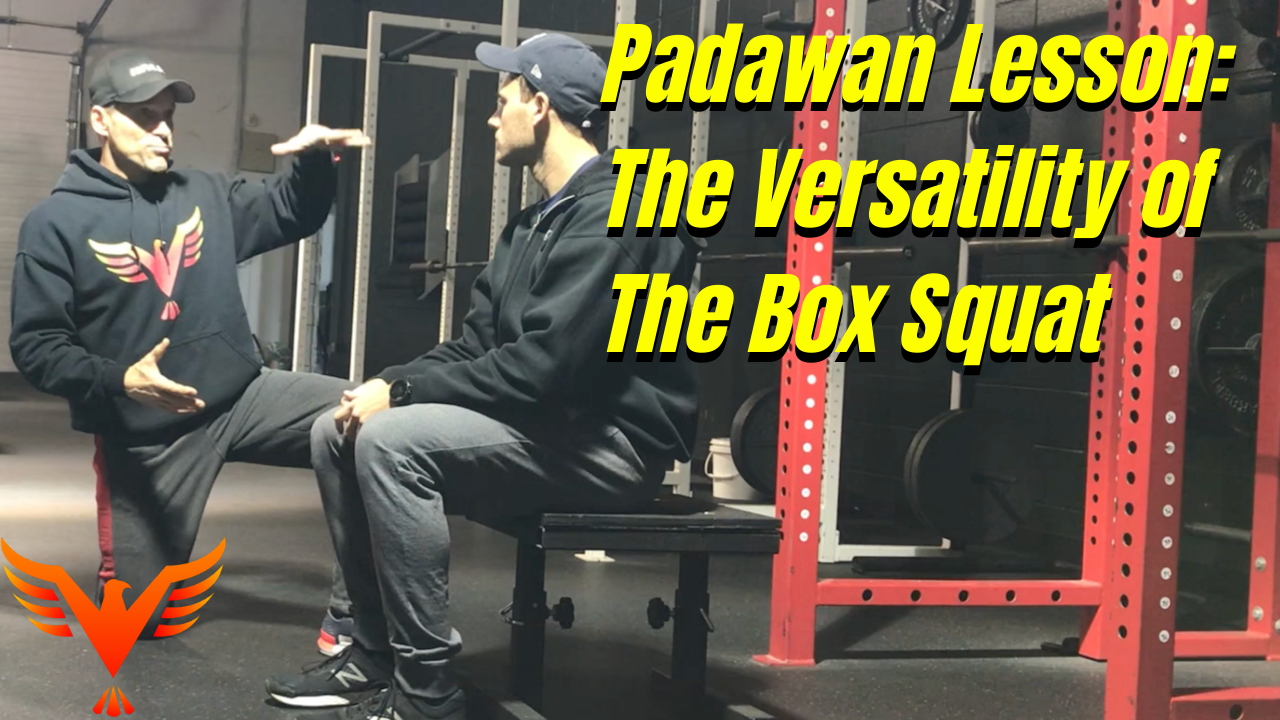
    Padawan Lesson: The Versatility of The Box Squat

    The box squat has been in the domain for powerlifting for quite some time. I’ll give the popularity of Louie Simmons and The Westside Powerlifting Methods credit for that.

    What we need to recognize is that the box squat is a much more versatile exercise if we can think differently.

    We can box squat to increase vertical jump.
    We can box squat to increase squat depth.
    We can box squat to rehabilitate the pelvic floor.
    We can box squat to substitute for plyometrics in some cases.

    In this video, I introduce the concepts that make the box squat such a useful exercise. I get the feeling that this will be a series because we use this exercise in so many different ways at IFAST.

    Find Bill:
    Instagram

    Facebook

    Twitter

    LinkedIn

  • Weekly Update and Q & A for November 3, 2019

    Weekly Update and Q & A for November 3, 2019

    Intensive IX is 11 days away!

    YouTube this week:


    Topics this week on Instagram:

    • The 16% Videos
    • Squat vs. Hinge and the SAID Principle
    • Delaying propulsion with pushes and pulls
    • Should you have surgery for meniscus injuries?
    • Narrow infra-pubic angle and squatting
    • Kettlebell arm bar to increase shoulder rotation

    This week’s Q & A questions answered:

    • Would love to hear you muse on heel/forefoot striking for distance running as it pertains to early/late propulsion. I.e. heel striking is typically labeled as “bad”, but seems to be a reasonable strategy to ensure we capture appropriate orientation of the hammy and pelvis. Midfoot striking seems to be “good”, but may lead to an overly concentric “push dominant” strategy.
    • What would I want to check/work on for R) handed pitchers that have a problem with missing the plate up and In or those that have a tendency to cut the ball glove side? Would this change as a lefty?
    • The pronation of glove hand let’s the front thorax compress, allowing the backside trunk to expand and rotate (in righty’s)? Also, how would you train optimal delay in pronation of back foot to keep as much of the stored energy as possible?
    • Does Narrow IPA mean a narrow ISA? Or how is the IPA measured?
    • Thank you for all the information you’ve been posting lately. I spent most of my of 20’s and 30’s training and competing in various strength sports. Now I’ve done a complete 180 and have been focusing on becoming the best golfer I can be. As someone with a wide ISA I think I understand that I need to focus on reestablishing eccentric orientation. Do you recommend doing this with exercises that can be loaded significantly like squats, presses, and chins while avoiding compressive exercises like deadlifts and bench press or should I focus more on low intensity reset type exercises?
    • I saw on Instagram some has asked about footstrike in distance running. Can you talk about how the model and propulsive phases apply to sprinting?
    • Do you have a info on a breathing pattern for Squats & Deadlifts (Sumo) – I’ve been dealing with SIJ instability for about a year now


    Find Bill:

    Instagram

    Facebook

    Twitter

    LinkedIn

  • Padawan Lesson:  Propulsion Concepts Applied to Cutting and Baseball Pitching

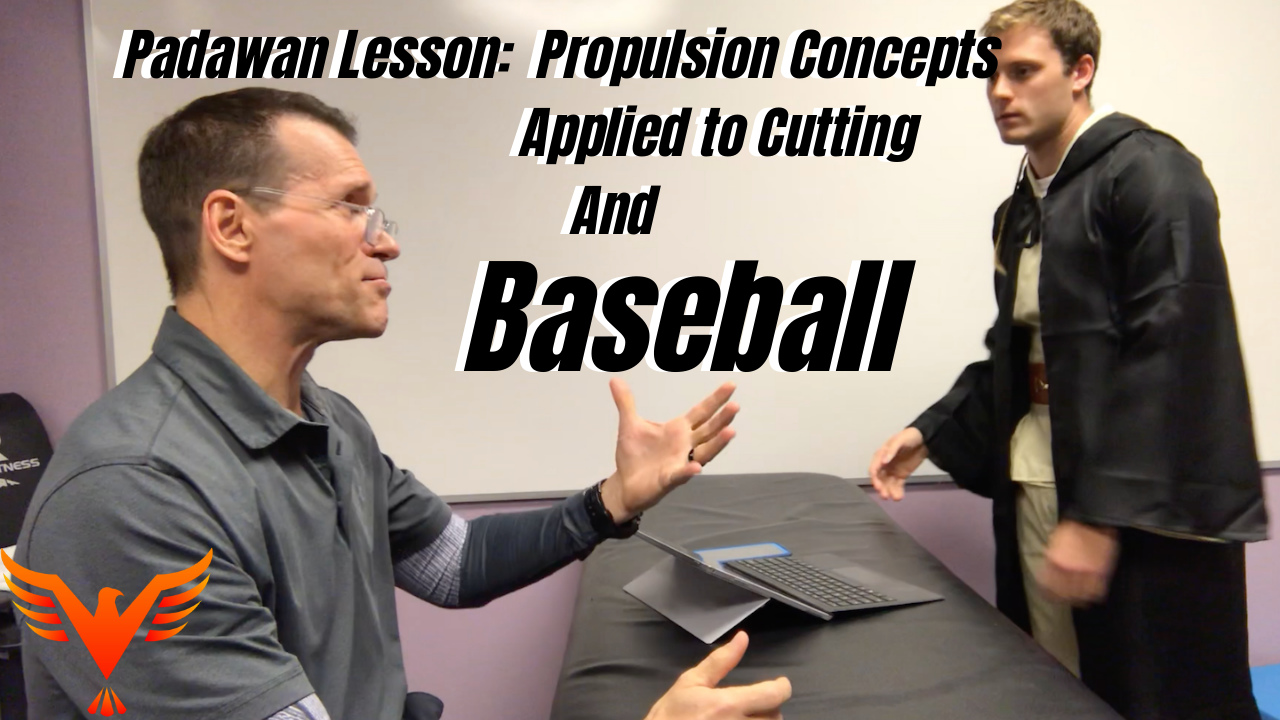
    Padawan Lesson:  Propulsion Concepts Applied to Cutting and Baseball Pitching

    We’ve been reviewing pressure and volume shifts throughout the pelvis that influence the pelvic diaphragm shape, position, and movement.

    In this video, we move up to the thorax to address the thorax movement, shape change, and airflow mechanics that occur with cutting to the side and a baseball throw.

    Just as we talk about propulsion, concentric and eccentric muscle orientation, and overcoming or yielding contractions in the pelvis, these same concepts apply to the thorax.

    Near the end of the video, we provide a visual representation of the thorax shape to help you understand the result of the conversation.

    If you have questions, please go to my instagram account and post them on the weekly Q & A request or email me at askbillhartman@gmail.com.

    instagram

    Facebook

    Twitter

    Linkedin


  • How to Perform a Scapular Decompression Mobilization to Promote Dorsal-Rostral Expansion

    How to Perform a Scapular Decompression Mobilization to Promote Dorsal-Rostral Expansion

    Compensatory breathing strategies may result in an increase in the muscular concentric orientation that compresses the dorsal-rostral thorax.

    Common findings include limited ipsilateral lower cervical rotation, ipsilateral shoulder flexion, and limited horizontal shoulder abduction. In many cases, a diagnosis of shoulder or rotator cuff impingement may be associated as well.

    If your client is unable to achieve normal muscular orientation to allow dorsal-rostral expansion and normal scapular upward and downward rotation for active shoulder, this manual technique may be beneficial to provide a window of opportunity via manually acquiring eccentric orientation of the dorsal-rostral musculature.

    This technique should not be painful at any time. In cases of positioning issues, this technique may also be performed in prone.


    Instagram

    Facebook

    Twitter

    Linkedin

  • The How, When, and Why To Do a Suboccipital Release Manual Therapy Technique

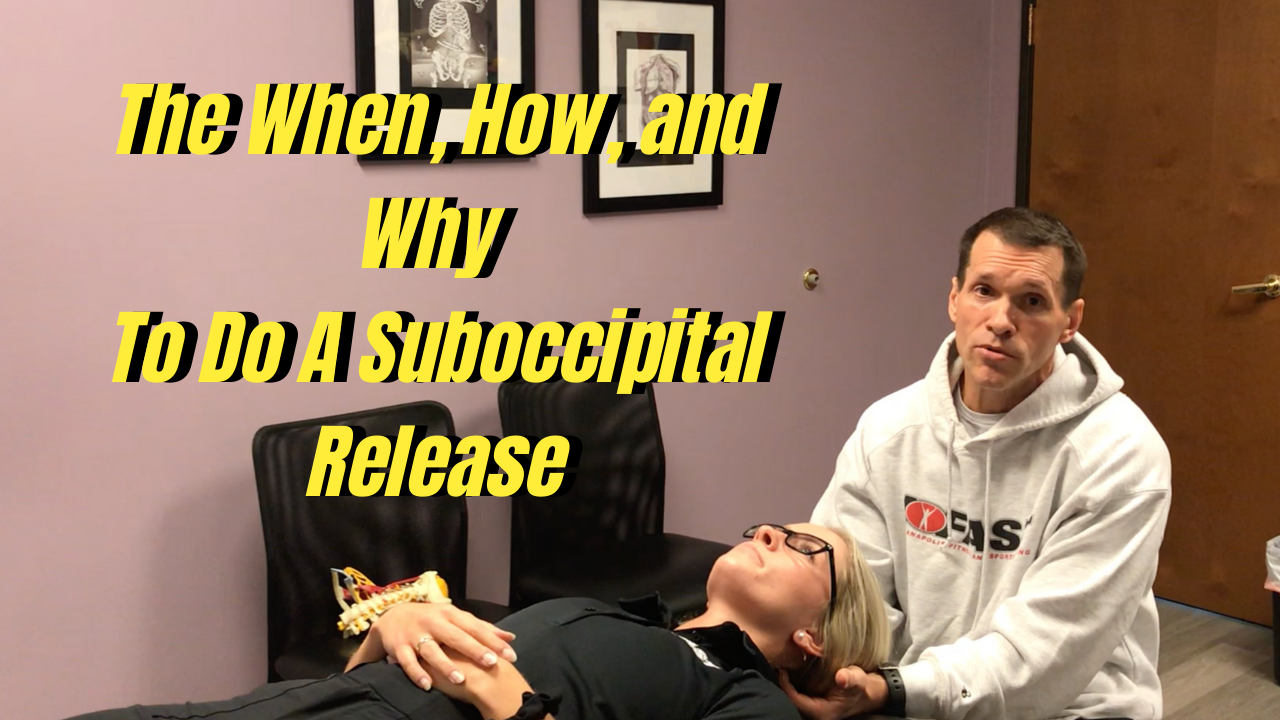
    The How, When, and Why To Do a Suboccipital Release Manual Therapy Technique

    There may be multiple factors a play as to why any manual therapy may be useful. To simplify the model of application, right or wrong, we can just look at it as moving fluids in and out of a space or promoting concentric or eccentric orientation of muscles.

    A suboccipital release is a commonly applied tactic for various purposes and various diagnoses. How and when to apply it has always been rather vague, but over time, I’ve put together some reasoning and signs as to when it’s best to apply.

    A distracting technique can be applied if you find the following signs:

    • Limited ipsilateral hip flexion
    • Limited ipsilateral shoulder flexion
    • Greater ipsilateral mandibular lateral trusion
    • Greater ipsilateral upper cervical rotation

    When these signs are unilateral, use a compressive manual strategy on the contralateral side as shown in the video.

    For symmetrical presentations with the limitations mentioned above, apply the distraction manual technique bilaterally.

    If you find excessive upper cervical rotation, limited lower cervical flexion, and bilateral hypermobility of mandibular lateral trusions, then apply the compressive technique bilaterally.


    Instagram

    Facebook

    Twitter

    Linkedin