How do you know when to hire a new employee?
Where do we get the best coaches in the industry?
IFAST (Indianapolis Fitness and Sports Training) in known for developing some of the best Strength and Conditioning and Fitness coaches and in the fitness industry.
Many of our interns and former coaches now hold positions in professional sports (NBA, MLB, and the NHL) as well as building their own successful businesses.
We’ve been quite lucky that almost all of our employees were developed through the IFAST Internship program.
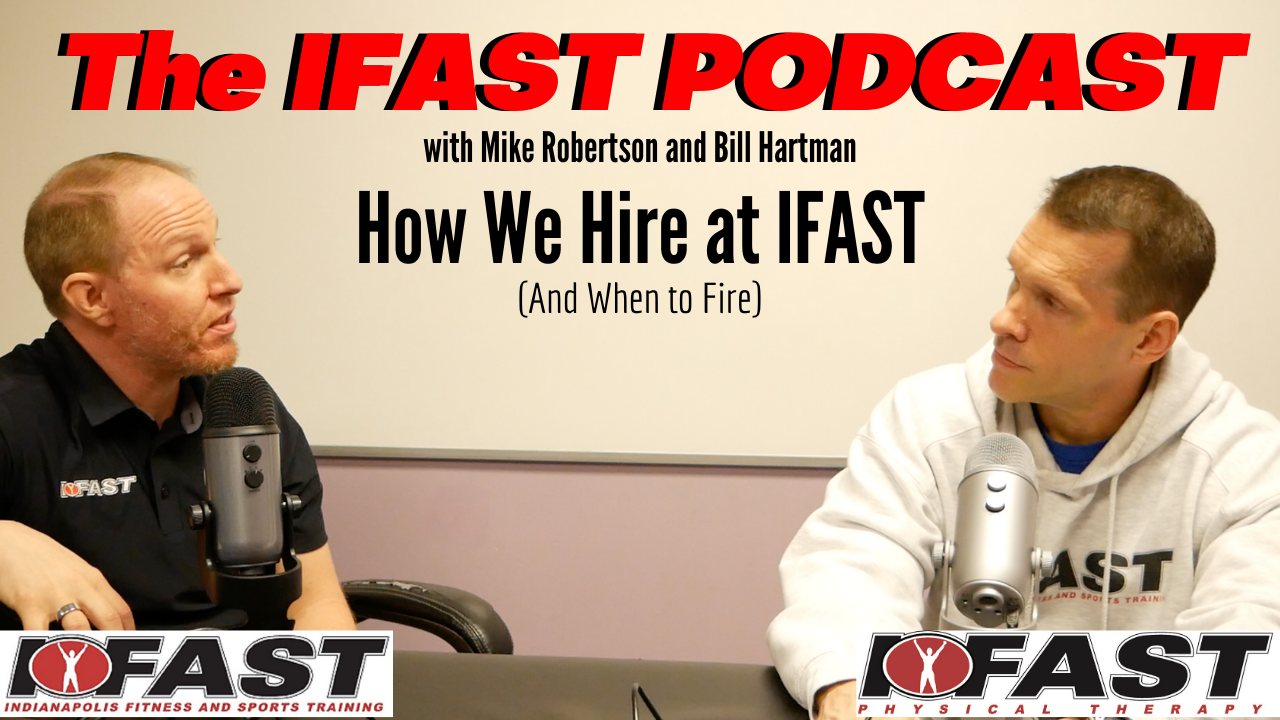
Here’s how we do it from hiring to, unfortunately, firing when it’s best for the IFAST culture.
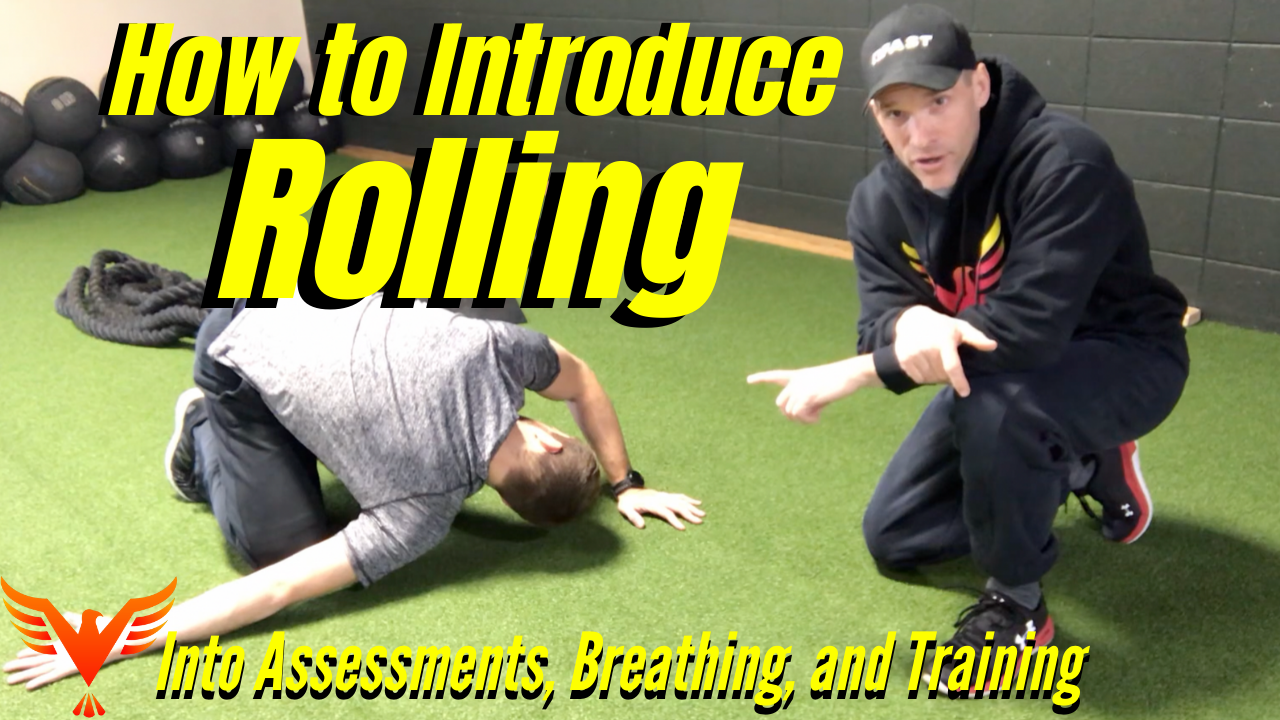
Rolling patterns are nothing new, but a perspective on what’s required to roll effectively can be used as part of your assessment process, rehab, or training.
By introducing effective rolling into a program, you can save a lot to time by taking advantage of rolling to restore and enhance mobility of thorax and pelvis. This also promotes improvements in shoulder and hip mobility as well as enhancing inhalation and exhalation capabilities for those that may be using compensatory breathing strategies that interfere with normal movement.
Please be careful as rolling patterns are not for everyone. Start simply. Progress gradually just as you would for any new activity.
The IFAST Internship is famous for producing some of the top professionals in professional sports including Major League Baseball, the NBA, and the NHL. Several are now successful business owners, and all but one IFAST coaches were former interns (our newest coach was actually one of our college athletes)
The IFAST Physical Therapy internship already has students scheduled for 2021.
A new internship class is selected each semester.
Give the podcast a listen and then submit your application to be in the next internship class.
The IFAST Podcast #1 with Mike Robertson and Bill Hartman – How to Start a Fitness Training Facility: https://youtu.be/NMJqdlBVIjI
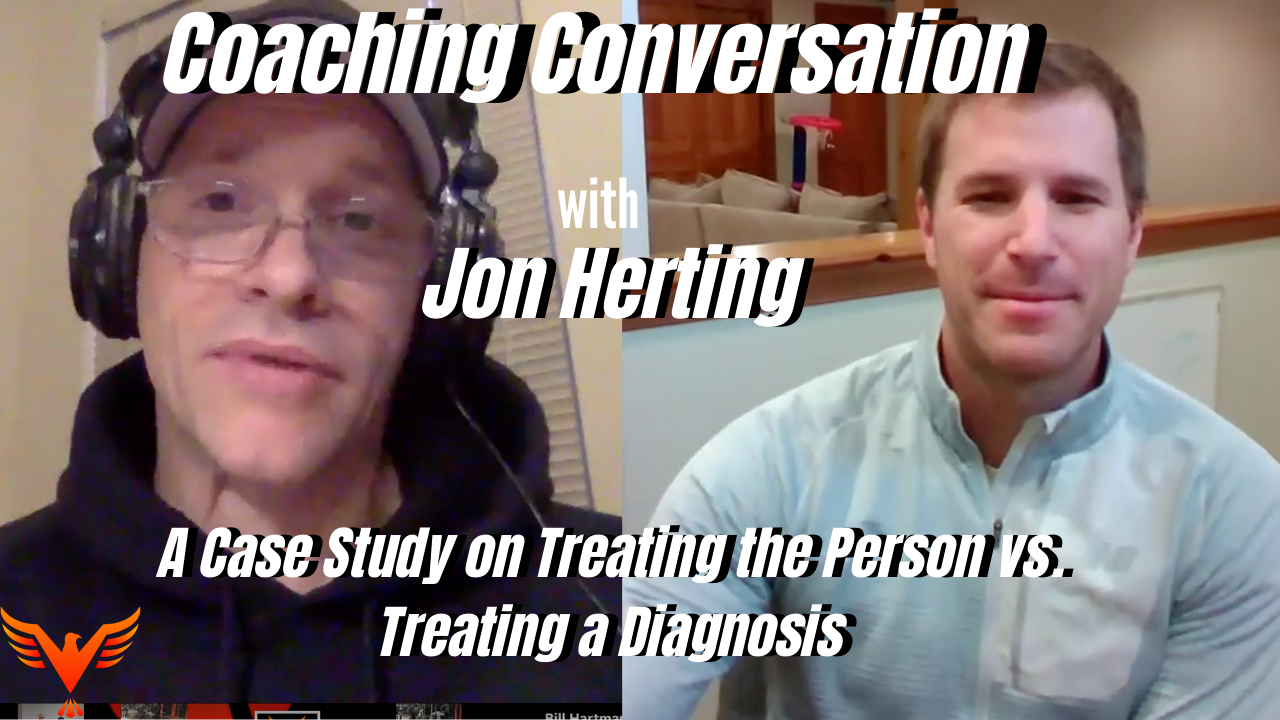
Bill Hartman’s Coaching Conversation with Jon Herting -Treating the person, not the diagnosis: https://youtu.be/lnXdGQ5Dw7w
This week’s topics on Instagram (@billhartmapt):
Elevation Training Mask opinions
Diagnosis Rolling (big YouTube video coming!)
Pain Science Resources
Shoulder Injury and Breathing Exercises
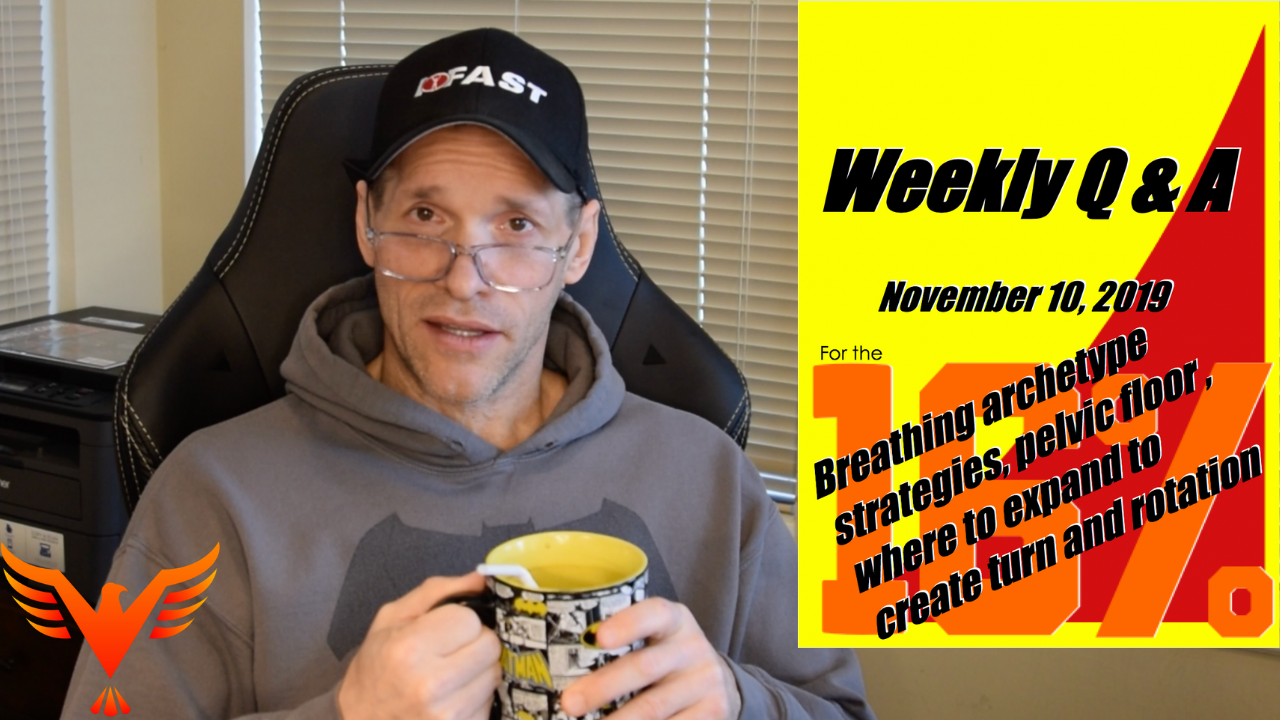
Daily video For the 16%…
This week’s Q & A questions:
Should I use the box squat at 90 degrees and coach and explode off the box with strong exhalation (exhalation/concentric strategy ) … Should I use a deeper box squat to promote more yielding and descended pelvic diaphragm ( inhalation strategy – more ER , flexion )
Is a compensatory inhalation strategy a strategy someone uses when they are biased towards exhalation ( compression)??
Do you think you could breakdown and explain in more detail what the exercise is doing to improve the shape of the thorax and pelvis? Would you perform on both sides?
I think you indicated that the current set up was suitable for a wide ISA. How would you change the exercise if you had a narrow ISA/inhalation bias?
I am also confused with foot position. If your feet supinate are you using an inhalation strategy? If you pronate are you using and exhalation strategy?
Can you also relate pelvic diaphragm mechanics to the cue “pretend like you are holding in gas” and when to use that cue?
If you cue ” hold in gas on the inhale does it activate pelvic floor? Shouldn’t you want pelvic floor to activate on the exhale…moving up like a piston with the thoracic diaphragm?
I was wondering what fields and areas of science would you recommend an entry-level PT to study and read. Additionally, do you have any advice for a new PT about to embark on this epic journey of starting in the field?
In your opinion should arm care be aimed at increasing dorsal rostral space? Instead of the typical I, T, Y’s. I liked your KB arm bar Video. Other ways you like to challenge the RTC for a baseball player.
From your last video, what does eccentrically yield the sternum mean? (Your talk on pronating the glove arm)
Training thoracic spine movement and is it worth doing in isolation?
What is the specific shape change of the pelvis you were attempting to create with the lateral drag video?
Can you clarify the shape change of the thorax associated with rotation and where we need yielding/overcoming contractions in order to have the most efficient strategy for something like a change of direction or pitch in baseball.
I heard you discussing on a video about catching a medicine ball throw, and how that teaches us to “catch our guts”? Could you go a little more into this? Where could someone read more about the forces produced by the ’guts’ or internal organs during movement?
Could you please talk about the relationship between the ability to expand the upper thorax and neck movement. I can’t figure out the exact relationship between thorax expansion and the ability to rotate the neck. thank you
Jon has evolved his treatment with the addition of concepts learned all the way back at The Intensive I with great success.
In this case study, Jon and I talk about how you can treat the person vs. trying to treat a diagnosis with a successful outcome. Even when the client has been treated by several other practitioners and methods or given a specific diagnosis it is recognizing what the patient needs and providing that through a more effective treatment model.
Find Jon Herting:
https://thetrainingroompt.com/our-team/jon-herting/
Jon’s Bio:
Jon Herting, PT, DPT, CSCS, ACSM CE-P, USAW is a dynamic clinician who has been involved in rehabilitation and strength and conditioning for 10 years and has built a reputation among athletes as a clinician who promotes quick results and optimal outcomes. As a Doctor of Physical Therapy and Certified Strength and Conditioning coach he has worked with athletes of all levels from adolescent to Olympic level and is a part of USA Weightlifting’s Medical staff. Jon believes in a holistic approach to rehab and believes that the ultimate goal of the rehab process is patient autonomy. He believes that there is not a distinct line between rehab and the training process.
Jon currently serves as adjunct faculty at Widener University and has developed several continuing education courses for clinicians and certified strength and conditioning professional based around assessment and rehabilitation techniques.