Author: Bill

  • How to Use a Lifting Belt as a Teaching Tool

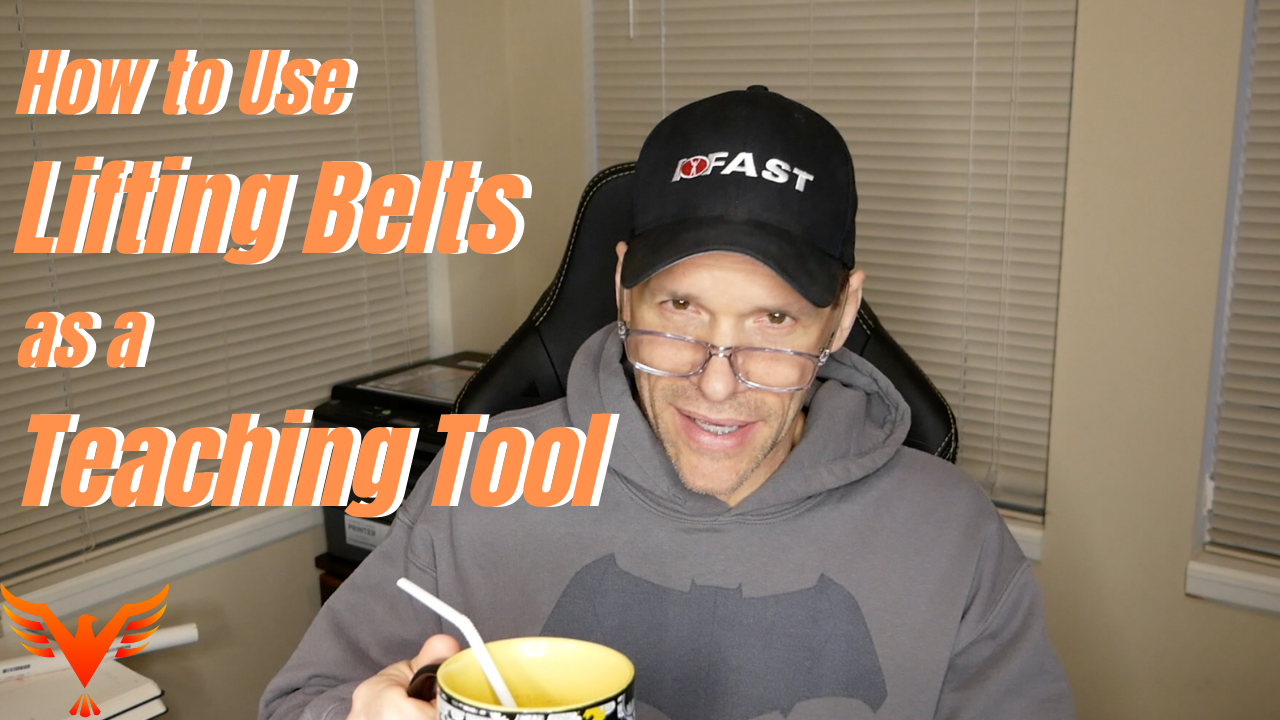
    How to Use a Lifting Belt as a Teaching Tool

    A weightlifting belt is most often worn to increase the amount of weight you can lift. However, there may be other uses as a teaching tool in some contexts.

    The intraabdominal pressure created by the lifting belt can provide cues to promote a concentrically-oriented pelvic diaphragm and create an overcoming contraction to enhance lower extremity strength/force production, improve jump landing mechanics, or restore pelvic floor control.


    #pelvicfloor #liftingbelt #billhartmanpt


    Find Bill:

    Instagram

    Facebook

    Twitter

    LinkedIn

  • Weekly Update and Q & A for November 24, 2019

    Weekly Update and Q & A for November 24, 2019

    I had to miss the Q & A last week because of The Intensive IX, so here are the links to this week’s YouTube videos:

    • The IFAST Podcast #2 – The IFAST Internship: https://youtu.be/kvCH0TtVak8
    • How to Introduce Rolling into Assessments, Breathing, and Training: https://youtu.be/YNvyF8BSMWA
    • The IFAST Podcast #3 – How We Hire at IFAST (and when to fire!): https://youtu.be/FXquBOCG04A
    • A Better Way to Measure Shoulder Flexion: https://youtu.be/jw1CmVIedB4
    • How to Measure the Infrasternal Angle: https://youtu.be/9WbPR4KIsQo
    • How to Mobilize the Ankle to Increase Propulsion: https://youtu.be/0LUNtUVL4Ow

    Topics on Instagram this week (@billhartmanpt):

    • Mixed grip deadlifts and body orientation
      How synovial joints work and development of arthritis
      Training to bias inhalation and early propulsion
      Daily videos for The 16%

    Upcoming Media! I was interviewed on The QB docs podcast with Drew Keil this week so be looking for that coming up in a few weeks.

    This week’s questions for the Q & A:

    • Could you elaborate on the “chessboard” which would result in a ton of hip IR with limitations in hip ER? It seems that most compensations result in some brand of anterior pelvic orientation which ought to bias the acetabulum into allowing for much more ER than IR (as in the case of a typical compressed wide ISA individual).
    • How does the anteriorly rotated innominate bias the femur into IR?
    • Question referring to ISA:
      After establishing wide/narrow what will be your next step.
      Also what is done with individuals who do not have wide nor narrow. You can say your 108.8. What strategies would be used there?
    • So if the ribs and can open and close as the arms go overhead, would that be an optimal ISA? And what would that mean movement-wise for the person?
    • In your shoulder flexion video, you had Nicki demonstrate a self-test. Is there a cluster of self-tests that would provide the most information for what needs restoration prior to or during training?
    • You have previously mentioned how you are keen to avoid treating clients like rehab clients if you can avoid it. You mentioned that if warm-ups were better this could address a lot of issues. I think you like the bear crawl – could you talk more about your warm-up exercise program?
    • Asymmetrical ribcage? Or am I just always turning right?
    • Would you subscribe to the idea that individual limbs move in a spiral movement trajectory only, or are there some straight line and diagonal influences as well as seems to be evidenced by Collagen lay down? How do internal fluid pressures influence this? Would it be incorrect to consider a concept of spiral muscular/Fascial loops that work like compression and tension-type fluid-filled springs?
    • You stated that although early and late propulsion look similar, the hip position varies between the two, how does the hip position change from early to late propulsion?


    #billhartmanpt #infrasternalangle #pelvicorientation

    Find Bill:

    Instagram

    Facebook

    Twitter

    LinkedIn

  • How to Mobilize the Ankle to Increase Propulsion

    How to Mobilize the Ankle to Increase Propulsion

    Pronation of the ankle/foot has often been expressed as something that may be unfavorable. Shoes to limit pronation have been constructed to attempt to reduce pronation.

    The reality is that a pronated foot is a propulsive foot that we require to produce force into the ground to prevent collapse. It is merely excessive pronation that we want to avoid, manage, or control.

    Athletes and clients with the perception of weak ankles, ankle instability, or ongoing ankle pain often have difficulty recapturing the position of the propulsive foot. In this video, I’ll show you a “Big Bang” ankle and foot mobilization to improve calcaneal eversion, subtalar pronation, and midtarsal mobility while simultaneously feeding back positional information to the lower extremity and axial skeleton.


    #pronation #propulsion #billhartmanpt


    Find Bill:

    Instagram

    Facebook

    Twitter

    LinkedIn


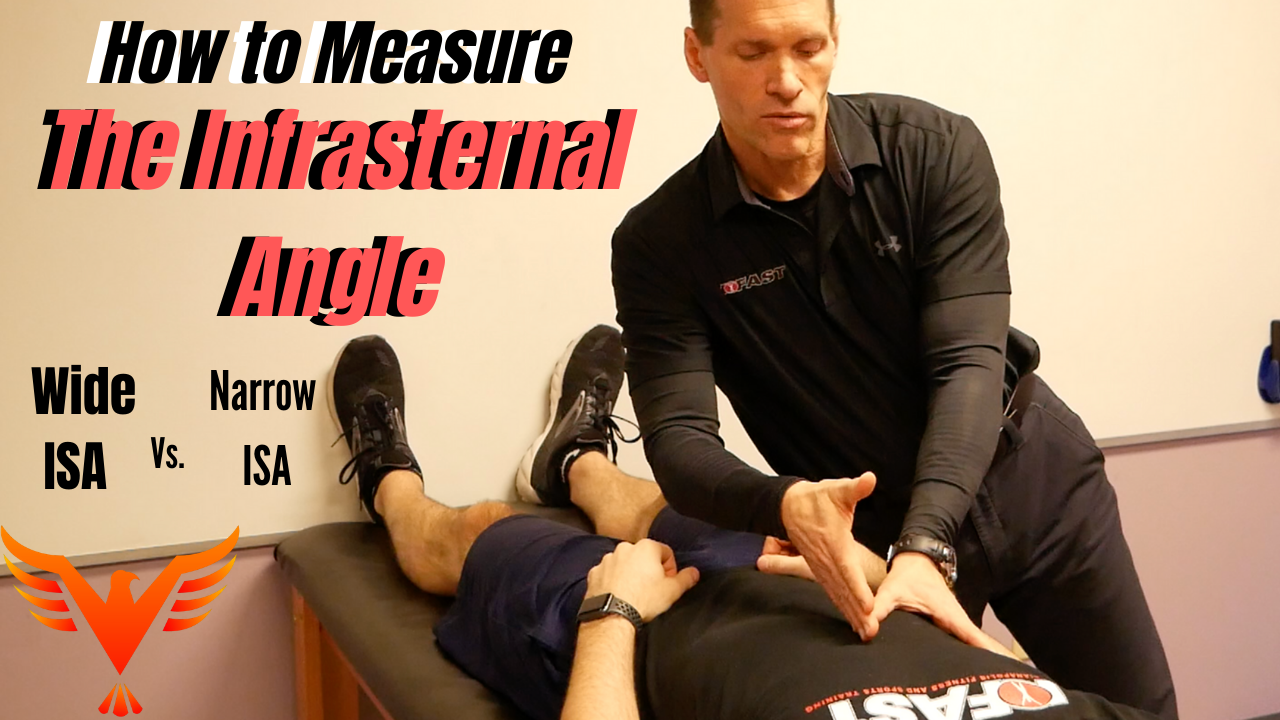
  • How to Measure the Infrasternal Angle to determine a Wide ISA or a Narrow ISA

    How to Measure the Infrasternal Angle to determine a Wide ISA or a Narrow ISA

    The infrasternal angle is a useful test to determine breathing compensatory strategies that influence movement capabilities. Your ability to measure it effectively will provide understanding and guidance as to the best interventions to impact a client’s movement.

    Find Bill:

    Instagram

    Facebook

    Twitter

    LinkedIn


    #infrasternalangle #wideISA #billhartmanpt

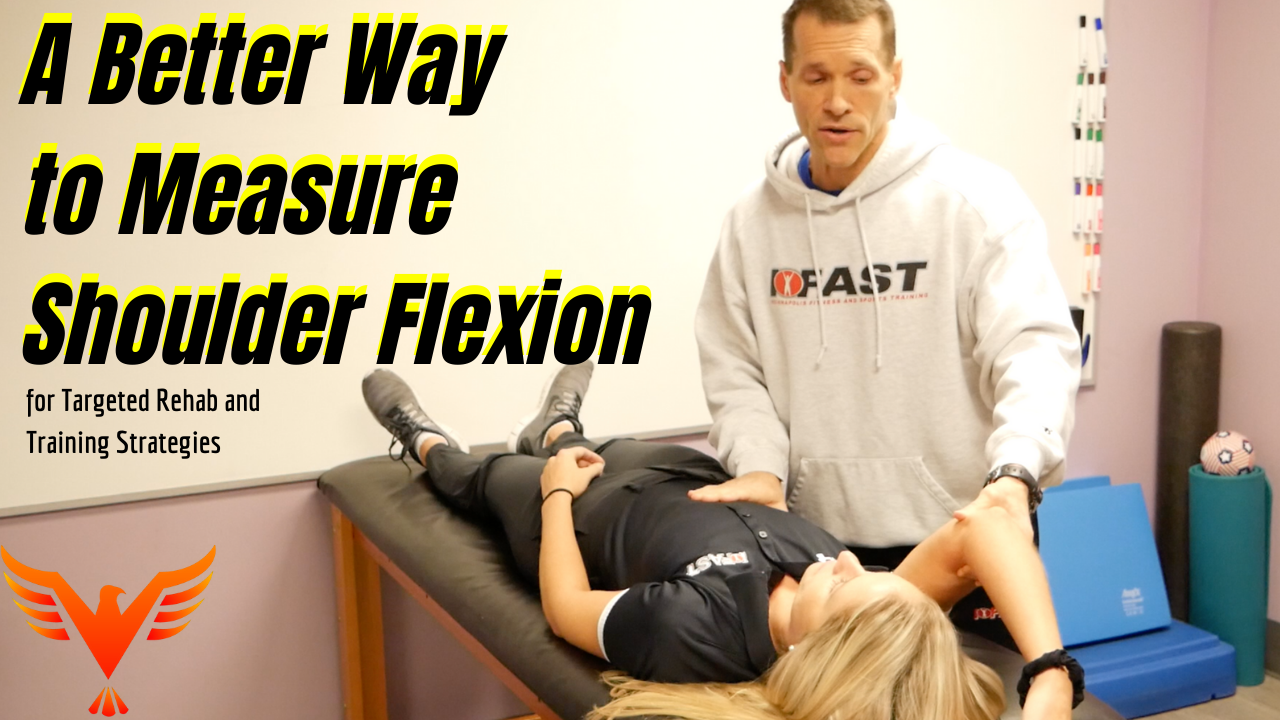
  • A Better Way to Measure Shoulder Flexion to Target Rehab and Training Strategies

    A Better Way to Measure Shoulder Flexion to Target Rehab and Training Strategies

    Thinking in straight planes like shoulder flexion is misguided.

    We need to think differently about how movements are achieved.

    Shoulder flexion involves a great deal of shoulder rotation. If this rotation is not accounted for in the measurement, you’ll fail to succeed quickly and you may even select the wrong shoulder rehab exercises or strategy that you need to resolve your client’s issues.

    Controlling shoulder rotation during your shoulder flexion measure and understanding the relative motions required for shoulder flexion makes all the difference.

    If you don’t have a treatment table or someone to measure your shoulder flexion, I’ve included a simple shoulder flexion self-test you can use to gauge your own progress.

    askbillhartman@gmail.com

    Find Bill:

    Instagram

    Facebook

    Twitter

    LinkedIn