I’ve also been busy on Instagram for The 16% and posted a few IGTV segments, so check those out.
Topics for this week’s Q & A:
In your model are the terms compressed and expanded used mutually exclusive or are they used in combination to describe strategies at different segments? Or does it depend if discussing “normal” vs compensatory strategies?
Could you discuss ideal / non compensatory foot position, and its relationship to inhalation and exhalation in different phases of gait and how, or if, we can potentially change compensatory foot mechanics with more proximal structures?
Is there a good resource for the lay person on what sinovial fluid is, and how the body utilizes it? Great video on knee flexion, I’m just wondering how my body could make such a mistake on where to store the fluid that would cause such discomfort.
Thoughts on psychedelics laying new road maps for altering neurotransmitters most commonly taken routes, similarly allowing us to alter our relationship with gravity and atmospheric pressure to reinstate a preferred posture?
Who or what are the 16%?
What are your thoughts on training barefoot and when, if, and how it could be practical?
What books or publications would you recommend that would aid in a deeper understanding of disordered breathing patterns/rib cage compensatory strategies and their effect on distal mechanics, and gait mechanics and how it relates to early to late propulsion?
Would you give your thoughts on strategies to improve the front rack position for FS/cleans as it relates to the ER/IR/ER arc? Do you think it would be more effective to train this position specifically, or utilize shoulder above and below it where you are more biased into ER to begin with and drive it from there?
What’s the best place to learn from you!?? Products, courses, just keep listening?
Bill can you discuss the position of the spine when you are trying to bias movements towards IR or ER. Should we be putting the spine into some extension as well? Are we just trying to keep the cylinder stacked? Does the IR/ER ideas refer to just the limbs?
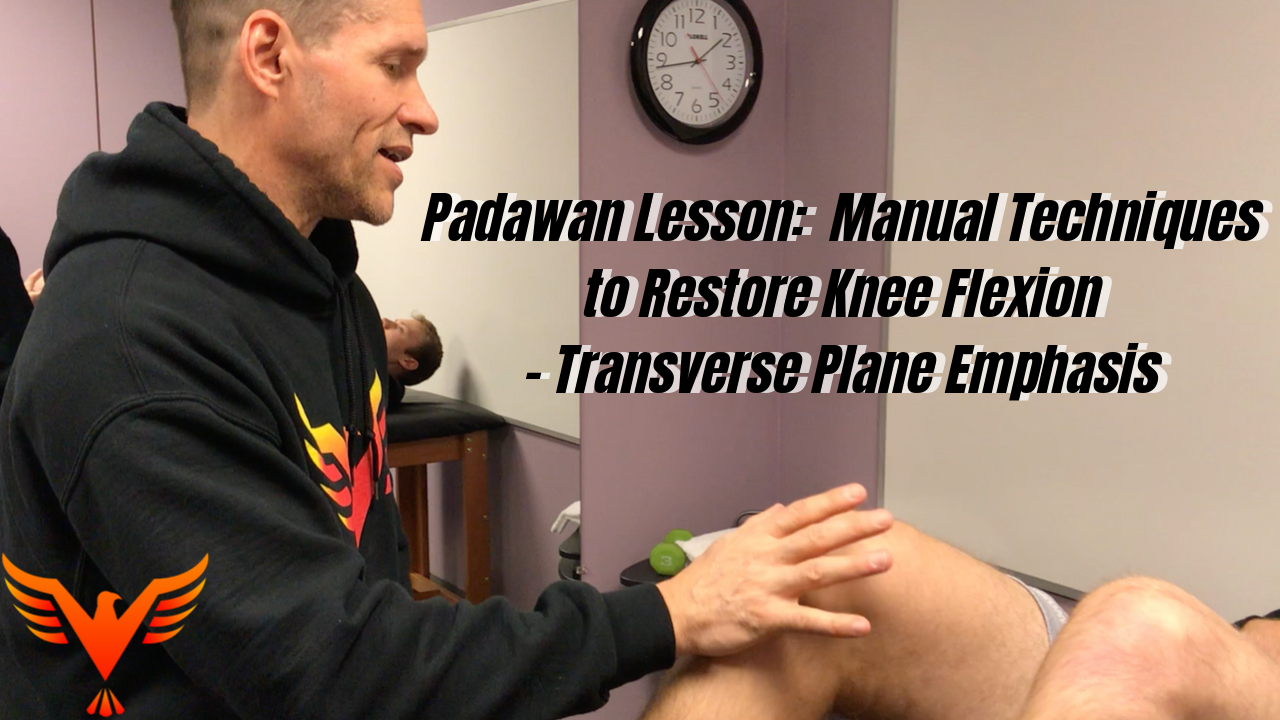
Manual techniques follow the same fluid mechanics as movement.
The knee is not a hinge, but rather has condyles that pivot on the tibia. The shift of synovial fluid supports the tibial rotation. simply compressing the knee harder into flexion is rarely the best solution. If the client cannot access this strategy independently, then we can provide a mechanical and sensory input to improve the outcome. Then it’s a matter of providing a learning opportunity to maintain the improved movement options. Strategy is more important than tactics.
Changing the way anyone thinks is a challenge. Emotions are attached to beliefs. Emotions determine how we make decisions. Many feel that there’s nothing wrong with the status quo and are satisfied with their current level of performance, knowledge, understanding, and outcomes.
Some will want to argue that the following perspective is merely an attempt to be contrarian. It is to a degree. That’s how we change and improve. We have taken many things at face value and accepted them without question. I am choosing to ask questions and think differently. This has served me well so far. I don’t fear being wrong.
Many different models are successful. We are often successful but for different reasons than what is reality because we can never really tell why a patient improves or a client moves better.
You don’t need to make any changes to what you do. If you’re one of the satisfied, then please click away to your next favorite website and enjoy.
If you want another perspective to consider, please read on. Even in doing so, you don’t have to agree. I encourage your consideration. Perhaps a useful conversation will arise that makes us all better at what we do.
My personal goal is to think differently about movement in the hopes that it provides an ever improving model of a complex human.
Consider an alternative perspective.
It may be a small jump for some, and a large leap for others. Still, others may not even consider this a change, and I am merely restating something with different words. So be it.
Thinking differently about movement.
In the hopes of learning about themselves, men began dissecting the deceased somewhere around 3rd century BC (Anat Cell Biol. 2015 Sep; 48(3): 153–169.). I’m sure they did so in a less formal manner prior to that. We are a curious species.
Lacking depth of understanding, I can imagine they looked at the cadaver as they would any other mechanics apparatus of their time. We learn many things via analogy so it stands to reason that the physics of the time predominated when they saw a hardened skeleton with its apparent endless array of levers and pulleys. Surely, we move just like the pulley system we use to get water from the well.
This view is still taught today from the most elementary to the highest level of anatomical study. But, I think, it is a limited view that prevents an even more fascinating solution to how we move on earth.
A Simple Rule Repeated
Go back through what we think is our evolution to the first single supercell.
It was basically a bag of water with some stuff in it.
We are no different.
We are mostly water and some stuff (mostly collagen).
In my mind, we are just battery-powered, water-filled, anti-gravity, helically-oriented, morphing meat suits.
If this is true, then we must behave based on the physical rules of how water and stuff interact in response to all the forces we are exposed to such as gravity, forces inside our body, and forces imposed upon us.
The Wacky Waving Inflatable Tube Man and The First Strategy
I think we have more in common with the Wacky Waving Inflatable Tube Man than levers and pulleys. Actually, levers in the human system would be quite destructive, but that’s a discussion for another time.
The tube man moves against gravity via an expansive strategy provided by its inflation.
You do the same every time you breathe in. This is strategy number one. It is an efficient and low energy solution to dealing with gravity and all the other forces imposed on us.
As the fluid volume of air expands the thorax, the entire body experiences fluid shifts and pressure changes that alter our physical shape against gravity. Just watch yourself in the mirror as you take the deepest breath possible, and you’ll see what I mean. You’re now a cousin of the Wacky Waving Tube Man.
Now shut off the fan that fills the Wacky Waving Tube Man. He no longer has an expansive capability to hold himself against gravity and he collapses. He still has some air inside, but it’s just not enough for him to expand and lift himself up. If only, he had muscles that could squeeze the remaining air, he’d stay upright.
Your Morphing Meat Suit and the Second Strategy
I’m assuming you’re still standing in front of a mirror watching your body change shape as you breathe. You can see the collapse of your thorax as you exhale. You actually lose height as you breathe out just like the tube man, but you don’t collapse as he does.
Why not?
Unlike the tube man, we have a second strategy.
We have muscles. Muscles change shape. Just flex your elbow and contract your biceps and revel in your awesomeness but pay attention to the shape of the muscle. It changes. It squeezes.
The other muscles of your body do the same every time you breathe out so you don’t collapse under the load of gravity.
You compress the fluids (water and the remaining air) inside your body to hold your position against gravity or to move through space. This is your second strategy. It takes more energy in comparison to your expansive strategy, but it does work quite well.
Just recall the last time you pulled a heavy deadlift or put a barbell on your shoulders for a heavy squat. You squeeze the body to maintain position under the forces of the load. This is obviously an amplification of the strategy, but it is the same.
Expand or Compress
To simplify.
You have two strategies of movement against the forces imposed upon you.
You can expand by increasing the fluid content of your body (air in) to maintain shape, to acquire position, and to move.
You can compress the fluid content of your body to maintain shape, to acquire a position and to move.
Coordinate the compressive strategy with the expansive strategy to promote fluid shift effectively and you can move through space in a number of different ways. Our ability to manipulate shape allows us to walk, run, lift heavy things, throw, jump, bend and twist.
Restricting or overemphasizing one strategy over another can raise performance in a very specific way to do ever-amazing things or it can be a source of limitation that imposes load on the system that can be quite unpleasant and perpetuate unrecoverable changes.
If you ask me, this is more interesting than talking about levers and pulleys.
Weekly Update: The Padawan has been asking some great questions, so we put them on video for you to help you improve your understanding and to help you formulate your own questions.
I’ve also been busy on Instagram and posted a few IGTV segments, so check those out.
The Intensive VIII week begins on Monday. I’ve also selected attendees for The Intensive IX, and they have been notified. If you applied and didn’t receive an invite this time, keep trying. I can only accept 8 attendees at a time to keep it… well… Intensive.
Topics for this week’s Q & A:
Could you please go over the why for the technique for the suitcase carry; taking big steps and swinging the free arm. When does a person “earn standing” with resets?
What prereqs are necessary for a standing reset to be successful?
How does your interaction with a patient change as you transition them from being a rehab client to a training client?
Why is speed always the last thing we layer onto an activity when we’re teaching a new movement?
Is there an instance where we’d want to increase speed initially to aid in learning?
We talked about how learning anatomy out of context. But if we can potentially encounter an infinite number of situations then wouldn’t serve to better learn the principles of anatomy in school?
Could you “expand” upon why the all four position, or maybe the way I was doing it (with my arms directly under my shoulder blades), would compress me in the space between the shoulder blades instead of expanding me? In quadruped, I have used the cues of “exhaling and reaching your sternum away from the floor”, then “inhale and fill that new space”. I probably get more of a “turtle shell” on my mid-back instead of where I need it. It is very hard to feel anything stretching in that upper posterior area. Can you provide any suggestions? Am I coming at it wrong and need to think of this differently?
Is there a correct position of the pelvis relative to the base of support that would be considered ideal for a squat?