
Tag: infrasternal angle

  • Weekly Update and Q & A for November 24, 2019

    Weekly Update and Q & A for November 24, 2019

    I had to miss the Q & A last week because of The Intensive IX, so here are the links to this week’s YouTube videos:

    • The IFAST Podcast #2 – The IFAST Internship: https://youtu.be/kvCH0TtVak8
    • How to Introduce Rolling into Assessments, Breathing, and Training: https://youtu.be/YNvyF8BSMWA
    • The IFAST Podcast #3 – How We Hire at IFAST (and when to fire!): https://youtu.be/FXquBOCG04A
    • A Better Way to Measure Shoulder Flexion: https://youtu.be/jw1CmVIedB4
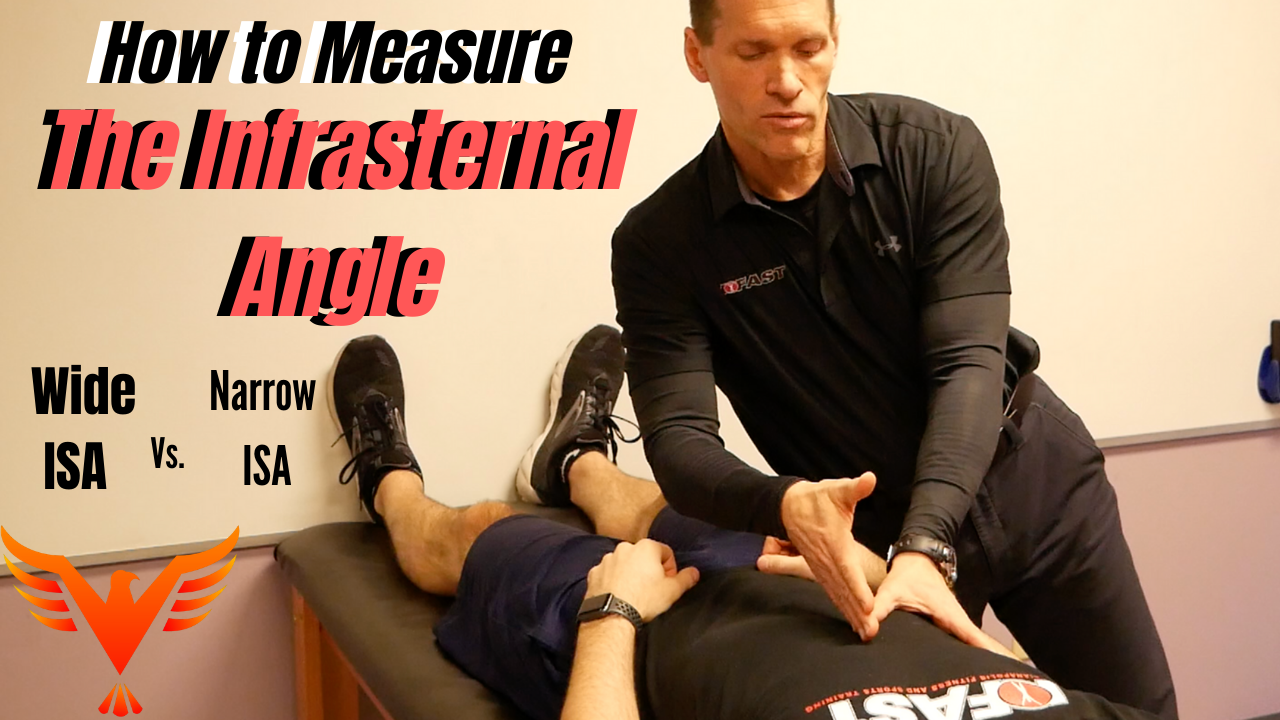
    • How to Measure the Infrasternal Angle: https://youtu.be/9WbPR4KIsQo
    • How to Mobilize the Ankle to Increase Propulsion: https://youtu.be/0LUNtUVL4Ow

    Topics on Instagram this week (@billhartmanpt):

    • Mixed grip deadlifts and body orientation
      How synovial joints work and development of arthritis
      Training to bias inhalation and early propulsion
      Daily videos for The 16%

    Upcoming Media! I was interviewed on The QB docs podcast with Drew Keil this week so be looking for that coming up in a few weeks.

    This week’s questions for the Q & A:

    • Could you elaborate on the “chessboard” which would result in a ton of hip IR with limitations in hip ER? It seems that most compensations result in some brand of anterior pelvic orientation which ought to bias the acetabulum into allowing for much more ER than IR (as in the case of a typical compressed wide ISA individual).
    • How does the anteriorly rotated innominate bias the femur into IR?
    • Question referring to ISA:
      After establishing wide/narrow what will be your next step.
      Also what is done with individuals who do not have wide nor narrow. You can say your 108.8. What strategies would be used there?
    • So if the ribs and can open and close as the arms go overhead, would that be an optimal ISA? And what would that mean movement-wise for the person?
    • In your shoulder flexion video, you had Nicki demonstrate a self-test. Is there a cluster of self-tests that would provide the most information for what needs restoration prior to or during training?
    • You have previously mentioned how you are keen to avoid treating clients like rehab clients if you can avoid it. You mentioned that if warm-ups were better this could address a lot of issues. I think you like the bear crawl – could you talk more about your warm-up exercise program?
    • Asymmetrical ribcage? Or am I just always turning right?
    • Would you subscribe to the idea that individual limbs move in a spiral movement trajectory only, or are there some straight line and diagonal influences as well as seems to be evidenced by Collagen lay down? How do internal fluid pressures influence this? Would it be incorrect to consider a concept of spiral muscular/Fascial loops that work like compression and tension-type fluid-filled springs?
    • You stated that although early and late propulsion look similar, the hip position varies between the two, how does the hip position change from early to late propulsion?


    #billhartmanpt #infrasternalangle #pelvicorientation

    Find Bill:
    Instagram

    Facebook

    Twitter

    LinkedIn

  • How to Measure the Infrasternal Angle to determine a Wide ISA or a Narrow ISA

    How to Measure the Infrasternal Angle to determine a Wide ISA or a Narrow ISA

    The infrasternal angle is a useful test to determine breathing compensatory strategies that influence movement capabilities. Your ability to measure it effectively will provide understanding and guidance as to the best interventions to impact a client’s movement.

    Find Bill:

    Instagram

    Facebook

    Twitter

    LinkedIn


    #infrasternalangle #wideISA #billhartmanpt

  • Weekly Update and Q & A for October 27, 2019

    Weekly Update and Q & A for October 27, 2019

    Videos on youtube this week:

    Last week’s Q & A:  https://youtu.be/IEoZmlJ2UUI

    Bill’s Instagram

    • Evaluate in context
    • Dorsal-rostral expansion
    • How to measure hip flexion
    • Peterson step-ups and low back RFESS
    • Eccentric orientation activities IG story saved.

    This week’s Q & A Topics:

    • Bill can you give a quick overview about the propulsion phases?
    • Can you explain eccentric/concentric orientation? Is it different than short or long
    • How do you approach rehabbing a core muscle injury/sports hernia?
    • Advice on handling current DPT education knowing that much of it is no longer best practices.
    • Bill, are you seeing any differences in typical presentations from the neck up (e.g. c-spine, jaw, palate) in people with an inhalation bias vs exhalation bias?
    • Is there any case where you would try to cue a position or action from the neck up along with biasing IR/pronation/extension/dorsiflexion or ER/supination/flexion/plantar flexion?
    • If the squat is an expansion pattern and deadlift is a compressive pattern, does that mean someone with a narrow infrasternal angle would generally be better at a squat since they have more space to expand into, or would they generally be better at a deadlift since they are already in an exhaled/compressed position?
    • Can you expand a bit more on what is going on in the suitcase carry you posted on your recent video? I tried it myself with a test-retest of internal and external rotation of my shoulders and there was a significant improvement.
    • Why a squat is an eccentric/expansive/inhale biased movement pattern?
    • Why a hinge/press/pull are concentric/compressive/exhale biased movement patterns?
    • Apart from the squat what are the other (if any) key expansive movement patterns – single leg/single arm movements?
    • if someone has an anteriorly rotated pelvis that is in an exhaled position with limited hip mobility, what will be the first step/exercise that you would use?
    • What is the most impactful philosophical book you have read?

    Find Bill:

    Instagram

    Facebook

    Twitter

    LinkedIn

  • A Dynamic Infrasternal Angle Test Example

    A Dynamic Infrasternal Angle Test Example

    A lot of practitioners misunderstand the value and assessment of the infrasternal angle (ISA) to determine effective interventions that restore respiratory variability.

    While you’ll see changes in the extremes of wide vs. narrow ISA with effective interventions, physical structure determines the appearance (wide or narrow) and the available compensatory strategies that may be limiting movement capabilities.

    Here is a pretty good example of a dynamic ISA.

  • Infrasternal Angle Video Demonstration

    Infrasternal Angle Video Demonstration

    Here’a brief video to show how the lower rib cage and diaphragm interact to alter the appearance of the infrasternal angle.