Derek Hansen was in Indy for the NFL Combine recently. I was honored to join him for breakfast and a chat. Here’s what we talked about.
Derek Hansen was in Indy for the NFL Combine recently. I was honored to join him for breakfast and a chat. Here’s what we talked about.
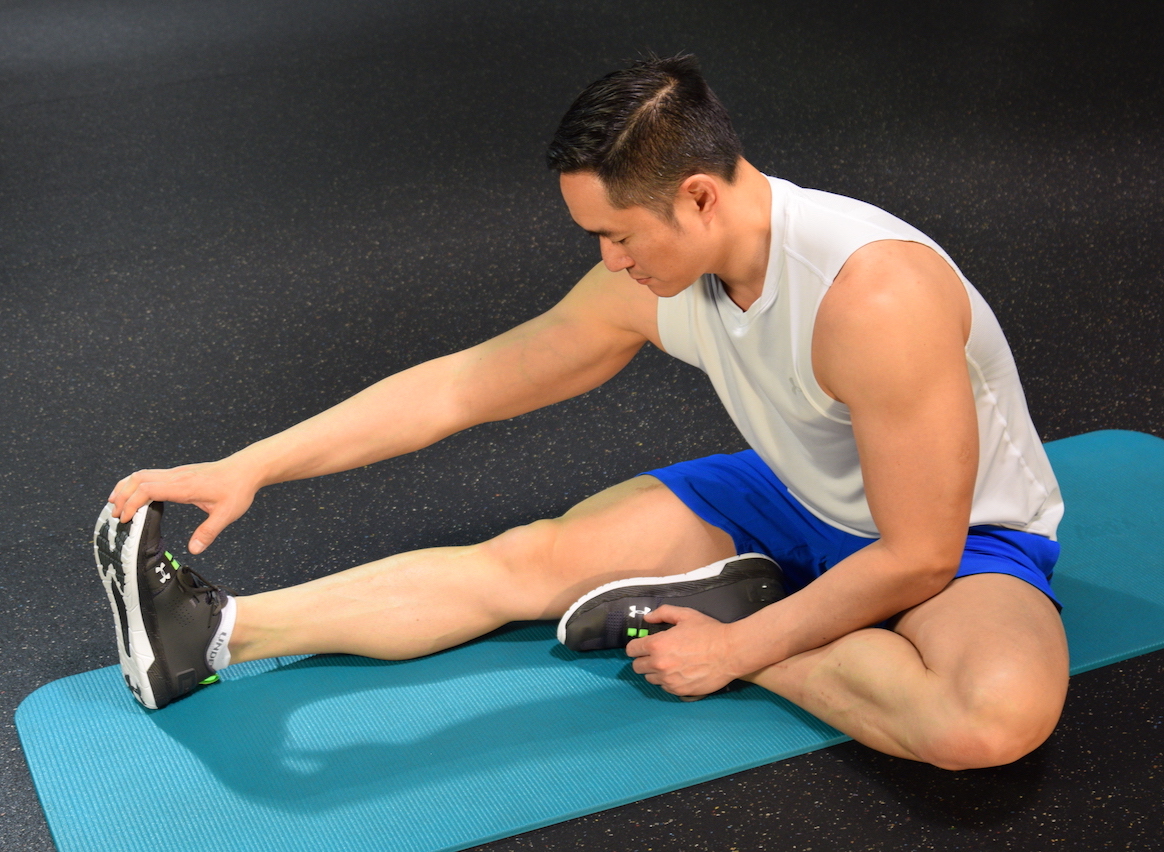
Question: Hi Bill, what’s your thoughts on post workout stretching?
Me: I don’t really have any.  If you like it, do it. If you don’t, you don’t have to.
Follow-up Question: Would you say there are “real” benefits to post workout stretching such as recovery? It seems this is a controversial topic.
Me: Research is interesting in this regard. There are indications that post-workout stretching reduces peripheral blood flow, but it will increase blood flow AFTER you stretch (called a rebound effect). there’s also an indication that you’ll increase HRV/parasympathetic nervous system (PNS) influence as a long-term side effect over a period of days/months. (https://www.researchgate.net/publication/274517864_Acute_Changes_in_Autonomic_Nerve_Activity_during_Passive_Static_Stretching)
Here’s where I think there may a few catches.
What positions are you using to perform stretching?
We have research to support the fact that body postures influence the autonomic nervous system with certain postures being more favorable in producing a parasympathetic response (https://www.ncbi.nlm.nih.gov/pmc/articles/PMC2222597/)
How do you breathe when you stretch?
Manipulating breathing rhythm and duration of inhalation vs. exhalation can alter the autonomic nervous system as well. Even breathing through different nostrils (left more parasympathetic) can influence it. (https://cialoslowem.files.wordpress.com/2016/03/2006-physiology-of-longpranayamic-breathing-neuralrespiratoryelementsmayprovide.pdf)
What are you thinking when you stretch?
The human neocortex has the ability to anticipate and simulate the world around us. Depending on what you’re thinking, you can influence our normal stress response and shift the autonomic nervous system favorably toward parasympathetic dominance or sympathetic. (See Why Zebras Don’t Get Ulcers)
In what environment are you when you stretch?
Simply perceiving an exercise environment as more favorable may alter performance and mood. This, in turn, will alter your autonomic nervous system. (https://digitalcommons.ithaca.edu/cgi/viewcontent.cgi?article=1133&context=ic_theses)
Increased PNS activity/HRV appears to be a sign of more robust health. That’s all good. The question becomes is it just transient based on some of the above conditions? Does a short period of parasympathetic reactivation promote better health?
Want a fast way to drop heart rate to demonstrate how we can manipulate autonomics? Simply submerge your face in a bowl of cold water for about 30 seconds.
video courtesy of Adam Loiacono
So is it really the stretching or is it the fact that peripheral sensations due to position are the influence or is it the breathing or is it the environment? Maybe it’s the effect of increasing pain tolerance (an effect of stretching) that improves HRV/PNS effects. The brain works in mysterious ways.
I suppose the bottom line is…
If you like to stretch, then stretch.
If you don’t, don’t.
There are many ways to gain the proposed beneficial effects as indicated by research.
As you progress in your ALL GAIN, NO PAIN program, you will eventually need to learn to manage yourself against gravity in standing. Here’s a reset you can use in the gym as progress from supine and prone resets. Special thanks to gym beast Dave Rappa, winner of best back in the business award!
We all regularly experience failure in regard to helping patients make changes necessary to impact their behavior to achieve a successful outcome. This is a discussion that may provide some answers as to why we fail and how to improve from these failures.
The outward appearance of making any kind of change in our behavior or our bodies tends to seem overwhelmingly complex.
The countless details and decisions of when should I do “X,” what is best, what is right, and what is wrong is paralyzing resulting in default behavioral strategies that are incoherent with our goals.
It’s like going to a restaurant and looking at a menu that is reminiscent of a coffee table book. There are main dishes of all kinds. Which one should you choose? How hungry am I?
Your waitress offers you a choice of side dishes and you stare at the list of 20 possibilities.
Should you choose broccoli, a sweet potato, or a salad? If you go with the salad, what kind of dressing? Do you want that on the side?
Unable to determine the best course of action from the complexity of decisions to make, you default to french fries.
Let me offer you a potential savior.
Complexity arises from simple rules repeated.
In nature, one only need to appreciate the branching of a tree. The simple rule of growth for a tree is to split one branch into two branches. Rinse and repeat. Over time, the result is what appears to be this incredibly complex structure reaching upward and spreading out in all directions.
When nature finds a simple rule that works, it uses it over and over. In humans, we actually use the same “tree” rule in regard to how we form the vast network of blood vessels in the body. One artery splits into two and so on to such a degree that each cell of your body gains access to the nutrient rich blood supply.
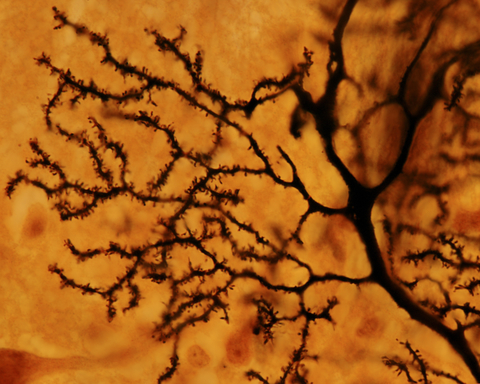
The dendrites emanating from your nerves to allow communication with other nerves follow this rule too. One branch splitting into two and so on. In fact, this process is called dendritic arborization (arbor = tree, see the neuron photo above).
Perhaps it’s the constant need to produce information to sell and the innate desire to seek novel information that has led to confusion and paralysis by analysis. Instead of identifying the simple rules upon which success is based, we sift through an ocean of minutiae that makes little to no impact.
What’s the best time to exercise? (Simple answer: Whenever you can or whenever you like to exercise)
Which supplements should I take if I exercise? (Simple answer: a select few, if any, if you eat a variety of foods. See Chapter 11 in ALL GAIN, NO PAIN for guidance of simple supplement rules)
How much sleep do I need? (Simple answer: Whatever is best for you. You can figure out how much you need with the simple process explained in Chapter 13 of ALL GAIN, NO PAIN)
What exercise is best for [insert name of muscle here]? (Simple answer: exercise all of your muscles with a variety of exercises)
You’ll find that most of the answers truly are quite simple or up to your preferences and individuality.
I wrote ALL GAIN, NO PAIN to solve the problem of this seemingly endless complexity. Once my patients and clients had resolved their pain issues or recovered from an injury, they had many concerns and questions as to what to do now that they felt good again.
I gave them simple rules.
1. Understand a little about how your brain and body work
2. Follow the No Pain Principles that promote rest, recovery, and resilience to stress
3. Follow the All Gain Principles that promote better movement and resistance to stress
Simple rules… repeated.
Your comeback starts today.