Tag: infrasternal angle

  • Q & A for The 16% – Determining Sacral movement vs. Pelvic Orientation (aka pelvic tilt)

    Q & A for The 16% – Determining Sacral movement vs. Pelvic Orientation (aka pelvic tilt)

    Grab your @neurocoffee and get ready for today’s Q & A!

    How are you dissociating sacral movements to pelvic orientations, and how do they show up in testing? What are your key indicators and where do you see common compensations around expected limitations based on their initial ISA/IPA presentations?

    My second question is based on when you refer to being in an inhalation vs exhalation state. Where do you commonly refer to when you say someone is in exhalation vs inhalation?

    In this video:

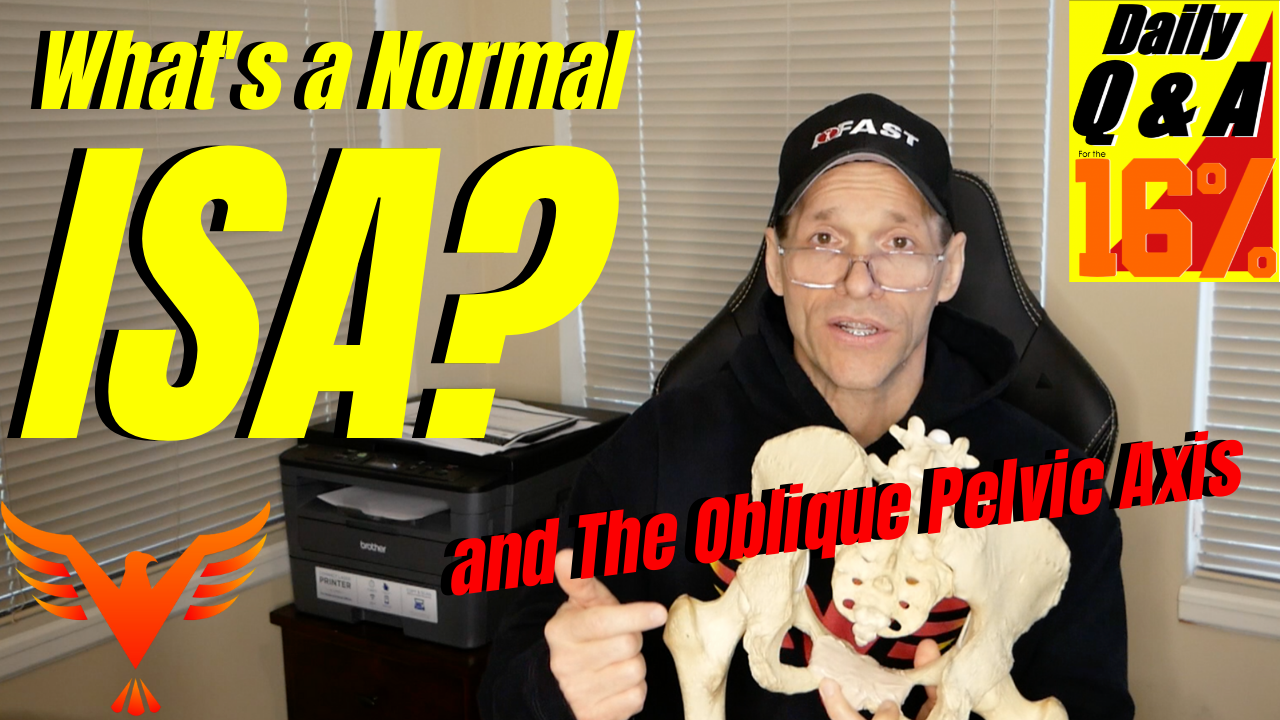
    I explain the difference between relative motion within the pelvis and absolute position change via orientation.

    I then explain what I mean by those with an exhalation bias or an inhalation bias based on physical structure of the body such as the infrasternal angle and helical orientations.

    #pelvictilt #breathingexercises #billhartmanpt


    Find Bill:
    Instagram

    Facebook

    Twitter

    LinkedIn

  • Q & A for The 16% – The Why, When, and How of Inversion Exercises

    Q & A for The 16% – The Why, When, and How of Inversion Exercises

    Question:

    From Vik:
    Can you discuss the utility of inverted positions? What compensatory strategies is this position useful for? What are some examples of inverted activities you use or have used?

    In this video: I offer a perspective on why you would want to invert a patient, client, or athlete, when inversion is a useful intervention, and how you can do it effectively.

    #inversion #breathingexercises #billhartmanpt


    Find Bill:

    Instagram

    Facebook

    Twitter

    LinkedIn

  • Q & A for The 16% – Axial Iterations and Treating with Biomechanics vs. The Biopsychosocial Model

    Q & A for The 16% – Axial Iterations and Treating with Biomechanics vs. The Biopsychosocial Model

    Q & A for Today…

    From Zhang:
    You’ve talked about iterations in previous videos.  Does the posterior sacral area behave the same as the dorsal rostral area? Does the lower thorax behave the same as the posterior outlet, and, the anterior pubic area behaves the same as the sternum?

    From Johnny:
    as clinicians, what are some ways to reconcile the biopsychosocial aspects of the pain experience with all the fun physics applications regarding patient encounters, assessment and treatment decisions? It seems like the rehab industry is divided and it has to be one style of treatment or the other.

    In this video:
    I answer the question as to whether there is any benefit to looking at the pelvis like we look at the thorax. I also clear up the battle between the biomechanical model vs. the biopsychosocial model. ‘Nuff said!

    #biopsychosocial #infrasternalangle #billhartmanpt

    Find Bill:

    Instagram

    Facebook

    Twitter

    LinkedIn

  • Q & A for The 16% – What do you do with a “normal” ISA? A right pelvic anterior tilt?

    Q & A for The 16% – What do you do with a “normal” ISA? A right pelvic anterior tilt?

    I have two great questions for today’s Q & A.

    Jason’s question:

    I recently saw a client with a 90 degree ISA that did not move at all. Additionally, he had: – Limited shoulder and hip and IR and ER – Limited shoulder and hip flexion – No true hip hyperextension – Lordotic posture Given these measures, I found it difficult to decide whether I should treat him as someone compressed or expanded, as these measures seem conflicting.

    Matt’s question:

    I’m wondering what your thought process would be for recapturing normal conditions for someone with a pelvis which is anteriorly tipped on one side only? (Wide ISA presentation also) The right hand Ilium seems to be pulled forward by the illiacus, and the lower rib cage on the same side looks to have an Oblique that’s not pulling the ribcage down fully during exhalation.

    In this video:

    I explain you can get the ISA to start moving and what you need to do after that. I give Matt a list of exercises to address a pelvis tilted on an oblique axis.

    #pelvictilt #infrasternalangle #billhartmanpt


    Find Bill:

    Instagram

    Facebook

    Twitter

    LinkedIn

  • Highlights from My Q & A with Strength Faction

    Highlights from My Q & A with Strength Faction

    https://billhartmanpt.com/
    https://infastonline.com/
    @strengthfaction

    Q & A topics:

    -Training older clients like me… intensity is easy, recovery is hard
    -What is the infrasternal angel and what does it mean?
    -Wide ISA’s need to exhale
    -How to write a book or a blog that resonates
    -Assessments in the gym instead of on the table
    -Reforming your model -What does posture mean?
    -Why do I not talk about or use the term neutral spine.

    #strengthfaction #infrasternalangle #billhartmanpt


    Find Bill:

    Instagram

    Facebook

    Twitter

    LinkedIn