Tag: concentric orientation

  • Bill Hartman’s Weekly Q & A for The 16% – December 29, 2019

    Bill Hartman’s Weekly Q & A for The 16% – December 29, 2019

    Bill Hartman’s Weekly Q & A for The 16% – December 29,2019

    00:12
    This week on BillHartmanPT.com: What words are meaningful to your client: https://billhartmanpt.com/question-what-words-are-meaningful-to-your-clients/

    This week on YouTube: Bill Hartman’s Weekly Q & A for The 16% – December 22, 2019: https://youtu.be/IE0mjTb1z7g
    Why you should individualize exercise prescription: https://youtu.be/WOvkZ36Fmys

    This week on Instagram (@billhartmanpt):

    Finding your solution to your pain
    The importance and value of teaching to learn
    The evolution of your continuing education
    Videos for The 16%

    This week’s Questions:

    2:12
    Could you explain what’s going in the pelvic floor when someone is doing a goblet squat in the rack with a band attached to the J hooks so when they squat down it’s almost as if they are bouncing off of it! I’m curious about the intent behind it, when it’s appropriate, and why?

    4:28
    With your help to date my ‘hingey’ squat is looking more squatty (thanks!). To date, I have been using light front bar squats (circa 50kg including the bar). When the SSB arrives I am looking to increasingly load my squatty squat. My understanding is that targeting a squatty squat will help improve my movement variability by helping me become less exhale biased & compressed. But I also understand that improving force production may re-enforce my compressed exhale biased axial skeleton. In light of this – using the SSQ bar is there a limit to how much I should progress the loading of a squatty squat?

    7:35
    Does the ability to abduct the femur = pelvic diaphragm eccentrically orienting and the pelvic outlet closing. And the ability to adduct the femur = pelvic diaphragm concentrically orienting and pelvic outlet widening. Are these useful tests to figure out where someone is limited in the propulsion arc?

    9:41
    What typically is the underlying driver in an individual that presents with excessive femoral IR in standing static posture and excessive bilateral “leg whip“ when running? Is it typically an excessive anterior orientation of the entire pelvis vs a sacral nutation with Ilial ER?

    11:37
    What tests do you use to determine if you have a compressive strategy? -what is being compressed? -what is the result? 1

    3:26
    Do you believe the entire human body is a literal tensegrity structure? Or are there just some elements of tensegrity within the system. Read something interesting about how the spine can’t be a literal tensegrity structure because the compression elements do not actually cross each other.

    16:26
    I am very fascinated with pelvic mechanics at the moment and was hoping you could offer some good resources to learn from as well.

    #pelvicfloor #tensegrity #breathingexercises

    Find Bill:

    Instagram

    Facebook

    Twitter

    LinkedIn

  • Concentric vs. Eccentric Orientation and Yielding vs. Overcoming Muscle Action

    Concentric vs. Eccentric Orientation and Yielding vs. Overcoming Muscle Action

    Thinking differently about muscle contraction.

    Traditionally, we think of muscle contractions as concentric, eccentric, and isometrics. Isometrics as they are described probably don’t exist.

    If we look at muscle contraction as a moment in time, we can determine their orientation as well as the direction of the action.

    From my perspective, this is a more useful representation of what’s actually happening with less confusion. This perspective also allows a more concise determination of needs that leads to more effective and targeted exercise prescription.

    #billhartmanpt #concentric #pelvicdiaphragm


  • Manual Therapy to Increase Shoulder Flexion and Cervical Rotation

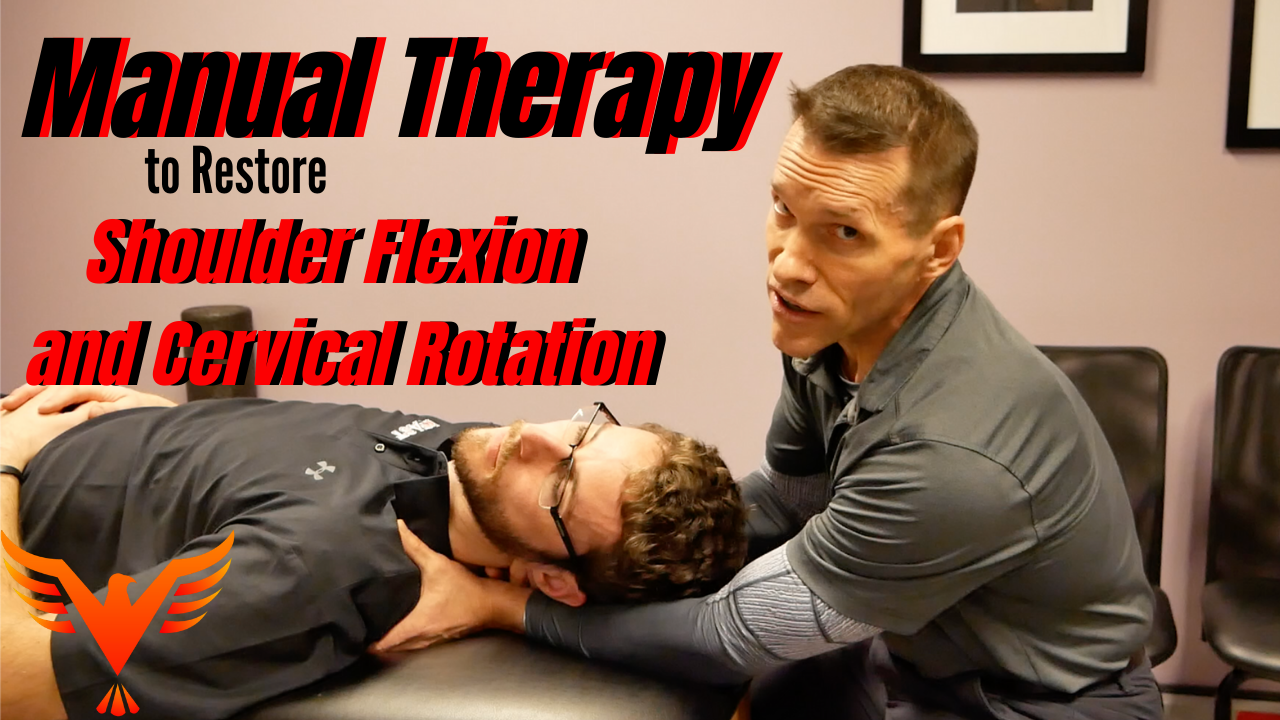
    Manual Therapy to Increase Shoulder Flexion and Cervical Rotation

    In the heterarchy of treatment, I rarely do manual therapies as my first line of intervention.

    Patients and clients always achieve more when they can create changes themselves and learn self-management. When a local influence is needed that the client cannot produce themselves, then manual therapy may be useful to create an opportunity to make the change easier for the client to accomplish.

    The triangle formed by the clavicle and the scapula with the acromion as the apex (affectionately referred to as The Camporini Angle which we named after my current Padawan) can represent the degree of compressive strategy applied to the upper thorax by the superficial musculature.

    If the dorsal-rostral thorax is compressed, this will limit the client’s ability to complete true shoulder flexion and to recapture lower cervical rotation. This is a very easy, gentle scapular mobilization that reduces the compressive strategy, expands The Camporini Angle and restores shoulder flexion as well as lower cervical rotation.

    #scapularmobilization #manualtherapy #camporiniangle

    Find Bill:

    Instagram

    Facebook

    Twitter

    LinkedIn

  • Bill Hartman’s Weekly Q & A for The 16% – December 8, 2019

    Bill Hartman’s Weekly Q & A for The 16% – December 8, 2019

    Links to this week on YouTube:

    This week’s topics on Instagram (@billhartmapt):

    • Thoracic outlet syndrome and breathing
    • When to prescribe the prone Y exercise
    • Get Client Buy-in Who can you help get better?
    • Simple self-test for breathing
    • Understanding secondary consequences of programming
    • Is there such a thing as muscle weakness?
    • Simple cervical mechanics
    • For The 16% videos

    This week’s Q & A questions:

    • How does the orientation of the pelvis influence movement options available at the ankle? I am curious to your thoughts, specifically in the context of speed skating where top performs express a high degree of ankle flexion.

    • When addressing elbow orientation via training, what is the deciding factor when choosing between an elbow flexion or extension driven activity? A specific case would be someone who has an ER’d humerus and pronated forearm You’ve touched on the fact that we don’t really know why people feel better after interventions. It makes sense to me that even if interventions are “specific” there are many things going on simultaneously. I was wondering if you could elaborate on this and possibly your own evolution regarding this. You recently shared a case on Dorsal-Rostral expansion helping improve a patient’s height and “corrected head forward posture” and although we aren’t necessarily after improving static positions posture, I’m wondering how expanding into the upper back would not result in more kyphosis / HFP?

    • When you say the word “orientation” are you saying that relative to the spine? If so, why do you use the spine to establish orientation?

    • When you say “inhaled” versus “exhaled” are you talking about ribs and spine or just spine? If both ribs and spine then why is a narrow ISA inhaled if their lower ribs are in an exhaled position?

    • Have you ever seen cases where the pelvis appears to have changed “orientation,” but the ribs still appear to be wide or narrow? If so, can you explain the mechanism behind that and how you continued treatment from there?

    • When treating someone, are there different criteria or things that you look for when deciding what to target first – ribs, pelvis, spine, etc?

    • I have heard the concept of “tissue quality” being discussed with many typical musculoskeletal “diagnoses”. Do we as physical therapists and fitness professionals have a good definition of what good tissue quality is?

    • What would you say are the biggest factors that impact somebody having an inhaled and exhaled skeleton (Wide Vs Narrow ISA)? How much does a person’s injury/training history come in to play? I can understand how strength athletes develop wide ISA’s but was wondering if there are any sports/events that can impact to position of the axial skeleton.

    • I work with some volleyball players and I am trying to work on their squat using the box squat. Given that they do not get much lower than about a ¼ squat when they jump in their sport, what depth should I focus on getting them to? 90o? Just above 90o? Should the goal be to get 120o of hip flexion to give them full excursion of their respiratory cycle? Defensive/back row players sometimes end up in a deeper squat position when digging the ball, should it be lower for them?

    • In the “How to Measure Infrasternal Angle” youtube video, I got the interpretation that a Wide ISA is indicated by an opening/increase in angle with inhalation without a legit closing with exhalation and that a Narrow ISA is indicated by a lack of opening with inhalation. Is this correct?

    • Does the resting measurement of the ISA give us any useful information and if so what does it tell us and how does it guide intervention?

    • Does the outcome of the ISA test (wide vs narrow) effect the prescribed exhalation or exhalation strategies (sigh vs pursed lip) used during prescribed interventions?

    • What do you do when an ISA is dynamic one side or one side tests as Wide and the other narrow?

    • If someone measures with a ISA of 60 degrees at rest and it widens but doesn’t completely close is this person considered a wide ISA? Would be considered to be an exhaled axial skeleton biased individual?

    #infrasternalangle #wideISA #boxsquat

    Listen on iTunes

    Find Bill:

    Instagram

    Facebook

    Twitter

    LinkedIn

  • Power Training from the Inside-out

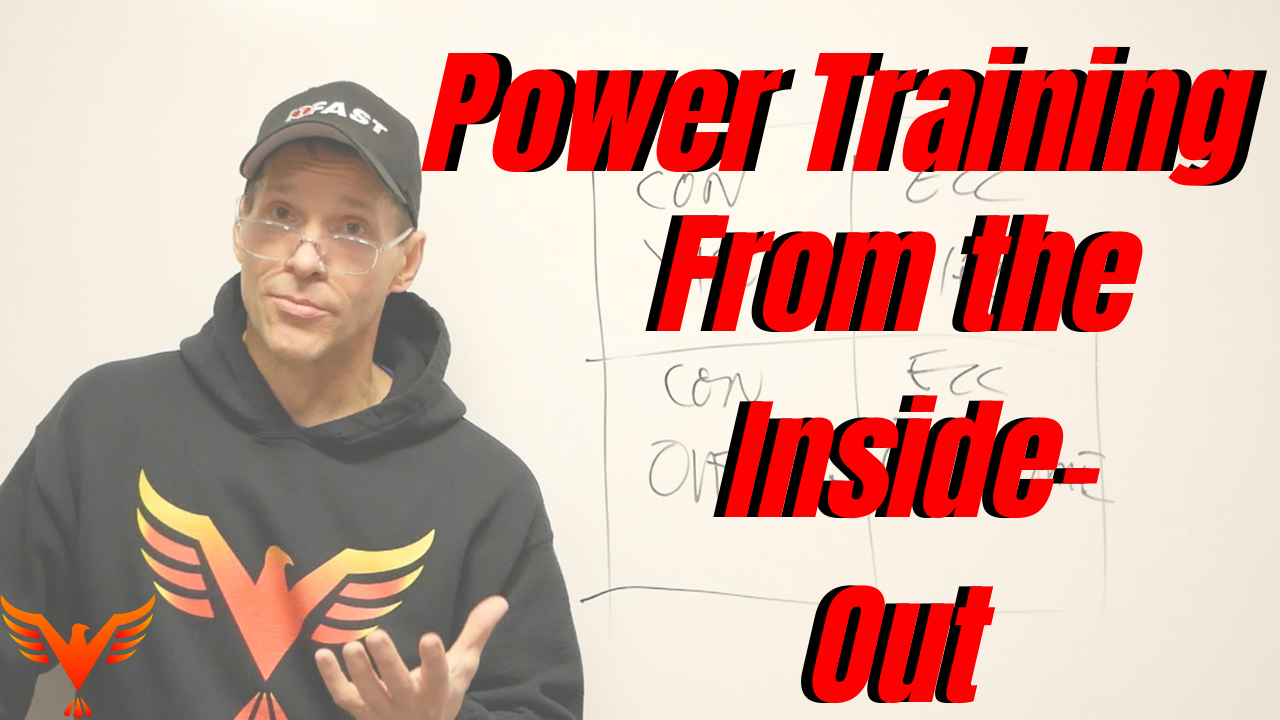
    Power Training from the Inside-out

    Power training is often measured or expressed as a product of our extremity movement.

    The reality is that if we are unable to move or control the forces produced internally, then our power production in any movement is compromised.

    We can manipulate exercises to emphasize different aspects of internal force management, but we need to look at how muscles work in a different way.

    Here, I introduce the concepts of seeing muscle position in a moment in time as concentric or eccentric orientation, and whether the muscles are overcoming or yielding. Post your questions in the comments.

    #powertraining #overcoming #yielding

    Find Bill:

    Instagram

    Facebook

    Twitter

    LinkedIn