Category: Professional Mentorship

  • Bill Hartman’s Weekly Q & A for The 16% – December 22, 2019

    Bill Hartman’s Weekly Q & A for The 16% – December 22, 2019

    Bill Hartman’s Weekly Q & A for The 16% – December 22, 2019

    This week on YouTube:
    Bill Hartman’s Weekly Q & A for The 16% – December 15, 2019:

    The IFAST Podcast #7 – The what, why and how of continuing education: https://youtu.be/ltw_swOprj4
    Understanding the Influence of Orientation on Range of Motion: https://youtu.be/mpmS5ubWjVw

    This week on Instagram:
    A clip from The IFAST Podcast about why I do The Intensive the way I do
    A clip from my Cutting Mechanics video as to how the pelvic diaphragm behaves
    I introduced Cartoon Bill this week about eliminating unnecessary jargon
    A clip from the Influence of Orietation video
    A Terry Project update
    Videos for The 16%…

    This week’s questions:

    2:07
    Riddle me this Batman…How can 2 individuals who both present with table test of limited left Hip IR (has 10 degrees), limited right ER (30 degrees), and limited hp extension in side lying (-5) Both have limited shoulder IR bilaterally Right (10 degrees) Left (30 degrees), but have at least 90 degrees of shoulder ER Left (90) and Right (97), yet 1 individual was presents as a Narrow ISA while the other presents as a wide? How can this be?

    4:46
    Looking at the wear pattern of their shoes, both clients bias towards the outside edge of their feet. My thought is that their femur is biased in internal rotation but their foot is biased towards external rotation, putting torque on the knee. Am I on the right track?

    6:53
    I was hoping you could offer more insight about helices and how it pertains to the body. I am open to and agree that all movements are rotations, but I am getting lost when you start talking about helices and would greatly appreciate some clarification or at least a starting point from which I can start to learn from.

    9:30
    What drives an anterior compressive strategy at the pelvis, thus limiting hip IR due to increased fluid in the anterior pelvis ? You have explained that a concentric orientation of posterior pelvic musculature occurs due to “elongation” and shape change of posterior pelvis with an anterior compressive strategy

    13:29
    I was looking at the pump handle as being similar to hip extensions.
    If I can’t depress the pump handle the my neck will substitute the remainder by extending?

    14:48
    How does grip variance affect elbow and shoulder function? Index vs pinky dominant grips?

    17:11
    Can you break down the shape change of the pelvis and behavior or the pelvic floor during acceleration and max velocity sprinting?

    #infrasternalangle #billhartman #pelvictilt
     

  • Understanding the Influence of Orientation on Range of Motion

    Understanding the Influence of Orientation on Range of Motion

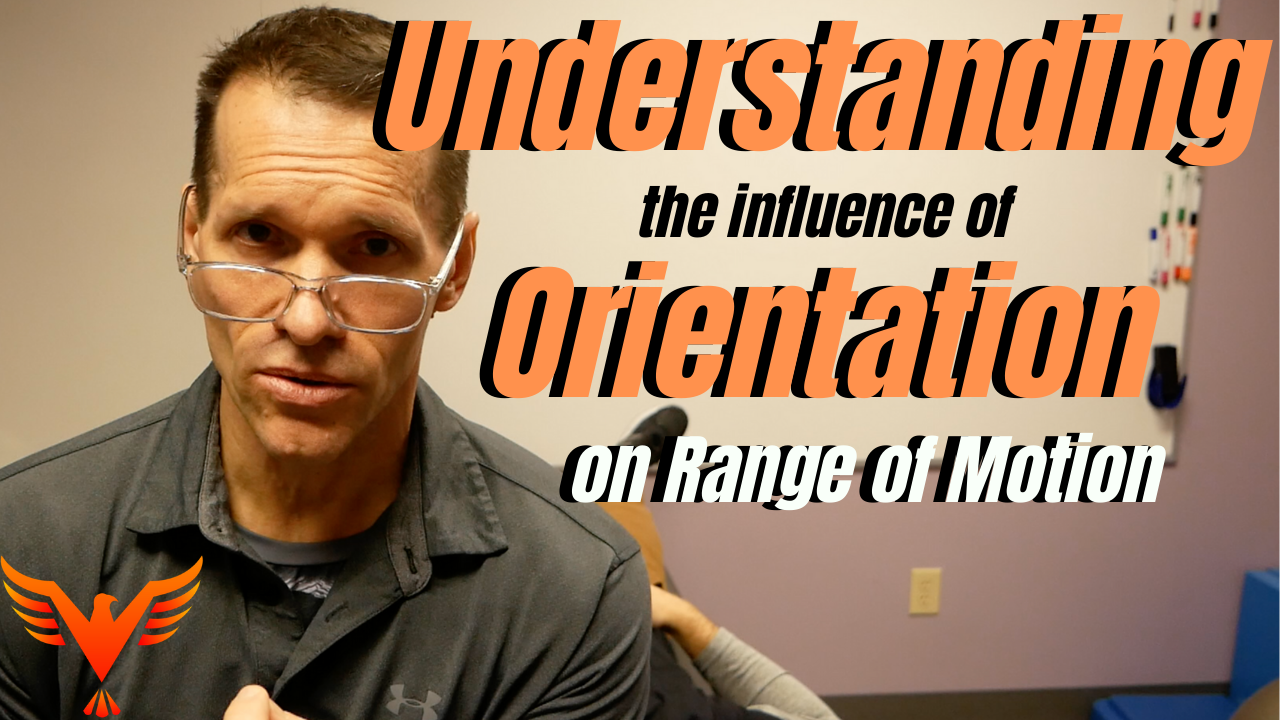
    The orientation of the pelvis and thorax influence the shape of the axial skeleton as well as the position of the glenoid and the acetabulum. This, in turn, influences muscle orientation and action to produce the available range of motion that is available during movement or table tests.

    In this video, manipulate the Padawan’s position intentionally, to demonstrate how axial skeleton orientation directly influences range of motion measures.

    #pelvictilt #dorsalrostral #shoulderflexion

    Find Bill:

    Instagram

    Facebook

    Twitter

    LinkedIn

  • The IFAST Podcast #7 with Mike Robertson and Bill Hartman – Continuing Ed: The What, Why, and How

    The IFAST Podcast #7 with Mike Robertson and Bill Hartman – Continuing Ed: The What, Why, and How

    If you want to go there, it starts HERE.

    Continuing education is a critical part of any professional’s growth.
    But where do you start with con ed?
    And how does that process evolve over the years?
    In this show, we talk about:
    Our initial forays into continuing education,
    The role of seminars – including the best type of seminars for both beginners and seasoned vets,
    Why the Intensive is in many ways “The Anti-Seminar,”
    The different types of knowledge you build and accumulate,
    Why there’s more to con ed than simply accumulating knowledge,
    The value of deep work and focus in your target activity, and
    How masters evolve from mentees to mentors.
    This show is jam-packed full of great info, and we truly hope you enjoy it!

    #ifast #continuingeducation #deepwork


  • Bill Hartman’s Weekly Q & A for The 16% – December 15, 2019

    Bill Hartman’s Weekly Q & A for The 16% – December 15, 2019

    This week on YouTube:

    • Bill Hartman’s Weekly Q & A for the 16% – December 8, 2019: https://youtu.be/dvAufow_1Fg
    • The QB Docs Podcast with Drew Kiel and Bill Hartman: https://youtu.be/hNmwdAo-k-E
    • The IFAST Podcast #6 with Mike Robertson and Bill Hartman – Our Client Foundation: https://youtu.be/Y4kmtvla6ZM
    • Manual Therapy – Mobilization to Increase Shoulder Flexion and Cervical Rotation: https://youtu.be/WgfF-EfEPsM

    This week on Instagram (@billhartmanpt):

    • Treatment sequencing
    • The Terry Project
    • Thorax shape and shoulder external rotation/shoulder internal rotation
    • The QB Doc Podcast Highlights
    • Videos for The 16%

    This week’s questions:

    When squatting, what do you believe the risk/reward is for oly shoes or some sort of heel lift. I know the obvious benefits/risks but in you’re opinion, which outweighs the other? Does it put that much more stress on your knees? Does it allow you to stack your pelvis better? Hip IR?

    How would you approach working with a patient that was diagnosed with a condition related to central sensitization such as fibromyalgia or complex regional pain syndrome? Are there any specific compensatory strategies you have found to drive central sensitization (or what we may perceive to be central sensitization)?

    For a wide ISA individual trying to regain his/her squat pattern, what progressions do you use after goblet/kettlebell/zercher squats? In light of Mike Robertson’s complete coach course I think the safety squat bar will be a good squat progression – allowing you to load the squat pattern and keep posterior thorax open for expansion. Do you use the safety squat bar much to load/progress the squat pattern?

    How do you determine if a proxy measure of the extremity is pathological (ex. ligamentous laxity, capsular instability)? On the opposite end, how would you determine a true tissue extensibility limitation assuming you’ve maximized axial position and respiratory variability? How would you treat these two presentations differently?

    Piggy-backing off last week’s question, what tests or measures do you apply to determine whether the elbow is oriented towards ER/pronation or IR/supination?

    From a practical standpoint, what would be do with a narrow campo angle vs. a wide campo angle? I understand that it is a representation of the superficial helical angle that compresses the underlying axial helices, but how does it actually change our approach to gaining more variability or more performance?

    Why might we use rolling activities for a wide infrasternal angle and quadruped activities for a narrow infrasternal angle ? Can you give an example of an activity for both scenarios?

    So with respect to internal pressure of the guts and diaphragm with high rate of force production in say a high box jump. You’d want a diaphragm that can concentrically yield and concentrically overcome very quickly?

    Please, please, please elaborate on how getting into a cut is “ER” and out of a cut is “IR”. In my myopic, acetabulum on femur way of looking at things, it seems as if “loading” should be acetabulum on femur IR and “exploding” should be the reverse. Thanks for all the content!

    #billhartmanpt #infrastrernalangle #squatting


  • Cutting Mechanics from The Inside-Out

    Cutting Mechanics from The Inside-Out

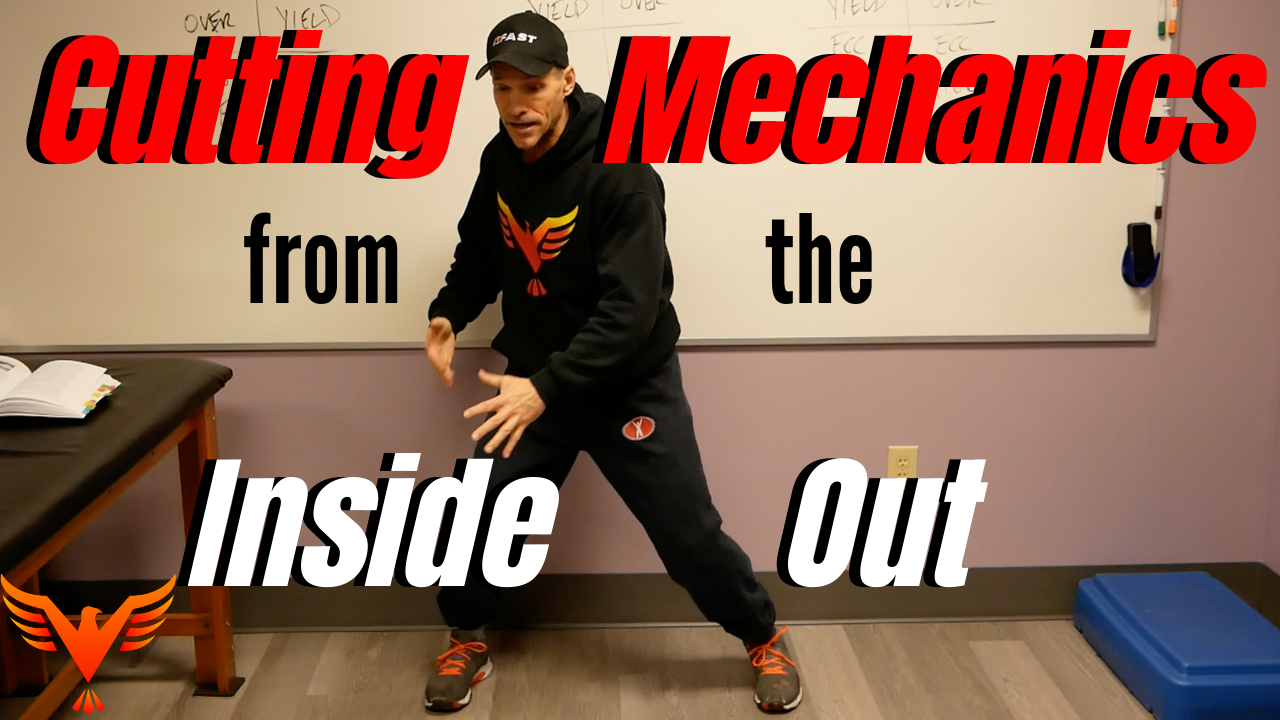
    Agility and cutting mechanics have always been described by the extremity movement, stretch-shortening cycle, and external forces.

    This video describes cutting from the perspective of how you manage the internal forces.

    How does the pelvic diaphragm behave?
    Where and when does concentric orientation occur?
    Where and when does eccentric orientation occur?
    How do I use yielding action to position the body?
    How do I use overcoming action to move quickly?
    What are the right foot cutting mechanics look like?
    How does this help my exercise prescription and programming?

    #agilitytraining #pelvicdiaphragm #speedtraining