Author: Bill

  • Delayed-Onset Muscle Soreness is All in Your Head

    Delayed-Onset Muscle Soreness is All in Your Head

    Brain-Adam-Crowe

    This one is a no brainer… well… sort of.

    We know that pain is a perceptual experience generated by the brain.

    There’s no such things as pain receptors or painful stimuli in the periphery.  Instead nociceptors send signals to the central nervous system regarding noxious stimuli, and the brain decides how that information will be perceived.

    Some times it’s pain.  Some times it’s not.

    The mystery of delayed-onset muscle soreness (DOMS) is one of the those concepts thats been studied for decades with no real answers other than a process of elimination.  For those of you who are still telling your clients that it’s “lactic acid” or whatever you’re making up today, perhaps you can now step up your game just a little bit.

    Here’s a study that shows that the DOMS associated with eccentric loading is related to central sensitization of the nervous system.  It’s also pretty clear that you don’t have torture your clients with muscle soreness either with a proper application of the repeated bout effect.

    DOMS is central sensitization

  • Anatomy Lessons from the Lab:  Peripheral Nerves

    Anatomy Lessons from the Lab: Peripheral Nerves

    Young Matt and I spent about 6 hours in the cadaver lab on Saturday afternoon.

    I am forever fascinated by human anatomy, and it’s always a learning experience no matter how many times I get in the lab.

    By the way, I’ll be teaching an cadaver anatomy course in the fall for PT’s in a virtual palace of a facility in the fall.  More on that later.

    Our goals for Saturday’s lab time was to dissect out all the peripheral extremity nerves in preparation for attending NOI Group’s Mobilization of the Nervous System Course next week.

    Here’s some highlights and clinical thoughts from the lab…

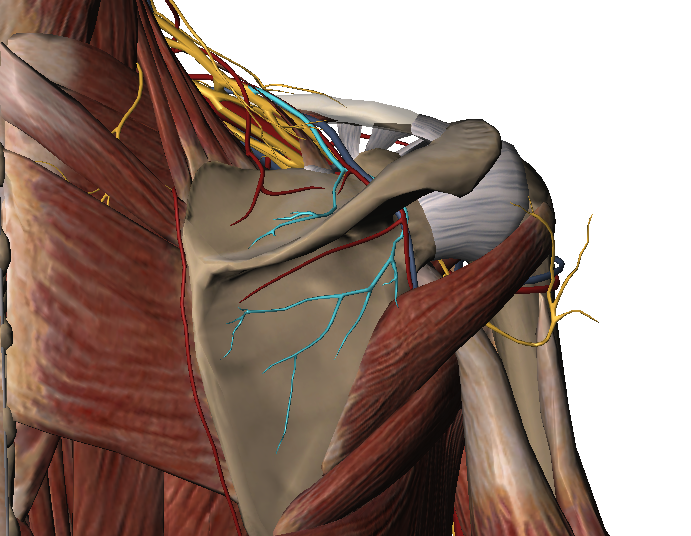
    We dissected out the shoulder with the goal of following the suprascapular nerve.  First and foremost, in looking at the infraspinatus… not a single trigger point in sight! 🙂

    The nerve is easy to find at the suprascapular notch under the superior transverse scapular ligament.  As you follow it around the lateral aspect of the spine of the scapula it goes deep where it supplies the infraspinatus with a number of branches.  If you reflect back the entire infraspinatus to expose the infraspinous fossa, you can get a good look at the branching of the nerve.

    Clinical thoughts:  If you have a client with posterior shoulder pain, a loss of shoulder internal rotation, or horizontal adduction, you may want to take a look at this nerve.  The sensory branches are more prolific than you think.  Considering the possibilities of neurogenic inflammation and mechanosensitivity as a result of injury to the target tissues or surgery, you have to consider the need to treat not only the tissues but consider the state of the nerve itself.  Here’s my buddy Zac Cupples performing the neurodynamic test for the suprascapular nerve.

    [Click on the photos to enlarge them]

    Suprascapular Nerve Image courtesy of Visible Body (www.visiblebody.com)
    Suprascapular Nerve
    Image courtesy of Visible Body (www.visiblebody.com)

    In the lower extremity, we looked closely at several nerves that influence symptoms in common knee and ankle injuries.

    We followed the saphenous nerve from the adductor canal.  Our main focus here was to follow the infrapatellar branches that are implicated in a number of knee issues.

    Clinical Thoughts:  Post-surgical conditions, Knee contusions, MCL sprains, and general knee sensitivity in kneeling warrants assessment of the saphenous nerve as it is frequently irritated.  If you ever had a client complain of anterior or medial knee soreness or pain long after typical tissue healing time, be sure to take a look at this nerve.  Remember that the typical saphenous neurodynamic test is done with the knee extended.  To differentiate the infrapatellar branches requires knee flexion to bring them under tension.

    Saphenous Nerve in blue Image courtesy of Visible Body (www.visiblebody.com)
    Saphenous Nerve in blue
    Image courtesy of Visible Body (www.visiblebody.com)

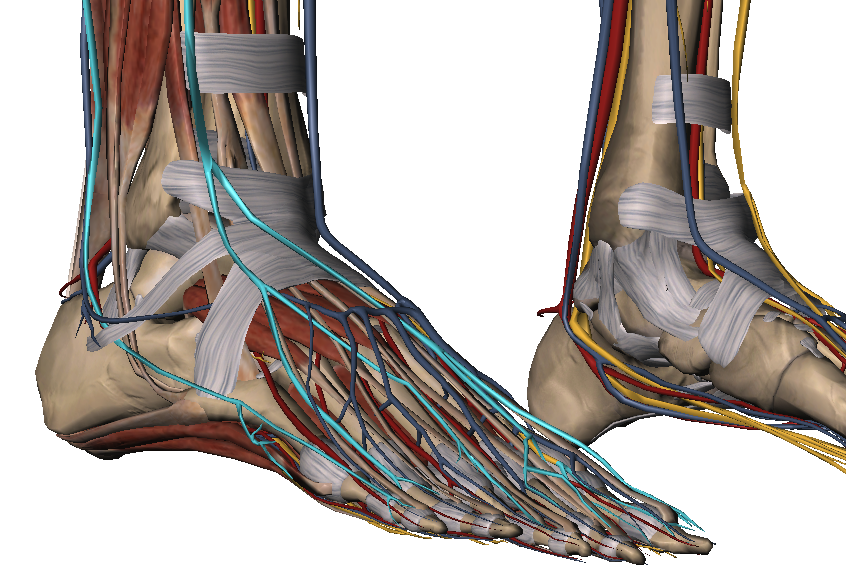
    We went to the distal posterior thigh to identify the split in the sciatic nerve into the tibial nerve and common fibular (peroneal) nerve.  Young Matt went to work on the deep and superficial branches of the common fibular nerve, and I worked on uncovering the sural nerve.  We were able to expose and identify them all the way to their distal locations in the foot.

    Sural and Superficial Fibular Nerves in blue Image courtesy of Visible Body (www.visiblebody.com)
    Sural and Superficial Fibular Nerves in blue
    Image courtesy of Visible Body (www.visiblebody.com)

    Clinical Thoughts:  The superficial fibular and sural nerves deserve special attention in any form of lateral ankle injuries like an inversion sprain, foot contusions, or any form of ankle surgery.  Their coverage of the lateral ankle and dorsum of the foot is quite broad.  You can tweak them with small modifications to your straight leg raise test.  Here’s Zac again showing proper execution of the neurodynamic tests.

    Overall, it was a very solid day in the cadaver lab with many more to come.

    Be sure to sign up for the newsletter as subscribers will be the first to get word on when the cadaver anatomy course will take place this fall.

    Recommended Resources


  • Fixing a Stiff Big Toe

    This little piggy went to market…

    Probably the most common area for arthitic changes in the foot is the first metatarsophalangeal joint (MTP joint).

    During normal gait the entire body must advance over this single joint, so you can see how a restricted MTP joint can be responsible for countless conditions and injuries. Many foot and ankle problems, knee pain, hip and back pain, and even cervical or shoulder problems can be traced back to a stiff big toe.

    If you can’t advance over a stiff big toe, you’re going to find a way around it.  Depending on how the rest of your body moves, these compensations can lead to wear’n’tear elsewhere.

    In addition, given enough time your stiff big toe becomes arthritic and known as a hallux rigidus, another fancy term for a stiff big toe.

    In an effort to address a stiff big toe, many health professionals will attempt to fix the issue by going to the supposed source of the problem, the 1st MTP joint.  While this may provide some measure of improvement, experience shows that we need to look at foot mechanics a little more closely.

    To achieve normal big toe extension (MTP dorsiflexion), the first metatarsal head must be able to plantar flex as part of the Windlass Mechanism that restores the longitudinal arch of the foot during gait.  Failure of the active musculature that contributes to the Windlass Mechanism, namely flexor hallicus longus, prolongs pronation (the arch stays flat for a longer period of time than normal) resulting in inhibition of peroneus longus (fibularis longus).

    Peroneus longus attaches to the proximal aspect of the first metatarsal and provides a stabilizing force that allows the 1st metatarsal plantar flexion to occur.  If this doesn’t happen due to inhibition associated with prolonged pronation, the first metatarsal remains dorsiflexed and blocks 1st MTP joint extension, and you get a stiff big toe.

    So if we cut to the chase, the fix is to restore 1st metatarsal plantar flexion and restore flexor hallucis longus function.

    Here’s a video sequence showing how I restore 1st MTP joint extension with a 1st metatarsal-cuneiform mobilization and some ART to the flexor hallucis longus.


  • IFAST Assessment Case Study: Why Can’t I Lockout My Deadlift?!

    Every semester a new crew of interns make their way to IFAST to learn what we do and how we do it.  Our intern system has cranked out some outstanding professionals many of whom have become successful fitness business owners and high level strength coaches.

    One of our current interns, “Li’l Stevie” Gabrielsen, is a powerlifter working his way up the ranks with a little bit of deadlift issue.  Seems he’s strong enough to pull just about anything off the floor, but he can’t lock it out.

    Case in point…

    Did he try pulling with bands?  yes.

    Did he try pulling with chains? yes.

    Did he try pulling from pins? yes.

    Now to his credit, Stevie has busted his ass and pulled 605, so these are all reasonable methods to correct his weak lockout.  However, based on his investment of effort, Stevie believes his progress should be much greater than he’s able to demonstrate at this point.

    As part of their internship, each intern undergoes our extensive IFAST Assessment.  Today was Stevie’s turn and the results were quite interesting.

    A key component of the IFAST Assessment is to use a battery of corroborating tests to zero in the true fitness diagnosis.  Trying to infer too much information from a single test is a common mistake that leads to poor exercise selection, ineffective programs, and less than optimal results.

    For instance, here’s Stevie’s initial supine straight leg raise test…

    Your initial suspicion may be stiff or short hamstrings, but without a corroborating test, you really don’t know for sure.  Here’s his right passive supine straight leg raise…

    Clearly, Stevie doesn’t lack passive hamstring flexibility on the right leg, but check this out…

    He actually has less passive straight leg raise capability on the left compared to right.

    So to review, active supine straight leg raise on the right was significantly limited and passive was within normal limits, but active was better on the left and passive was less on the left compared to right.

    Have you figured it out yet?

    No?

    Okay, so we put Stevie in prone to take a look at his prone hip extension.  Here’s his first attempt.

    Clearly he can’t effectively extend the hip, so is it a lack of hip extension flexibility or weakness?  Here’s your answer.

    Obviously flexibility is not the issue based on passive hip extension testing.  It would seem that Stevie has been trying to lockout his deadlifts with only one glute, thus his frustration and slower than expected progress.

    Problem solved, right?

    Not so fast.

    What’s your corrective plan?

    Glute strengthening?  Nope.  Stevie’s been busting his ass trying to strengthening his lockout which includes literally tons of hip extension work, so doing more of the same will most likely turn into an exercise in frustration.

    Straight leg raise corrective exercise?  Nope. We actually attempted some just to see what would happen out of curiosity, and while there was some change, it wasn’t significant enough to get excited about it.

    What we ended up doing was to use the results of several other tests that indicated that Stevie had a pelvic asymmetry.  One quick and dirty pelvic correction later and here were his restest results…

    With his pelvic symmetry restored, Stevie can now approach training with greater insight and use his previous methods with an effective hip extensor mechanism.  We anticipate almost instant improvement in his next training session.

    Pelvic asymmetries alter the length-tension relationship of the muscles attached to the pelvis that, in turn, alter joint flexibility and the ability of muscles to produce tension/strength.  Without this knowledge and the ability to differentiate between position-related faults and true flexibility or strength deficits, your corrective exercise prescription will in all likelihood fail.

    As a reminder, we still have a few seats left for Diagnosis Fitness:  The Complete IFAST Assessment System on July 27-28.  Attendance is limited and the tuition goes up July 2nd, so don’t wait to reserve a spot.

  • Perfecting Weightlifting Technique at IFAST with Rufus

    Perfecting Weightlifting Technique at IFAST with Rufus

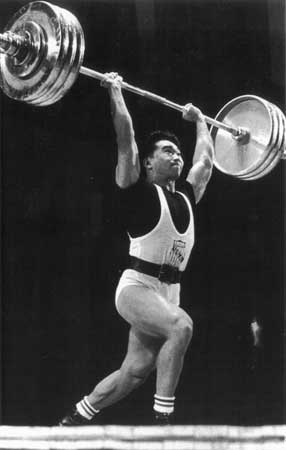
    On Saturday morning at Indianapolis Fitness and Sports Training in addition to our usual cast of fitness clients and athletes, you’ll find Grant “Rufus” Gardis working with his young weightlifters and athletes on our weightlifting platforms.  When he’s not certifying coaches for USA Weightlifting, Rufus does amazing things in working with several of our IFAST regulars and athletes in regard to weightlifting technique and sports performance, and we consider it an honor to have him as part of our team.  You’ll be hard pressed to find a better weightlifting coach.

    Rufus’ young lifters recently competed successfully and well-beyond expectations, and I was so impressed with his methodology that I had to interview him to find out how he got such great results.

    Bill:  You just got back from competition with a couple of you lifters.  How’d they do?

    Rufus:  I was really pleased with the results of both of my athletes. They lifted well and more importantly their technique was really good. Of course like everything else, the technique could have been better, but for what I would consider beginners, it was really, really good.

    To give you a little background on my two lifters Ryan is 15 years old and competes in the 77 kg weight class. Kevin is 14 years old and competes in the 85 kg weight class. They both started serious weightlifting training about 9 months ago. The focus of their training has been on perfecting the technique of the snatch and the clean and jerk. The boys’ last competition was December 17, 2011. At this meet, Kevin totaled 92 kg and a bodyweight of 73.95 kg. Ryan, competing at a body weight of 71.44 kg, totaled 115 kg. On May 19, 2012, Ryan totaled 151 kg at a bodyweight of 76.6 kg and Kevin totaled 122 kg and a body weight of 79.7 kg.

    In my mind, these are huge jumps considering their training loads for the past few months.

    Bill:  That’s impressive progress for beginning weightlifters.  Can you outline how you approached their training?

    Rufus:  In January at USA Weightlifting Junior National Championships, I had the opportunity to speak with Zygmunt Smalcerz, the National Coach for USA Weightlifting, at length about how they develop weightlifters in his native country of Poland. He told me then that 14 and under and beginners cannot lift weights any heavier than 50% of their body weight in the snatch and 100% of their body weight in the clean and jerk. The point being that the idea is to perfect the technique of the lifts. Also, in other conversations with Dragmir Ciorsolan, himself a former national coach for USA Weightlifting, he told me that the first two years were all about technique. Never about strength. He would always say the strength will come.

    I decided to put their words into practice. Starting January 1 of this year the boys and I embarked on our journey. During this time we focused on the technique of the lifts and on corrective exercises. We also used this time to work on our core, hip, and shoulder stability.  We included push-ups , pull ups, single leg work, and various presses from a split squat position. Any lift or lift related exercise was done for 5 reps and all other pressing squatting exercises were done for 8 to 10 reps. We limited the number of sets to no more than four for each exercise.

    As you can see, we did a lot of volume, and the lifts were kept in accordance to Zygmunt’s recommendations. We did vary from these recommendations on Saturdays when we train at IFAST, and I would let the kids go up in weight until they either missed or the technique broke down. A lot of times, I would have a predetermined weight which they could go up to, usually about 80 or 85% of their maximum, and we tried to get 3 or 4 sets at this weight. Once again, I let technique be the judge.

    The amazing thing to me was how few lifts that we missed. Even when doing five repetitions with a snatch or clean and jerk we weren’t missing. The technique may not be exactly what I wanted, but we were missing any lifts.

    It was during this time in late January or early February I picked up a book entitled “The Talent Code”. In this book the author describes a system that he calls deep practice. Now, this deep practice is nothing new. It’s a system of breaking down a skill into several parts and perfecting each part and going on to the next part and then putting the parts gradually together to form the whole skill. It is used by musicians to learn new songs they want to play, by tennis players, soccer players, and even the Marine Corps uses this technique when teaching soldiers how to shoot a rifle. As best I can tell, even weightlifters throughout the world use this the practice with their beginning weightlifters to perfect the technique of the snatch and clean and jerk.

    What we did was nothing really earth shattering once you stop and look at it. We quit looking at the result and concentrated our efforts on perfecting the technique. We started with each athlete just practicing a movement with no weight, literally just with air. We just practiced getting into the positions and moving the imaginary bar perfectly. When they made a mistake, they’d repeat the movement until it was correct. Once that became consistent, we put a light bar in their hands and let them practice the movement. At this point, we didn’t worry about speed of the bar or the speed of going under the bar. It was all about the technique. As the technique improved, we added a little more weight to the bar. Proceeding each set with the loaded bar, the kids did 5 to 10 repetitions of the movement they were about to perform just using air. We called this modeling. If a rep wasn’t perfect using the weight, we went back to either modeling with air or just the empty bar. The weight on the bar was of no consequence. The other thing I noticed that was amazing to me was that once they really bought into what we were doing, they became more and more focused on the technique with each training session.

    I think the important to reiterate that we didn’t look at the end result as being total amount of weight lifted. For us, the end result was the perfection of the rep or of the movement. The one time that that we did go for a true maximum was the Saturday before the competition and that was only to find out what we would do in the meet.

    Bill:  What is the big take-away from your experience with this programming that other coaches can utilize to improve their own programs?

    Rufus:  The idea that I hope one would come away with is that we need to focus more on skill development as opposed to the end result which, in the case of our weightlifters, would be the total weight lifted. My kids still have a long way to go to perfecting of the technique. My plan is for approximately the next one and a half to 2 years to stay with this program. Along the way we will be competing in meets but the focus will always be technique before strength.

    Bill:  Thanks Rufus… See you next Saturday.