Optimal varies with imposed demands (load, speed, surface, fatigue, visual cues, stance width, pelvic position, hip joint shape, etc.). Squatting is not as simple as knees out being better than knees in or toes out being better than toes straight.
Variability is the ideal. It would be desirable to be able squat in many different ways and many different foot positions under varying circumstances.
There is never one ideal. That’s like saying there’s one ideal posture, one way to sit, one way to have sex, or one way to throw a ball.
In fact, we know that because of the noise built into the nervous system we can’t duplicate the same motion no matter how hard we try even if it looks the same to the naked eye.
With practice and good coaching, you will determine the optimal for the circumstances and the individual.
This was actually a Facebook post that did pretty well in the “likes” department so I thought I’d build on it a bit for a blog.
Thoughts on long-term athletic development…
1. In a sporting environment, athletes perform based on learned prediction models associated with experience.
2. Research supports the understanding that motor [movement] variability facilitates motor learning and prediction capabilities that determine the ultimate level of performance.
3. Greater movement variability [movement experience] is associated with a faster rate of learning and better prediction modeling (a rare case of more is better).
4. The nervous system regulates motor variability and responses to perceptions of threat to the human system.
5. Exposure to an unpredictable environment like most sports demands a broad spectrum of movement variability to limit threat and increase the level of sport performance.
6. Early sports specialization intentionally restricts motor variability and movement exploration, and therefore, limits motor learning and prediction modeling.
7. Limited motor learning and prediction modeling results in novel experiences in a sporting environment being perceived as threatening and the nervous system will limit human system variability to perceived demands of the sporting activity as a means of protection.
8. Limitations in human system variability [including movement] limit ultimate sports performance.
9. Early sports specialization is in conflict with optimal long-term athletic development of young athletes.
It seems to me that those coaches concerned with the physical preparation side of the training process (AKA the strength and conditioning community) either understand the importance of long-term athletic development (LTAD) process or are coming around nicely to such an understanding. I can’t remember the last time that a strength coach expressed that what our kids need is more specificity, more focus on one sport, more games played per season/year, and less focus on general development before the age of specificity. Thank the internet and our ability to communicate information and ideas that originated in other countries for that.
We have organizations like the IYCA that are assisting in the development of a growing number of excellent coaches at the early developmental levels of sports preparation trying to remedy the problems associated with early sports specialization, overuse injuries, and young athlete burnout. We have educational resources
So where are we failing our young athletes?
Perhaps I’m biased, but I don’t think it’s the strength and conditioning community that is failing the athletes.
We’re failing the parents and the sports coaches.
I truly believe that Moms and Dads want what’s best for their kids. They want them to be happy. They want them to be healthy. They want them to be successful.
The problem is that there is no playbook for them.
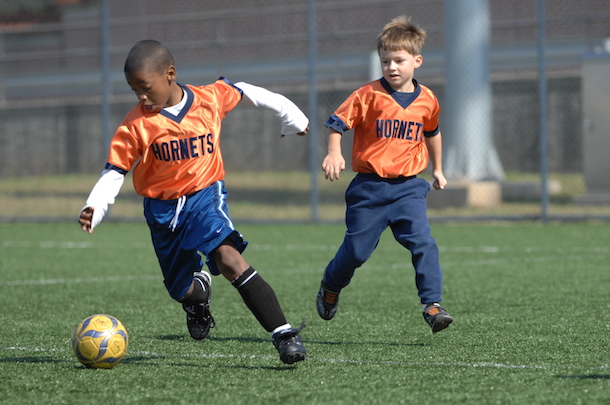
Parents don’t understand how early focus on a single sport actually limits their child’s ability to reach their true athletic potential in any sport. Most of the athletes that make it to the big leagues played a variety of sports throughout their athletic careers.
Parents don’t understand how central and peripheral fatigue accumulates from a high frequency of practice, repetitive activities, and a seemingly endless, year-round season of the same sport. There’s no better way to steal the fun out of playing sports and end a sports career early than to be tired all the time and make it feel like a job to such a degree that you cap an athlete’s performance in their teens. And parents don’t understand that their child may never express the fact that they’re exhausted and don’t want to play tonight because they don’t want to let Mom and Dad or their team down.
Parents don’t understand how these same activities stress their children’s muscles, joints, bones, and connective tissues. If they did, perhaps we wouldn’t see adult-type injuries in preteens and teenagers associated with overuse. Playing a variety of sports, strength training, running, jumping, tumbling, and throwing are all safe and appropriate activities that make kids better athletes. It is when these activities are taken to excess by young athletes that they become detrimental.
Parents don’t understand that it’s okay to say no to protect their child. Playing one different sport per season or taking a full season off to just play and be a kid is a great way to improve movement competency and athleticism.
I think the sport coaches mean well too, but I’m concerned that there are too few that understand the power of LTAD and the failures of the early specialization model that prevails in the USA.
Sport coaches are great strategists but most lack a fundamental understanding of the energetic demands of their chosen sport. I would never expect a sport coach to have the same level of understanding of exercise physiology as a strength and conditioning coach, however, the lack of understanding leads sport coaches to “condition” their athletes inappropriately either intentionally or unintentionally contributing to excessive fatigue and overuse injuries.
Sport coaches are great technical skill coaches but many lack sufficient understanding of the physiology that underlies skilled sports movement. Coaches without a remedial understanding blame performance deficits on a lack of skill rather than the physiology that underlies skilled movement. This leads to a more is better approach to activities that merely reinforces compensatory movement, leads to injuries, or establishes a performance plateau.
Sport coaches are great motivators but it is unfair, unnecessary, inappropriate, and ultimately detrimental to demand that your athletes participate in your single sport program year round. Young athletes are not the same physiologically or psychologically as adult athletes and have their own general and specific needs to reach their full potential. Pressuring athletes to participate in “voluntary” practice year round or suffer the consequences of not earning a starting position or even playing is beyond reproach.
I am all for winning. I’ve devoted a large part of my life to assuring that our young athletes have the best shot at success. Adopting the foundational principles of long-term athletic development provides your kids the best opportunity to reach their ultimate potential.
A brief thought/memory on perception of threat, the brain, and pain… Back in the mid 90’s I worked in Florida for a bit and met Chris who was another PT at a beach party. He was heavily tattooed, had spiky hair, and multiple earrings in each ear. In talking to some co-workers who knew him pretty well, they mentioned that this PT was “really out there.” Based on his appearance and first impression, I was leaning toward agreement.
Our conversation included the design of his PT clinic which he said was quite unique. I was doing some rotations at multiple locations as part of my intro to the company and had the opportunity to work at Chris’ clinic for a day.
When I arrived at the clinic, my initial response was that I was apparently lost as this did not look like any clinic I had ever been in before. It reminded me of someone’s home. Not at all what I expected. Chris greeted me and began to show me around. By the way, his hair was perfectly combed, his tattoos were covered, and his earrings were nowhere to be seen, so I almost didn’t recognize him.
The carpet was lush, and the lighting was not the typical harsh florescent overhead light but rather provided by lamps and decorative lighting. The things that struck me the most were the colors, the sounds, and the smells. Yes, the smells.
The walls, curtains, and trim were all various hues of purple.
At first it reminded me of a teenage girl’s room and fully expected to see posters of the Backstreet Boys on the walls (it was the 90’s after all). No posters to be found. Just tasteful artwork that matched the purples.
As Chris talked, I noticed the soft music playing throughout the clinic in the background. Not your typical local radio station or Muzak. This was a bit “new agey” but not annoying or offensive.
“Sure,” I said leaning harder toward my first impression from the beach.
I left that day not really sure what to think of Chris or his clinic design. I didn’t understand how all the minute details could really have an effect on a treatment outcome. If you’re a good therapist, that’s all that matters… I thought.
Fast forward to the present.
My more mature prefrontal cortex with an expanded understanding of the patient experience thinks Chris was brilliant. Whether he knew it or not, Chris was well ahead of the curve back in the 90’s based on our current understanding of perception and pain science. He created a massive “home field advantage” in working with people in pain.
All perceptions matter. Not just sights, sounds, and smells of the room, but our appearance, the tone of our voice, our handshake, or our facial expressions (smile!) are all perceived by our clients and can contribute to either a more comfortable or more threatening experience.
Neuroception according to Porges, takes place below conscious awareness in the more primitive areas of the brain and determines whether an environment is safe or dangerous. A higher perception of threat increases the sympathetic tone of the nervous system in preparation of flight, fight, or freeze. This will increase the sensitivity of already damaged nerves and inflamed tissues and potentially makes pain perception worse no matter how good a therapist or coach you think you are.
While our clients may present with knee pain, shoulder pain, or back pain, we are always treating “the system.”
Rather than go on about the patient interaction, I’m going to refer you to my favorite article from 2013 by my buddy, Zac Cupples. Zac is a master at understanding the therapist to patient interaction. While he doesn’t wear earrings, sport any tattoos, or wear purple, he does an amazing job of creating a powerful “home field advantage.” Read The Interaction Here.
Saturday Conversations… Genetics, BDNF, Rehab, and Performance
On Saturdays after wrapping up working with clients and hanging out at IFAST, I usually spend lunch with Rufus (AKA Grant Gardis), Lance, and the interns chatting over fajitas and a margarita. Conversation is always varied and will cover a full spectrum from relationship advice to high-level sports training and sciency stuff.
Rufus had to leave, so we skipped Mexican food this past Saturday, but I was lucky to have a conversation with my buddy, former IFAST intern, former IFAST employee, photographic memoried and current standout physical therapy student Eric Oetter. I try to touch base with him regularly just to see how he’s doing and to see what they’re currently studying in his classes. It’s a great way for me to keep up on the basic sciences as Emory’s program appears to be outstanding in that capacity.
[By the way, you need to see Eric speak at Art Horne’s big conference this May. Go to http://www.bsmpg.com after you read this]
Recently, Eric attended a lecture by Randy Trumbauer, PhD regarding his research in brain-derived neurotrophic factor (BDNF). If you don’t know anything about BDNF, John Ratey, MD refers to it “nourishes neurons like fertilizer” in his book SPARK. It is present in the brain, more specifically the hippocampus, an important area for memory and learning.
The research that was presented was more specifically regarding the BDNF Val66Met allele.
[Allele – an alternative form of a gene.]
An interesting point of the research on the Val66Met allele of BDNF, which is present in about 25% of the population, is that it has been shown to REDUCE motor learning and motor map reorganization following motor task training (think learning any physical activity).
The influence of genetics on skilled or sports performance, rehab from musculoskeletal or neurologic injury, and young athlete development certainly presents some very interesting questions. Here’s some thoughts from our conversation this Saturday afternoon…
After suffering a stroke, traumatic brain injury, or spinal cord injury, does the Val66Met allele impact a patient’s outcome in regard to recovering motor abilities? It would certainly seem that it may. The limited ability to develop new neurons and new connections in the brain or spinal cord after an insult could certainly limit recovery potential. This may account for the broad variations in recovery seen by patients suffering neurologic injuries.
Does the Val66Met allele impact one’s abilities to learn or demonstrate new motor skills in athletes? This is a conversation (actually several conversations) that I’ve had with Rufus recently regarding young athlete development. Take 100 kids and watch them play or exercise. There are certainly broad variations in performance. Is this the genetic component that influences or limits ultimate performance and separates the pros from the rest of us?
If such a genetic variation is a limiting factor, can we impact the potential negative consequences in regard to motor performance? Perhaps, yes. Hypoxic conditions and exercise can certainly increase BDNF secretion, and Eric noted per Trumbauer’s presentation, they are doing amazing things with patients with incomplete spinal cord injuries via acute intermittent hypoxic conditions.
On another interesting level, if there is an allele that limits performance by reducing motor learning and mapping the motor cortex of the brain, is there an allele that does the opposite? Is there a variation that makes learning motor skills and improving brain maps easier? Eric and I have discussed this many times. Take the highest level athletes you’ve ever seen or worked with. While there are many who present with a top-notch work ethic, there are also many who never train, occasionally practice, and yet demonstrate amazing physical skills and abilities. We’ve always said that these athletes are “just wired differently.” Perhaps this sheds light on such “wiring.”
If you’ve read books like The Sports Gene, then you’re very aware of the impact of genes on performance. For instance, a variant of the alpha-actinin-3 gene (ACTN3) in fast-twitch muscle fibers appears to be important for speed. Variations in a sodium channel-alpha subunit (SCN9A) affects our ability to experience pain by altering nociceptive inputs. One of 27 variations of SCN9A can make you less sensitive or more sensitive to noxious stimuli. (here’s a large study covering pain perception variation and SCN9A expression in a variety of conditions) Catechol-O-methyl transferase (COMT) is an enzyme that breaks down neurotransmitters in the brain like dopamine, epinephrine, and norepinephrine. Variations of the COMT gene influence cognition and memory as well as one’s sensitivity to pain, expression of anxiety and catastrophizing.
Implications and thoughts
Injury prediction, rehab potential, and human performance are multifactorial and incredibly complex. Threat perception, nociception, processing capabilities, and output capacity are all genetically influenced. We and our behaviors are products of our gene expression, but we are not our genes as how they are expressed is modifiable. Any sensory input is an influence on processing and output. The challenge is to determine the on/off switch and apply the correct inputs into the nervous system. While there are certainly commonalities amongst humans this concept is individualized.
If you’re a trainer, therapist, or coach, perhaps you should consider the thought above the next time one of your patient’s or athletes complains of what you feel is an unreasonable level of pain or physical limitation. These perceptions and limitations are individualized.
The current biopsychosocial model may not only apply to pain or disease but human performance as well. Still thinking about it.
Looking at the impact of genetics on human performance reminds me of reading about the old Soviet sport school programs where they utilized early identification of athletes and developed them utilizing a long-term, multi-year program. It would appear they were (and the concept still is) way ahead of the US athlete development programs on a much deeper, scientific level. We need long-term developmental programs for our younger athletes. Certainly, all our kids won’t be superstars but with a properly organized, long-term program their chances of improvement are much greater. The most likely result is a better human regardless of the sports-related outcome.
Adrian Peterson… Genetics and Environment sportsillustrated.cnn.com
How does someone have one of the worst possible injuries for an NFL running back and yet come back in less than a year to have one of the greatest seasons of all time? A great team of doctors, therapists, trainers, and coaches coupled with a perfect storm of genetics and environment. Adrian Peterson may represent this scenario to a level we haven’t seen before. Always remember that human performance is multifactorial. The process, progress, and performance will always be individualized. Don’t set expectations based on the outlier.
I had the privilege of spending an afternoon speaking with Light-heavyweight champ Bernard Hopkins and watching him train. MensHealth.com was there to video the day and recorded some great training and interview footage. Dr. Nick Ratamess and I were on hand to provide commentary on how a 48-year-old Hopkins does what he does. It was amazing to meet the champ and see him in action.