When you understand the relationships of position, compression, and expansion of the axial skeleton, you can use any number of supplementary exercises to support your movement goals.
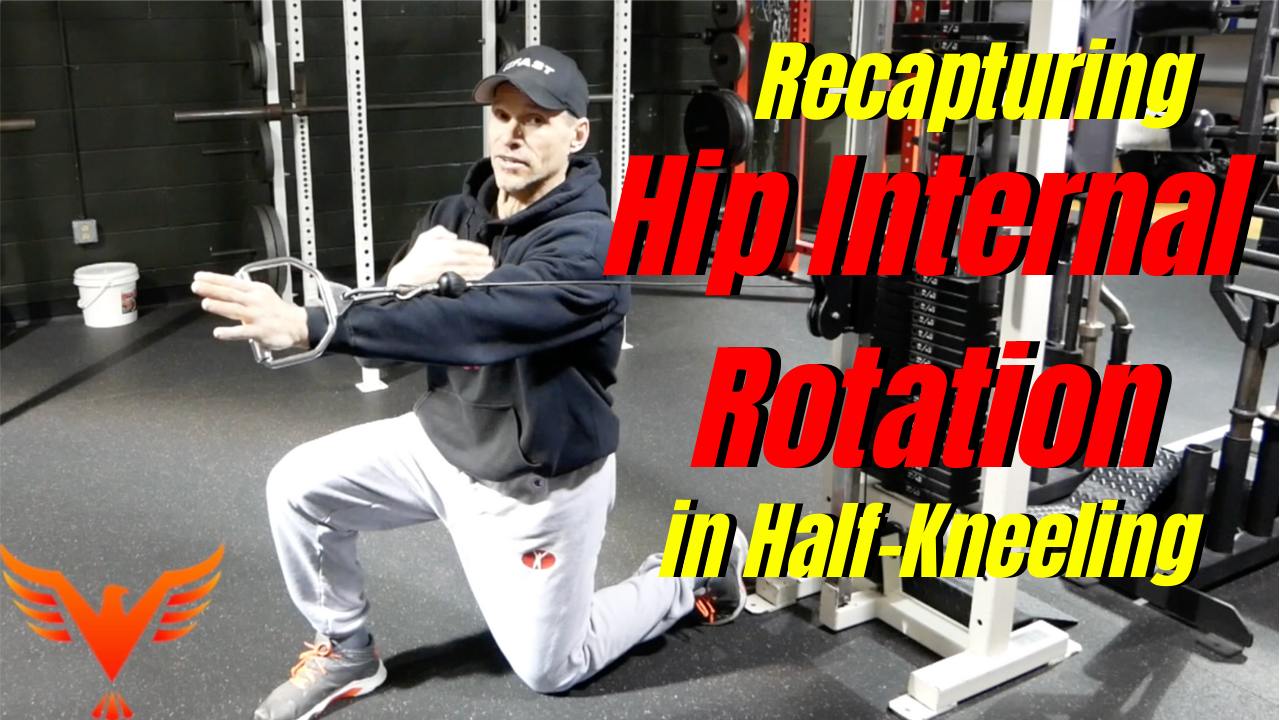
Many times, rehab exercises are not necessary to recapture hip range of motion that we lose in association with heavy strength training.
Supplementary exercises like half-kneeling activities can be used to offset the negative consequences of hard training.
On the final day of The Intensive, we Zoom (the app) in all other previous attendees to let them participate in the last day.
This is often a review of key topics and programming strategies.
At The Intensive X, we reviewed some concepts about the infrasternal angle and the compensatory breathing strategies as well as a discussion of how the internal pressures and volumes are manipulated to produce movement.
This video represents just a few minutes from the last 3 hours of The Intensive X.
One thing that would help me better understand and apply some of the concepts you reference in your videos is aligning more precisely with terminology. Specifically, some of the terms/concepts you frequently use feel synonymous even though they are not. It sometimes confuses me.
For example, in an absolute sense exhalation strategy, compression strategy, and concentric orientation are not all the same idea. However, when we move away from the absolute and start talking about anecdotes, such as various ways powerlifters move, the correlation between the terms is sometimes very high depending on the specific example.
This makes it hard/confusing/error-prone to then extrapolate my understanding of the concepts to other practical or illustrative examples.
The list of terms I’d like clarity on, both in absolute and also as they relate to other terms in the list, are as follows:
Extension/flexion
Concentric/eccentric orientation
Overcoming/yielding action
Inhalation/exhalation strategy
Expansion/compression strategy
In this video: Each of these concepts is explained to give perspective as to why this terminology is useful to increase understanding of the model.
With respect to a wide ISA individual focussing on Anterior-to-Posterior expansion of the thorax, I would be keen to see you execute exercises such as:
• An eccentric focused pec fly
• An eccentric focused pull down
I am Interested in your set up and execution of these exercises.
In this video: How to promote compression and expansion reciprocally to reduce the bilateral compressive strategies seen in many people with wide infrasternal angles and limited breathing excursion.