Tag: diaphragmatic breathing

  • Q & A for The 16% – Medial vs. Lateral Knee Pain Explained

    Q & A for The 16% – Medial vs. Lateral Knee Pain Explained

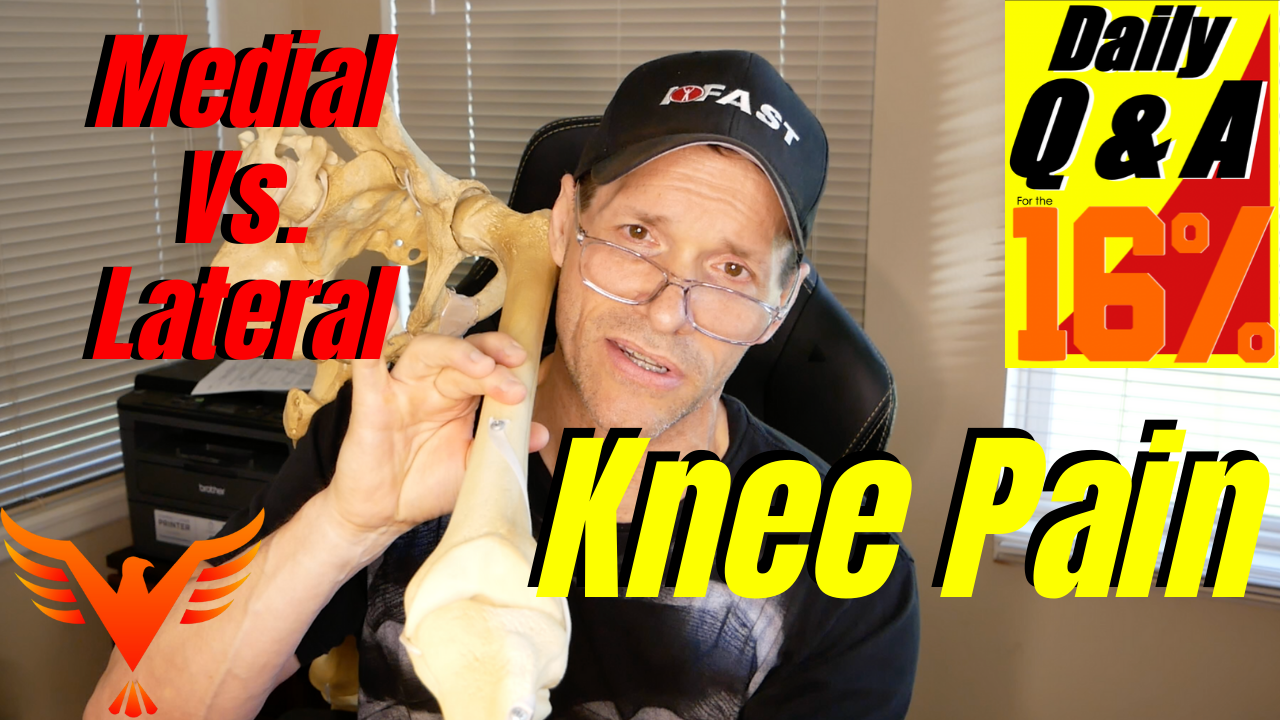
    My @neurocoffee is perfect as usual, and I have a Q&A that came from yesterday’s call with The Intensive Group about knee pain.

    Typically, with either medial or lateral knee pain we’ll see a loss of relative motion in the segments of the lower extremity. When segments move together, different aspects of the system will eventually hit constraints of the knee joint. Depending on where the greatest load occurs, that’s where you’ll see the pain arise if it does. Your goal then, is to restore the relative movements of the lower extremity. I have a series of videos for medial and lateral knee pain available here on instagram and on my YouTube channel, so check those out if you need suggestions for treatment or training.

    #kneeexercises #kneepain #billhartmanpt

    Find Bill:
    Instagram

    Facebook

    Twitter

    LinkedIn

  • Q & A for The 16% – Powerlifting Squat vs. Body Weight Squat

    Q & A for The 16% – Powerlifting Squat vs. Body Weight Squat

    My @neurocoffee is on another level today, so here’s today’s Q & A.

    From SanD:

    Can you please use your pelvis model to explain/compare pelvic position for stages of a reg squat v. competition back squat? Stuck trying to understand how the reg squat inhale down (sacrum counternutates, ilia spread, pelvic floor/guts drop) to yield, then exhale up to overcome (sacrum nutates, ilia narrow, etc) converts to a competition squat where you set the pelvic position for both yielding and overcoming at the top and hold it until the lift is complete. Wouldn’t inhaling at the start to get tight counternutate the sacrum which isn’t ideal for overcoming at the bottom. How do you coach that pelvis?

    #powerlifting #backsquat #billhartmanpt

    Find Bill:

    Instagram

    Facebook

    Twitter

    LinkedIn

  • Q & A for The 16% – Neck Performance – for The Bench Press and Combat Athletes

    Q & A for The 16% – Neck Performance – for The Bench Press and Combat Athletes

    Here’s today’s Q&A on neck training in the bench press and for combat athletes.

    From Vikram: Could you explain why some people go into what looks like cervical flexion at the bottom of a bench press?

    From Conor:  I have an athlete that wants to train their neck because they’re a combat athlete. I was curious what your thoughts are on neck training and how you would go about it for both a wide or narrow ISA. They are fairly well progressed in their program and feeling great, but have had issues with neck tension in the past.

    #combatathletes #MMA #billhartmanpt

    Find Bill:

    Instagram

    Facebook

    Twitter

    LinkedIn

  • Q & A for The 16% – Understanding Upper Dorsal-Rostral Expansion – Exercise Strategy

    Q & A for The 16% – Understanding Upper Dorsal-Rostral Expansion – Exercise Strategy

    I brought my @neurocoffee into the purple room so I could use a couple models to show you some key elements associate with the upper dorsal-rostral thorax.

    I spent some time this morning on a mentorship call discussing approaches to recapture the expansion in the area of the last few upper ribs and lower cervical spine mechanics.

    I’ll cover a few elements of normal and compensatory strategies and then show you a few exercises that I use to address these limitations in the gym.

    #neckpain #breathingexercises #billhartmanpt

    Find Bill:

    Instagram

    Facebook

    Twitter

    LinkedIn

  • Q & A for The 16% – Forward Head Posture Strategy – Deadlifts?

    Q & A for The 16% – Forward Head Posture Strategy – Deadlifts?

    I have my @neurocoffee and here’s today’s Q&A.

    Playing off a comment from yesterday’s shoulder impingement video, I got a request to discuss forward head posture. Here’s a description of forward head posture and some counterintuitive strategies to restore movement options.

    #forwardhead #posture #billhartmanpt

    Find Bill:

    Instagram

    Facebook

    Twitter

    LinkedIn