Category: Professional Mentorship

  • Q & A for The 16% – Pelvis shape change vs. Pelvis Orientation

    Q & A for The 16% – Pelvis shape change vs. Pelvis Orientation

    Question #1

    In the Q & A video from below, you mention that when you get an anterior compression of the front of the pelvis, you will get a shape change that will steal IR and increase concentric orientation of the posterior musculature. I’m having trouble visualizing this orientation of the ilium and how this would increase compensatory concentric orientation of posterior musculature.

    Question #2

    Why would someone who has an extremely narrow ISA present with excessive hip IR, and very limited hip ER ?? This person exhibits an excessive lumbar lordosis, is a fantastic squatter, and can rest in the squat position for long periods of time. They also exhibit very pronounced bilateral leg whip when running. Should we not expect to see the opposite measures, very limited hip IR, not Limited ER is this situation ??

    In this video, I explain how the pelvis may change shape to result in a loss of hip internal rotation. I also show how a relative change for a narrow infrasternal angle coupled with an anterior orientation of the pelvis will result in extreme hip internal rotation.

    #infrasternalangle #counternutation #billhartmanpt


    Find Bill:

    Instagram

    Facebook

    Twitter

    LinkedIn

  • Q & A for The 16% – How to Confirm Forearm Pronation

    Q & A for The 16% – How to Confirm Forearm Pronation

    Question: Following on from your arm care series, how do you measure pronation and supination of the forearm?

    In this video:

    How do I measure forearm pronation and supination?

    What is the confirming test to determine forearm pronation?

    #tenniselbow #elbowpain #billhartmanpt

    Find Bill:

    Instagram

    Facebook

    Twitter

    LinkedIn

  • Q & A for The 16% – How to Create a System to Accelerate Learning

    Q & A for The 16% – How to Create a System to Accelerate Learning

    Question:

    My question is about best practices when it comes to learning. From your teachings and others, I have come to see that humans are complex adaptive systems made up of a multitude of many systems interacting. Not only must we know the whole, but it pays to understand the sum of its parts, in this way it’s best to take a pluralistic approach to training individuals.

    When we look at the formal way most education systems tackle the complexity of the human system, it is that of a reductionist approach where the systems are broken down into their parts, studied, “learnt”, and then move onto the next system, without much thought of how it interacts with the system as a whole. For the most part, it is a practice of rote memorisation without any context to ground it to the individual.

    From reading Make It Stick, I understand that it is best to practice interleaving and varied practice (to name but a few) but how do you decide where and what to study with such a complex subject? I often find myself getting overwhelmed with all there is and all I want to learn that it almost becomes impossible to start.

    I know you have developed your system to help make things simple for your practice and I was wondering if you had any advice when it came to what would be best for foundational knowledge that anyone who wished to understand and train people should know.

    Kind regards (from sunny old London),

    Sasha

    In this video:

    How to organize your learning. There is not one way but feel free to use mine.

    Mindmap – Identify what you know, what is related, what questions do you have?

    Resources – ask Dr. Google, read, tab, underline, etc.

    Notecard – create a resource card so you know where you got a piece of information. Number the resource. Create a notecard with information you find useful or important (include the resource number).

    Categorize – organize notecards by topic, project, or any other systematic approach.

    Update your mindmaps on a regular basis to identify new gaps in understanding. Write about or teach what you think you know.

    This provides embedded testing to keep your learning fresh and progressive.

    #fasterlearning #learning #billhartmanpt

    Find Bill:

    Instagram

    Facebook

    Twitter

    LinkedIn

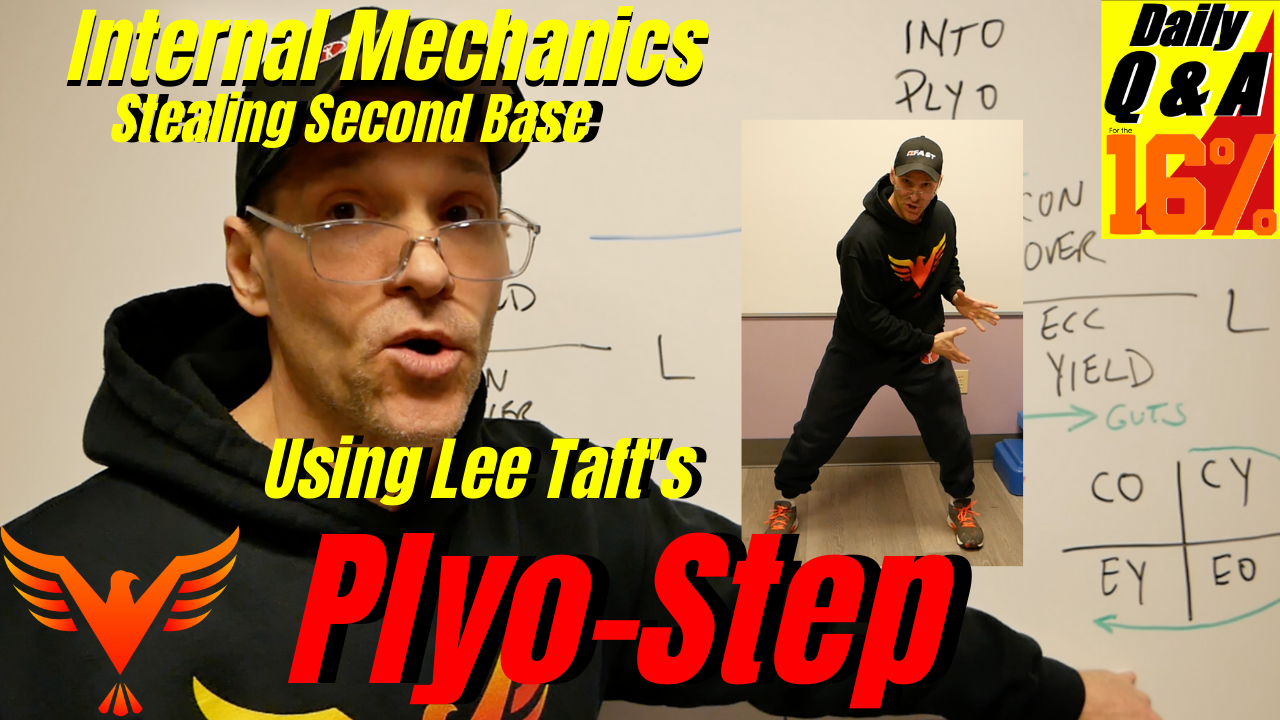
  • Q & A for The 16% – Internal Mechanics of Stealing Second Base – with Lee Taft’s Plyo Step

    Q & A for The 16% – Internal Mechanics of Stealing Second Base – with Lee Taft’s Plyo Step

    Question from Justin:

    I have been thinking about the mechanics of base stealing in baseball and trying to use your rethinking agility video as a reference for understanding, but I was wondering if you could clarify the pelvic floor mechanics if you’re starting from a lateral stance without a cut or change of direction preceding the acceleration?

    In this video:

    We look at this question from the outside mechanics to the internal mechanics with an active demo and then a whiteboard explanation.

    This includes the internal mechanics of my friend, Lee Taft’s Plyo-Step.

    #plyostep #basestealing #billhartmanpt


    Find Bill:

    Instagram

    Facebook

    Twitter

    LinkedIn

  • When Stretching Works… and When Stretching Fails

    When Stretching Works… and When Stretching Fails

    What the world needs is another video or study on stretching!

    NOT!

    Here’s a perspective that may be helpful.

    You’re not really changing the muscles when you’re stretching. That’s why stretching fails… thankfully! If stretching worked the way most people think, we’d be a nightmare of restrictions and extreme mobilities that we’d never be able to organize successfully.

    In this video: What is the essential element to create stability or recapture movement capabilities? It’s really quite simple.

    #stretchingexercises #howtostretch #billhartmanpt


    Find Bill:

    Instagram

    Facebook

    Twitter

    LinkedIn