Category: Homepage

  • Q & A for The 16%… Resources to Help Build Your Model

    Q & A for The 16%… Resources to Help Build Your Model

    I get a lot of questions about where you can find more information about how I developed my model of human performance.

    There are countless resources available.

    Here’s some foundational resources you may find useful. Keep in mind, this is just the beginning.

    Recognizing and Treating Breathing Disorders: A Multidisciplinary Approach https://www.amazon.com/dp/0702049808/ref=cm_sw_em_r_mt_dp_U_9uUlEbFG1GBX9 Anatomy of Breathing https://www.amazon.com/dp/0939616556/ref=cm_sw_em_r_mt_dp_U_BxUlEb5GQDBPX The Thorax: An Integrated Approach https://www.amazon.com/dp/1912085054/ref=cm_sw_em_r_mt_dp_U_sSUlEbQNPAE5F

    Find Bill:

    Instagram

    Facebook

    Twitter

    LinkedIn

  • Q & A for The 16%… Wide Infrasternal Angle vs Narrow Infrasternal Angle Relationships

    Q & A for The 16%… Wide Infrasternal Angle vs Narrow Infrasternal Angle Relationships

    I’ve been getting a lot of similar questions that appear to be related to understanding my references to wide infrasternal angles vs. narrow infrasternal angles.

    When breathing is restricted such that full inhalation or full exhalation cannot be achieved, the infrasternal angle (ISA) provides guidance as to what compensatory strategy is being utilized to maintain respiration.

    In this video, I explain the relationships between the sacrum, the ilium, the hip and acetabulum, and the spine. This should help provide a foundational understanding of the two archetypes that represent the breathing compensatory strategies.

    #infrasternalangle #breathingexercises #billhartmanpt


    Find Bill:

    Instagram

    Facebook

    Twitter

    LinkedIn

  • Q & A for The 16% – Hip Mechanics that Increase Hip External Rotation

    Q & A for The 16% – Hip Mechanics that Increase Hip External Rotation

    Talking about possible influences on hip internal and external rotation.

    There are plenty of clues in the anatomy. Anatomy texts rarely talk about real, living humans and try to apply dead guy anatomy to movement. It doesn’t work and often creates a limiting, confusing model.

    Naming muscles external rotators is wrong because as we move, the way many of these muscles influence movement change and they can become internal rotators. Don’t let the name confuse you and limit your thinking.

    [quick note: early in the video, I misspoke and said that the muscles below the line at the trochanters limits ER. That’s incorrect. They limit IR. Chalk that one up to not enough Neuro Coffee, doing creative work before the Neutein kicks in, and shooting video in the wee hours of the morning]

    Have a great Friday and post your questions for the Q & A. askbillhartman@gmail.com subject line ask Bill Hartman questions.

    Find Bill:

    Instagram

    Facebook

    Twitter

    LinkedIn

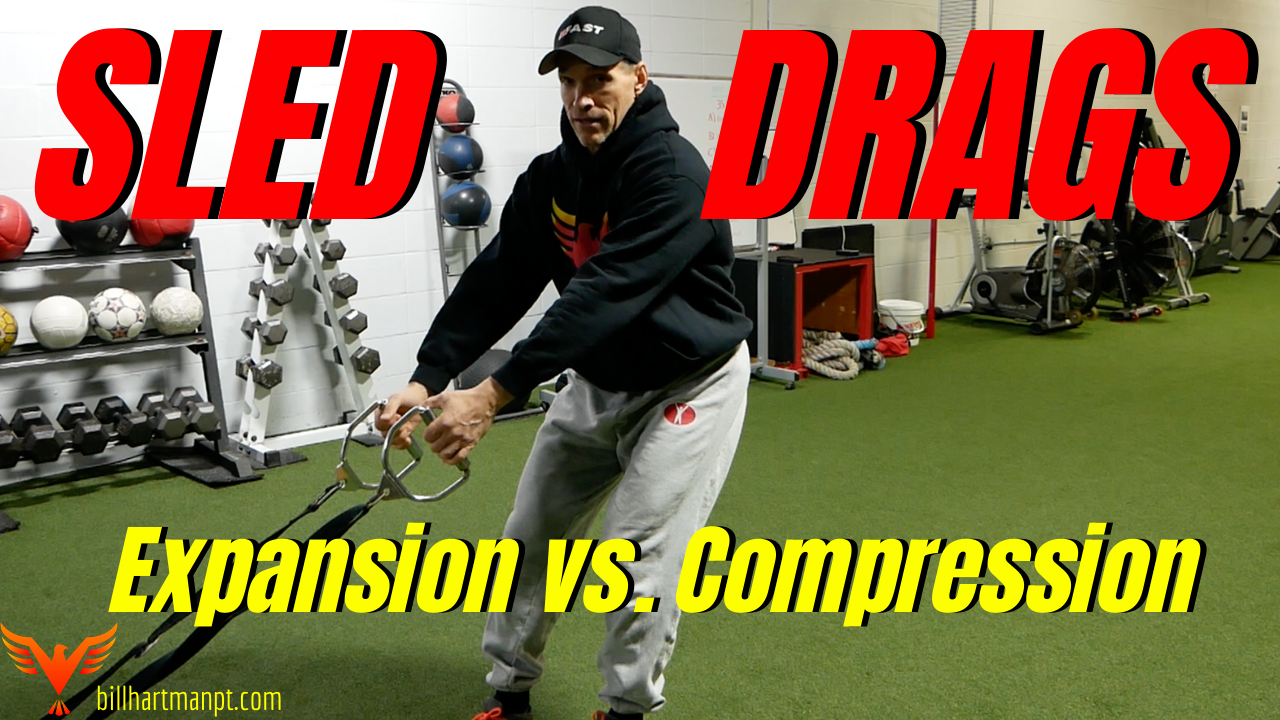
  • Q & A for The 16%… How to Set-up Sled Drags to Enhance Conditioning and Emphasize Inhalation and Expansion

    Q & A for The 16%… How to Set-up Sled Drags to Enhance Conditioning and Emphasize Inhalation and Expansion

    Question: How you would set up a backward sled drag to promote an inhalation strategy in terms of position of the torso and arms? And what you would do if someone needed more compression?

    In this video:

    Two variations of the sled drag to emphasize different aspects of thorax and rib cage movement and shoulder movement.

    What’s are the differences in the set-up for inhalation or expansion and exhalation or compression?

    How to implement a hip shift to enhance movement. How does sled weight affect the chosen strategy?

    #sleddrag #breathingexercises #billhartmanpt


    Find Bill:

    Instagram

    Facebook

    Twitter

    LinkedIn

  • Q & A for The 16%… A Simple Exercise for Upper Back Posture (Dorsal-Rostral Expansion)

    Q & A for The 16%… A Simple Exercise for Upper Back Posture (Dorsal-Rostral Expansion)

    Question: What is the best strategy for one to achieve dorsal rostral expansion without creating and excessive thoracic kyphosis or spinal bending?

    In this video:

    A simple exercise that allows you to feel the focused dorsal-rostral expansion that helps improve posture and shoulder range of motion.

    In many cases, the inability to achieve the desired position to expand the dorsal-rostral thorax is a matter of feeling the appropriate position as you breathe in.

    Use this activity to acquire the sensation and then carry it over to any number of other activities.

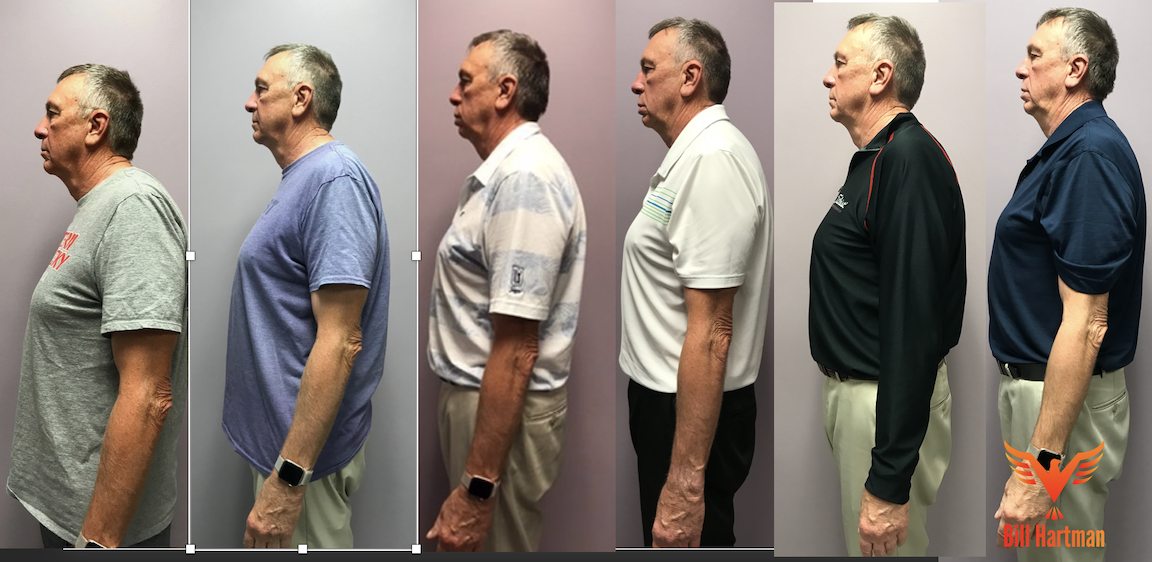
    If you’re seen the remarkable changes that Terry has made as part of The Terry Project on Instagram, you’ll see why I utilize this activity frequently in practice.

    Overcome your desk posture. #deskposture #hunchback #billhartmanpt


    Find Bill:

    Instagram

    Facebook

    Twitter

    LinkedIn