Category: Homepage
-
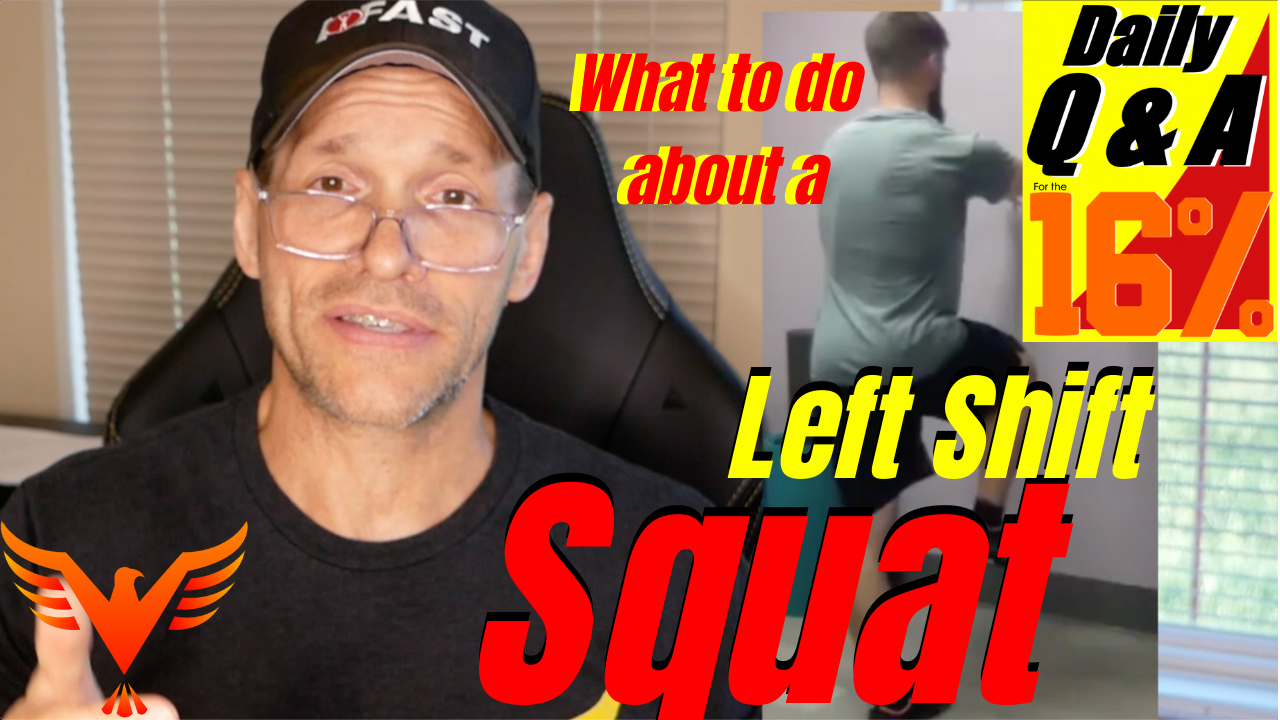
Q & A for The 16% – Left Shift in a Squat/Left Sacrum Compression
Here’s a client case for today’s Q & A that may be of interest. Sit back with your @neurocoffee and enjoy.
From Dori:
I have a client with an ongoing sense of pressure in the left sacral area and left upper back/lower cervical area when she squats. She shifts to the left when she squat but It gets a little better each set of squats but it does persist. She’s limited in end range hip flexion but not SLR which is about 100, hip external rotation is limited, shoulder flexion is limited on the left but not so much on the right. She’ll often complain of soreness after hinging activities in her left hamstrings. any strategy that may be helpful to alleviate the pressure and hamstring soreness would be appreciated.
-

The Bill Hartman Podcast for The 16% – Season 4 – Number 1

Season 4 Number 1
This week’s topics:
-
What Online Assessments YOU should be using
-
Understanding relative elbow range of motion
-
Assessing and Training Young Athletes
-
Coffee ’n’ Coaches Conference Call
-
Neck range of motion testing and training
-
-

Q & A for The 16% – Neck Range of Motion Testing and Training
Neck stiffness and range of motion limitations are quite common and can get magnified by various training strategies.
Here’s a question to lead us toward a way to monitor progress even if you don’t do manual therapy as part of your practice.
Grab a @neurocoffee and give this a watch.
From Adrian:
I have an athlete with a great deal of neck limitation who appears to be very compressed in the upper ribs. Are there any other good tests that can lead me toward a solution or let me know that I’m making progress short of trying to assess neck mobility directly? Does compression of the manubrium affect neck position and movement?
#neckpain #neckstretches #BillHartmanPT
-

Q & A for The 16% – Assessing and Training Young Athletes
Today’s topic is Long-Term Athletic Development playing off a question I got at askbillhartman@gmail.com.
It’s a common concern for parents of young athletes. It’s also related to a blog that I reposted today from 2014 that still applies.
Grab a @neurocoffee. Here we go.
From Adam:
My son, who is 13 years old, is a baseball pitcher. Would you suggest/recommend parent have their athletes assessed every year to identify those key performance indicators and understand how to best use them while maintaining proper technique to help prevent against injury? Check out my answer and then go to https://billhartmanpt.com/thoughts-on-long-term-athletic-development-a-repost-from-2014/ and check out the blog.
#LTAD #youngathletes #billhartmanpt