Author: Bill

  • Bill Hartman’s Weekly Q & A for The 16% – December 15, 2019

    Bill Hartman’s Weekly Q & A for The 16% – December 15, 2019

    This week on YouTube:

    • Bill Hartman’s Weekly Q & A for the 16% – December 8, 2019: https://youtu.be/dvAufow_1Fg
    • The QB Docs Podcast with Drew Kiel and Bill Hartman: https://youtu.be/hNmwdAo-k-E
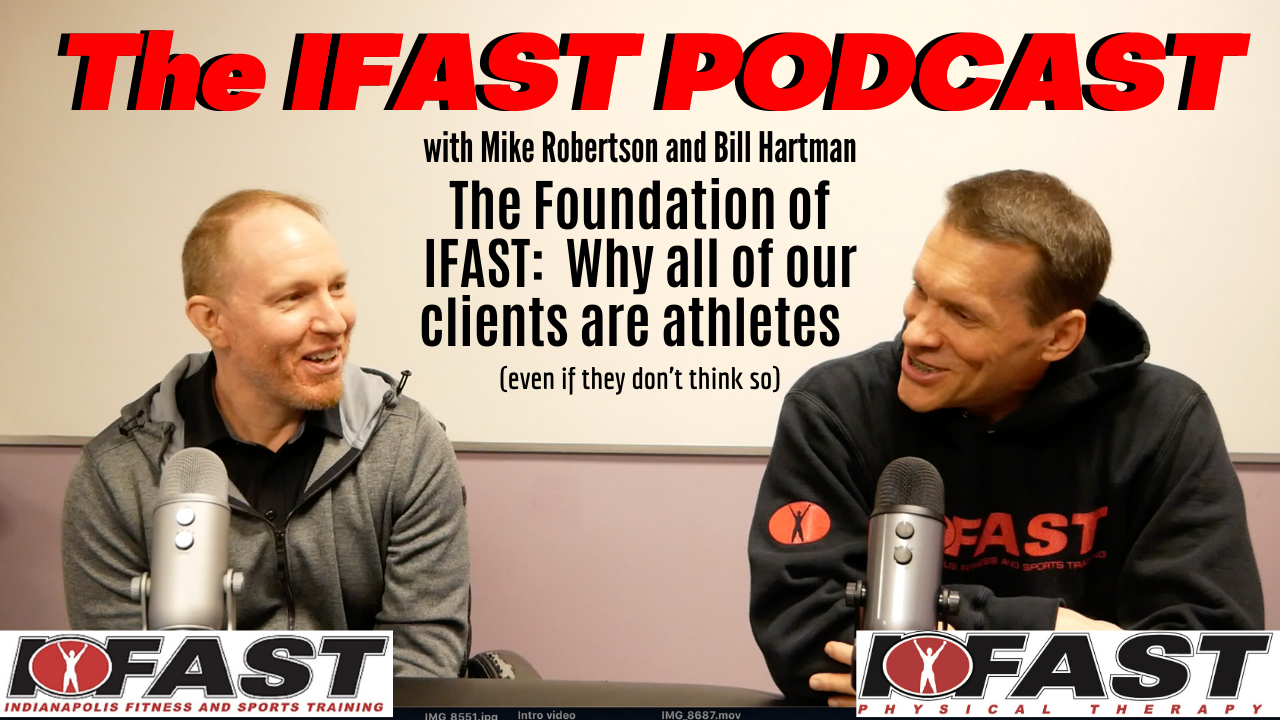
    • The IFAST Podcast #6 with Mike Robertson and Bill Hartman – Our Client Foundation: https://youtu.be/Y4kmtvla6ZM
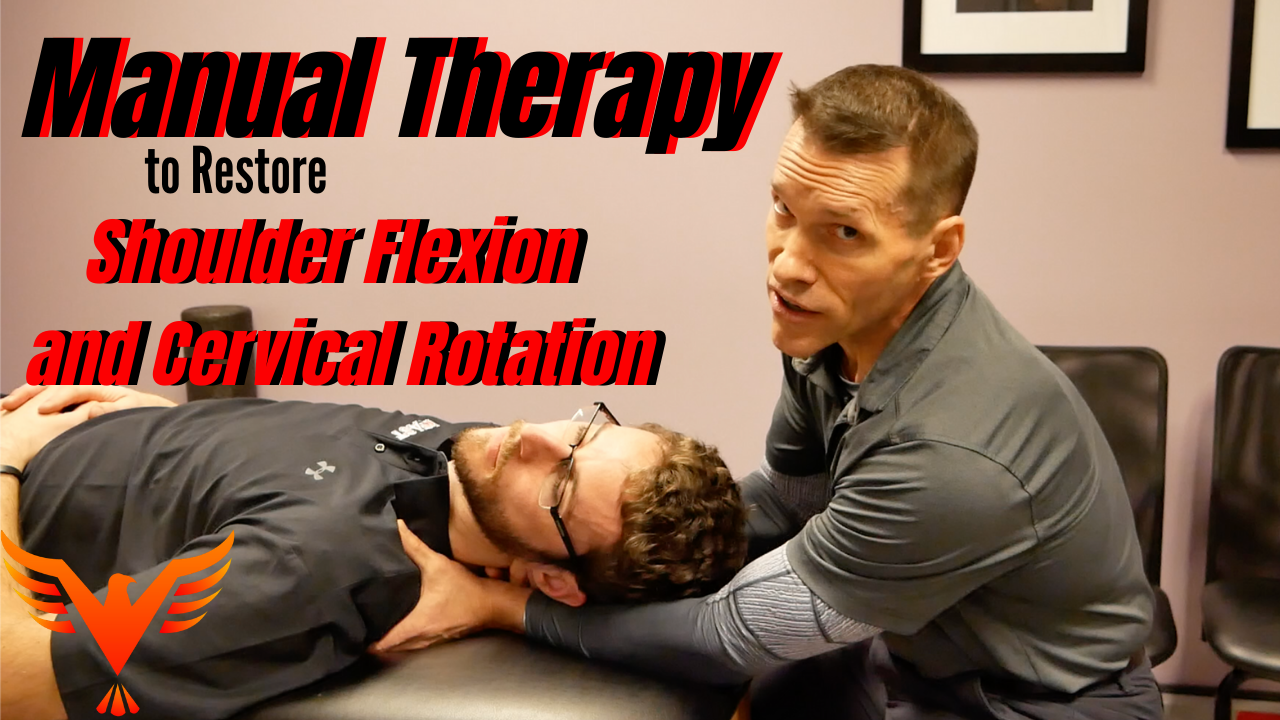
    • Manual Therapy – Mobilization to Increase Shoulder Flexion and Cervical Rotation: https://youtu.be/WgfF-EfEPsM

    This week on Instagram (@billhartmanpt):

    • Treatment sequencing
    • The Terry Project
    • Thorax shape and shoulder external rotation/shoulder internal rotation
    • The QB Doc Podcast Highlights
    • Videos for The 16%

    This week’s questions:

    When squatting, what do you believe the risk/reward is for oly shoes or some sort of heel lift. I know the obvious benefits/risks but in you’re opinion, which outweighs the other? Does it put that much more stress on your knees? Does it allow you to stack your pelvis better? Hip IR?

    How would you approach working with a patient that was diagnosed with a condition related to central sensitization such as fibromyalgia or complex regional pain syndrome? Are there any specific compensatory strategies you have found to drive central sensitization (or what we may perceive to be central sensitization)?

    For a wide ISA individual trying to regain his/her squat pattern, what progressions do you use after goblet/kettlebell/zercher squats? In light of Mike Robertson’s complete coach course I think the safety squat bar will be a good squat progression – allowing you to load the squat pattern and keep posterior thorax open for expansion. Do you use the safety squat bar much to load/progress the squat pattern?

    How do you determine if a proxy measure of the extremity is pathological (ex. ligamentous laxity, capsular instability)? On the opposite end, how would you determine a true tissue extensibility limitation assuming you’ve maximized axial position and respiratory variability? How would you treat these two presentations differently?

    Piggy-backing off last week’s question, what tests or measures do you apply to determine whether the elbow is oriented towards ER/pronation or IR/supination?

    From a practical standpoint, what would be do with a narrow campo angle vs. a wide campo angle? I understand that it is a representation of the superficial helical angle that compresses the underlying axial helices, but how does it actually change our approach to gaining more variability or more performance?

    Why might we use rolling activities for a wide infrasternal angle and quadruped activities for a narrow infrasternal angle ? Can you give an example of an activity for both scenarios?

    So with respect to internal pressure of the guts and diaphragm with high rate of force production in say a high box jump. You’d want a diaphragm that can concentrically yield and concentrically overcome very quickly?

    Please, please, please elaborate on how getting into a cut is “ER” and out of a cut is “IR”. In my myopic, acetabulum on femur way of looking at things, it seems as if “loading” should be acetabulum on femur IR and “exploding” should be the reverse. Thanks for all the content!

    #billhartmanpt #infrastrernalangle #squatting
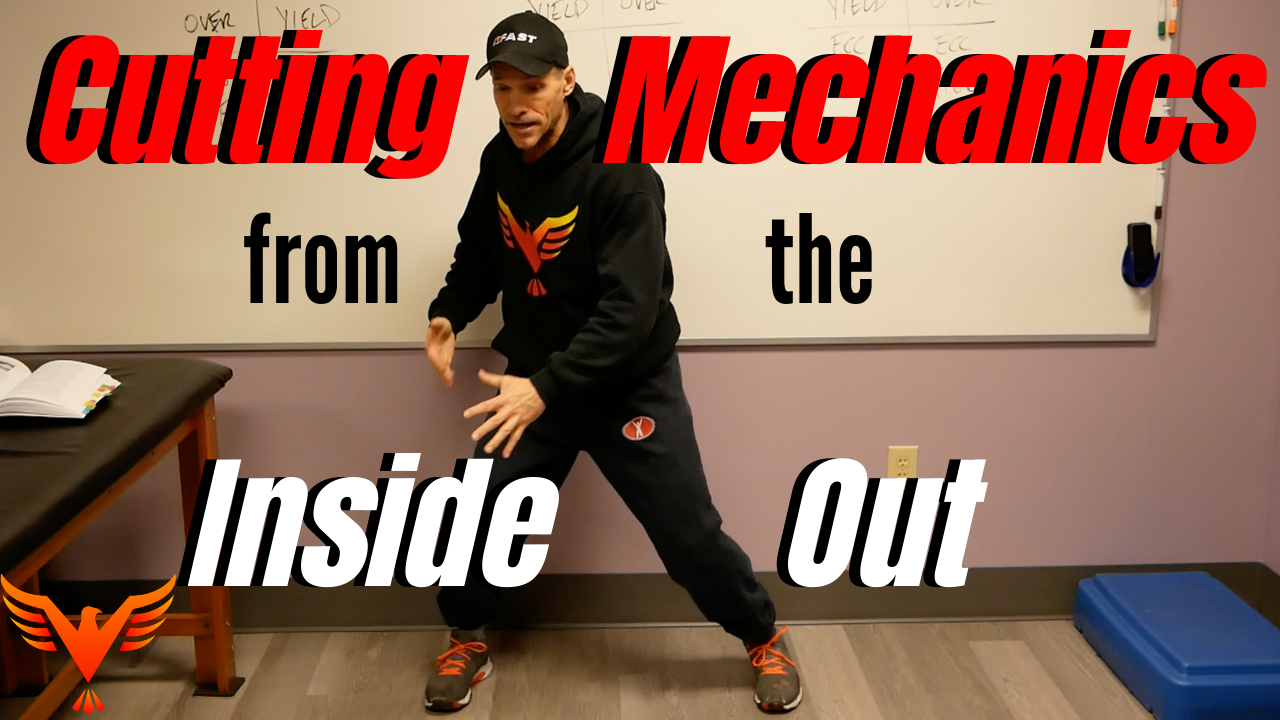
     

  • Cutting Mechanics from The Inside-Out

    Cutting Mechanics from The Inside-Out

    Agility and cutting mechanics have always been described by the extremity movement, stretch-shortening cycle, and external forces.

    This video describes cutting from the perspective of how you manage the internal forces.

    How does the pelvic diaphragm behave?
    Where and when does concentric orientation occur?
    Where and when does eccentric orientation occur?
    How do I use yielding action to position the body?
    How do I use overcoming action to move quickly?
    What are the right foot cutting mechanics look like?
    How does this help my exercise prescription and programming?

    #agilitytraining #pelvicdiaphragm #speedtraining


  • Concentric vs. Eccentric Orientation and Yielding vs. Overcoming Muscle Action

    Concentric vs. Eccentric Orientation and Yielding vs. Overcoming Muscle Action

    Thinking differently about muscle contraction.

    Traditionally, we think of muscle contractions as concentric, eccentric, and isometrics. Isometrics as they are described probably don’t exist.

    If we look at muscle contraction as a moment in time, we can determine their orientation as well as the direction of the action.

    From my perspective, this is a more useful representation of what’s actually happening with less confusion. This perspective also allows a more concise determination of needs that leads to more effective and targeted exercise prescription.

    #billhartmanpt #concentric #pelvicdiaphragm


  • Manual Therapy to Increase Shoulder Flexion and Cervical Rotation

    Manual Therapy to Increase Shoulder Flexion and Cervical Rotation

    In the heterarchy of treatment, I rarely do manual therapies as my first line of intervention.

    Patients and clients always achieve more when they can create changes themselves and learn self-management. When a local influence is needed that the client cannot produce themselves, then manual therapy may be useful to create an opportunity to make the change easier for the client to accomplish.

    The triangle formed by the clavicle and the scapula with the acromion as the apex (affectionately referred to as The Camporini Angle which we named after my current Padawan) can represent the degree of compressive strategy applied to the upper thorax by the superficial musculature.

    If the dorsal-rostral thorax is compressed, this will limit the client’s ability to complete true shoulder flexion and to recapture lower cervical rotation. This is a very easy, gentle scapular mobilization that reduces the compressive strategy, expands The Camporini Angle and restores shoulder flexion as well as lower cervical rotation.

    #scapularmobilization #manualtherapy #camporiniangle

    Find Bill:

    Instagram

    Facebook

    Twitter

    LinkedIn

  • The IFAST Podcast #6 with Mike Robertson and Bill Hartman – Our Client Foundation

    The IFAST Podcast #6 with Mike Robertson and Bill Hartman – Our Client Foundation

    While IFAST is known for training competitive athletes, all of our clients come to us with a “So that” as Mike Robertson is fond of saying.

    They come to IFAST “so that” they can accomplish something outside the gym such as climbing a mountain, running a desert, playing with their grandchildren, or tending to their garden.

    As a by-product, they gain greater health, strength, endurance, and general well-being. This episode is about those clients that make up the foundation of IFAST.

    #ifast #indianapolis #personatraining

    Find Bill:

    Instagram

    Facebook

    Twitter

    LinkedIn