Author: Bill

  • Why you must individualize exercise prescription

    Why you must individualize exercise prescription

    You cannot blindly prescribe exercises based on the sport or the position that the athlete plays. Each athlete has their own personalized physics that determines how they perform.

    The exercise prescription should respect that fact.

    We must adapt the exercise, the cues, and the execution to meet the needs of the individual rather than just the perceived needs of the skill. Here I use baseball pitchers as an example of how generalized exercise programs for pitchers fail a large percentage of the athletes.

    #baseballpitcher #billhartmanpt #throwersten

    Find Bill:

    Instagram

    Facebook

    Twitter

    LinkedIn

  • Question:  What words are meaningful to your clients?

    Question: What words are meaningful to your clients?

    A question in regard to using common industry jargon in speaking with clients: What do your clients prefer to hear? Which words are relatable to them and their understanding?

    How we communicate certainly matters. We speak differently to different groups or individuals. Most of this happens unconsciously.

    We don’t talk to our closest friends and family the way we may speak with a new client at their first appointment.

    That first meeting with a client is important as it can set the tone for all future interactions as you work to establish rapport. Your questions should help you to understand “their story” which informs you of their desires, beliefs, and their level of understanding.

    They read what you and other professionals in the industry write on the internet, and in many cases, may use jargon-laden language because of their exposure. They want to present themselves in the best light and will attempt to speak your language or to use jargon in an attempt to do so even when they don’t really understand.

    In this case, it may be necessary for you to use similar language at first. This is referred to as “meeting them at their story.” It keeps the interaction comfortable and non-threatening. It provides a reassuring element to the new client that what they know or what they believe is okay for now even if they may be misguided.

    Consider a client who offers that they’ve been following The Ice Cream Diet.

    What not to do…

    You: Are you on any special diet program?
    Client: Yes, I follow the Ice Cream Diet.
    You: What?! That’s ridiculous! No one can lose weight eating ice cream.

    A better choice…

    You: Are you on any special diet program?
    Client: Yes, I follow the Ice Cream Diet.
    You: You’re eating regularly. That’s great. We can use that to your advantage to make the changes you’re seeking.

    You now have an element of their story. It is now your job to guide them away from what you’ve determined to be interfering with their process, and you can influence an existing behavior favorably to support their intention. This includes the language they use.

    As we guide the client through an exercise program, it is not necessary to pepper our instructions with unnecessary industry jargon or concepts. There’s a difference between meeting a client at their story and how an insecure coach defaults to jargon in an attempt to prove his intellect and worth to the client. Clients don’t really care what you know. They just want a coach to help them achieve the outcome they desire.

    The mythical neutral spine comes to mind in this instance.

    Other than the fact that it doesn’t exist and couldn’t be identified visually if it did, attempting to create a singular ideal promotes opportunities for failure and additional, distracting cognitive load on the client. Much like those that chase “good posture” as if there is just one elusive posture that we hope to attain someday. [author’s note: Sorry. Your mom was wrong. There’s no such thing as good posture.]

    While we’re on the topic, there is no one good knee position, one good foot position, one good hip position, one good neck position, or one good shoulder position. Rarely is there a best way. There should be many ways depending on the context. The ability to adapt tends to represent health in all systems.

    The human body has evolved to distribute loads and stresses throughout the movement system quite well. Movement is actually quite “noisy” in that there are constant adjustments, micromovements, and micromovements that must occur to assure this distribution of load as we move.

    Allowing a client to explore movement is a better choice. It allows them to evolve a sense of acceptable ranges of movement rather than chasing the imagined ideal that may actually create positions or restrictions that lead to discomfort, focal loads, and pain. Such an outcome is the failure of the coach to understand how the system moves. It is not the fault of the client or their body.

    Don’t misunderstand this to be an “anything goes” proposition in regard to exercise execution. Your purpose as the coach is to guide the process within those acceptable limits rather than restrict it. Teaching the exercise or activity within its context is sufficient to arrive at a successful outcome. Eventually, the exercise becomes the exercise for the client.

    A squat becomes a squat.
    A row becomes a row.
    A press becomes a press.
    A lunge becomes a lunge.

    No neutral spine cues are necessary.


  • Bill Hartman’s Weekly Q & A for The 16% – December 22, 2019

    Bill Hartman’s Weekly Q & A for The 16% – December 22, 2019

    Bill Hartman’s Weekly Q & A for The 16% – December 22, 2019

    This week on YouTube:
    Bill Hartman’s Weekly Q & A for The 16% – December 15, 2019:

    The IFAST Podcast #7 – The what, why and how of continuing education: https://youtu.be/ltw_swOprj4
    Understanding the Influence of Orientation on Range of Motion: https://youtu.be/mpmS5ubWjVw

    This week on Instagram:
    A clip from The IFAST Podcast about why I do The Intensive the way I do
    A clip from my Cutting Mechanics video as to how the pelvic diaphragm behaves
    I introduced Cartoon Bill this week about eliminating unnecessary jargon
    A clip from the Influence of Orietation video
    A Terry Project update
    Videos for The 16%…

    This week’s questions:

    2:07
    Riddle me this Batman…How can 2 individuals who both present with table test of limited left Hip IR (has 10 degrees), limited right ER (30 degrees), and limited hp extension in side lying (-5) Both have limited shoulder IR bilaterally Right (10 degrees) Left (30 degrees), but have at least 90 degrees of shoulder ER Left (90) and Right (97), yet 1 individual was presents as a Narrow ISA while the other presents as a wide? How can this be?

    4:46
    Looking at the wear pattern of their shoes, both clients bias towards the outside edge of their feet. My thought is that their femur is biased in internal rotation but their foot is biased towards external rotation, putting torque on the knee. Am I on the right track?

    6:53
    I was hoping you could offer more insight about helices and how it pertains to the body. I am open to and agree that all movements are rotations, but I am getting lost when you start talking about helices and would greatly appreciate some clarification or at least a starting point from which I can start to learn from.

    9:30
    What drives an anterior compressive strategy at the pelvis, thus limiting hip IR due to increased fluid in the anterior pelvis ? You have explained that a concentric orientation of posterior pelvic musculature occurs due to “elongation” and shape change of posterior pelvis with an anterior compressive strategy

    13:29
    I was looking at the pump handle as being similar to hip extensions.
    If I can’t depress the pump handle the my neck will substitute the remainder by extending?

    14:48
    How does grip variance affect elbow and shoulder function? Index vs pinky dominant grips?

    17:11
    Can you break down the shape change of the pelvis and behavior or the pelvic floor during acceleration and max velocity sprinting?

    #infrasternalangle #billhartman #pelvictilt


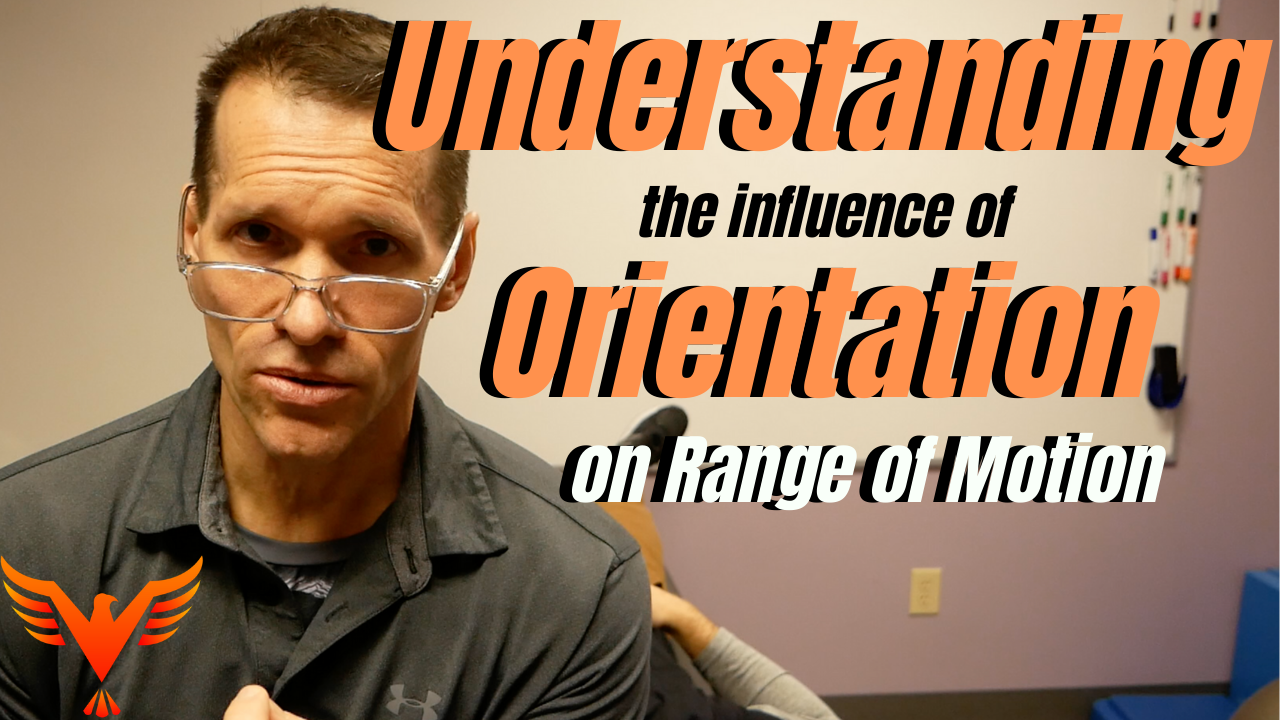
  • Understanding the Influence of Orientation on Range of Motion

    Understanding the Influence of Orientation on Range of Motion

    The orientation of the pelvis and thorax influence the shape of the axial skeleton as well as the position of the glenoid and the acetabulum. This, in turn, influences muscle orientation and action to produce the available range of motion that is available during movement or table tests.

    In this video, manipulate the Padawan’s position intentionally, to demonstrate how axial skeleton orientation directly influences range of motion measures.

    #pelvictilt #dorsalrostral #shoulderflexion

    Find Bill:

    Instagram

    Facebook

    Twitter

    LinkedIn

  • The IFAST Podcast #7 with Mike Robertson and Bill Hartman – Continuing Ed: The What, Why, and How

    The IFAST Podcast #7 with Mike Robertson and Bill Hartman – Continuing Ed: The What, Why, and How

    If you want to go there, it starts HERE.

    Continuing education is a critical part of any professional’s growth.
    But where do you start with con ed?
    And how does that process evolve over the years?
    In this show, we talk about:
    Our initial forays into continuing education,
    The role of seminars – including the best type of seminars for both beginners and seasoned vets,
    Why the Intensive is in many ways “The Anti-Seminar,”
    The different types of knowledge you build and accumulate,
    Why there’s more to con ed than simply accumulating knowledge,
    The value of deep work and focus in your target activity, and
    How masters evolve from mentees to mentors.
    This show is jam-packed full of great info, and we truly hope you enjoy it!

    #ifast #continuingeducation #deepwork