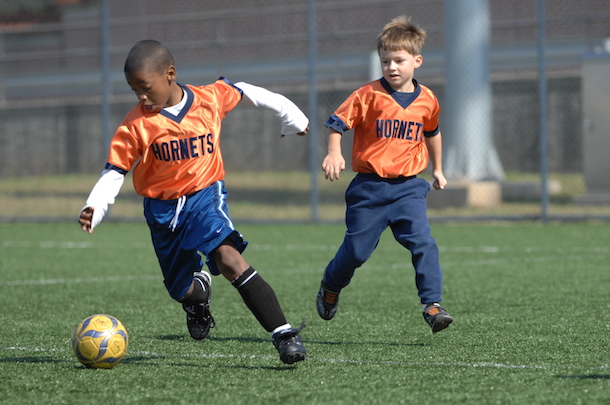
Tag: young athletes

  • The Bill Hartman Podcast for The 16% – Season 16 – Number 7

    The Bill Hartman Podcast for The 16% – Season 16 – Number 7

    The Bill Hartman Podcast for The 16% – Season 16 – Number 7

    SUBSCRIBE for even more helpful content:
    YT: https://www.youtube.com/@BillHartmanPT
    IG
    https://www.instagram.com/bill_hartman_pt/
    FB
    https://www.facebook.com/BillHartmanPT
    WEBhttps://billhartmanpt.com/

    This weeks topics:

    0:00 Today’s Q&A is with Matt who got permission to share client photos that offer opportunities to identify movement strategies used to manage center of gravity. While photos don’t tell you everything, they expand your ability to determine how and why someone moves the way they do. Be sure to check out my IG account for the visual.

    11:13 Today’s Q&A is part 2 with Matt who is sharing posture photos of the client. We can use these photos to provide clues as to what type of movement strategies that someone may be using to control their center of gravity and how they interact by using their internal and external rotations. Be sure to check out my IG account for the visual.

    22:44 Today’s Q&A is with Teja who is working with a Narrow ISA individual who is using a strong compressive strategy to stay inside of their base of support. In most cases, we just need to move them toward an early propulsive representation to resolve the issue. However, in some cases, reverse engineering requires capturing the ER shape change first. This discussion gives you the understanding with a demo as well.

    32:07 Today’s Q&A is with Dante who had a question regarding training young kids, posture, and how their connective tissue behavior may influence how we work with them in their activities. Kids are not little adults. You must speak their language.

  • Q & A for The 16% – Assessing and Training Young Athletes

    Q & A for The 16% – Assessing and Training Young Athletes

    Today’s topic is Long-Term Athletic Development playing off a question I got at askbillhartman@gmail.com.

    It’s a common concern for parents of young athletes. It’s also related to a blog that I reposted today from 2014 that still applies.

    Grab a @neurocoffee. Here we go.

    From Adam:

    My son, who is 13 years old, is a baseball pitcher. Would you suggest/recommend parent have their athletes assessed every year to identify those key performance indicators and understand how to best use them while maintaining proper technique to help prevent against injury?  Check out my answer and then go to https://billhartmanpt.com/thoughts-on-long-term-athletic-development-a-repost-from-2014/ and check out the blog.

    #LTAD #youngathletes #billhartmanpt

  • Thoughts on Long-Term Athletic Development – A Repost from 2014

    Thoughts on Long-Term Athletic Development – A Repost from 2014

    Thoughts on long-term athletic development…

    1. In a sporting environment, athletes perform based on learned prediction models associated with experience.

    2. Research supports the understanding that motor [movement] variability facilitates motor learning and prediction capabilities that determine the ultimate level of performance.

    3. Greater movement variability [movement experience] is associated with a faster rate of learning and better prediction modeling (a rare case of more is better).

    4. The nervous system regulates motor variability and responses to perceptions of threat to the human system.

    5. Exposure to an unpredictable environment like most sports demands a broad spectrum of movement variability to limit threat and increase the level of sport performance.

    6. Early sports specialization intentionally restricts motor variability and movement exploration, and therefore, limits motor learning and prediction modeling.

    7. Limited motor learning and prediction modeling results in novel experiences in a sporting environment being perceived as threatening and the nervous system will limit human system variability to perceived demands of the sporting activity as a means of protection.

    8. Limitations in human system variability [including movement] limit ultimate sports performance.

    9. Early sports specialization is in conflict with optimal long-term athletic development of young athletes.

    It seems to me that those coaches concerned with the physical preparation side of the training process (AKA the strength and conditioning community) either understand the importance of long-term athletic development (LTAD) process or are coming around nicely to such an understanding.  I can’t remember the last time that a strength coach expressed that what our kids need is more specificity, more focus on one sport, more games played per season/year, and less focus on general development before the age of specificity.  Thank the internet and our ability to communicate information and ideas that originated in other countries for that.

    We have a growing number of excellent coaches at the early developmental levels of sports preparation trying to remedy the problems associated with early sports specialization, overuse injuries, and young athlete burnout.  We have educational resources.

    So where are we failing our young athletes?

    Perhaps I’m biased, but I don’t think it’s the strength and conditioning community that is failing the athletes.

    We’re failing the parents and the sports coaches.

    I truly believe that Moms and Dads want what’s best for their kids.  They want them to be happy.  They want them to be healthy. They want them to be successful.

    The problem is that there is no playbook for them.

    Parents don’t understand how early focus on a single sport actually limits their child’s ability to reach their true athletic potential in any sport.  Most of the athletes that make it to the big leagues played a variety of sports throughout their athletic careers.

    Parents don’t understand how central and peripheral fatigue accumulates from a high frequency of practice, repetitive activities, and a seemingly endless, year-round season of the same sport.  There’s no better way to steal the fun out of playing sports and end a sports career early than to be tired all the time and make it feel like a job to such a degree that you cap an athlete’s performance in their teens.  And parents don’t understand that their child may never express the fact that they’re exhausted and don’t want to play tonight because they don’t want to let Mom and Dad or their team down.

    Parents don’t understand how these same activities stress their children’s muscles, joints, bones, and connective tissues.  If they did, perhaps we wouldn’t see adult-type injuries in preteens and teenagers associated with overuse.  Playing a variety of sports, strength training, running, jumping, tumbling, and throwing are all safe and appropriate activities that make kids better athletes.  It is when these activities are taken to excess by young athletes that they become detrimental.

    Parents don’t understand that it’s okay to say no to protect their child.  Playing one different sport per season or taking a full season off to just play and be a kid is a great way to improve movement competency and athleticism.

    I think the sport coaches mean well too, but I’m concerned that there are too few that understand the power of LTAD and the failures of the early specialization model that prevails in the USA.

    Sport coaches are great strategists but most lack a fundamental understanding of the energetic demands of their chosen sport.  I would never expect a sport coach to have the same level of understanding of exercise physiology as a strength and conditioning coach, however, the lack of understanding leads sport coaches to “condition” their athletes inappropriately either intentionally or unintentionally contributing to excessive fatigue and overuse injuries.

    Sport coaches are great technical skill coaches but many lack sufficient understanding of the physiology that underlies skilled sports movement.  Coaches without a remedial understanding blame performance deficits on a lack of skill rather than the physiology that underlies skilled movement. This leads to a more is better approach to activities that merely reinforces compensatory movement, leads to injuries, or establishes a performance plateau.

    Sport coaches are great motivators but it is unfair, unnecessary, inappropriate, and ultimately detrimental to demand that your athletes participate in your single sport program year round.  Young athletes are not the same physiologically or psychologically as adult athletes and have their own general and specific needs to reach their full potential.  Pressuring athletes to participate in “voluntary” practice year round or suffer the consequences of not earning a starting position or even playing is beyond reproach.

    I am all for winning.  I’ve devoted a large part of my life to assuring that our young athletes have the best shot at success.  Adopting the foundational principles of long-term athletic development provides your kids the best opportunity to reach their ultimate potential.

    Moms, Dads, and Coaches… are you listening?
    Find Bill:

    Instagram

    Facebook

    Twitter

    LinkedIn

  • Q & A for The 16% – Young Athlete Development and ISA Compensations & Strategies

    Q & A for The 16% – Young Athlete Development and ISA Compensations & Strategies

    My @neurocoffee is in hand and here’s this morning’s Q&A with a little bit of long-term athletic development feel to it.

    From Nate:
    I work do a lot of work with athletes in the age groups of 11-25 and I was curious if you think ISA compensations take time to manifest and therefore hard to detect in younger or prepubesent people?   As a follow up to this question do you feel that it would be smart to expose young and/or inexperienced athletes to the entire spectrum of the propulsion arc so they don’t slip to far into inhale or exhale strategies?

    #LTAD #youngathletes #billhartmanpt

    Find Bill:

    Instagram

    Facebook

    Twitter

    LinkedIn

  • Thoughts on Long-Term Athletic Development and Training Young Athletes

    Thoughts on Long-Term Athletic Development and Training Young Athletes

    young-athlete1

    This was actually a Facebook post that did pretty well in the “likes” department so I thought I’d build on it a bit for a blog.

    Thoughts on long-term athletic development…

    1. In a sporting environment, athletes perform based on learned prediction models associated with experience.

    2. Research supports the understanding that motor [movement] variability facilitates motor learning and prediction capabilities that determine the ultimate level of performance.

    3. Greater movement variability [movement experience] is associated with a faster rate of learning and better prediction modeling (a rare case of more is better).

    4. The nervous system regulates motor variability and responses to perceptions of threat to the human system.

    5. Exposure to an unpredictable environment like most sports demands a broad spectrum of movement variability to limit threat and increase the level of sport performance.

    6. Early sports specialization intentionally restricts motor variability and movement exploration, and therefore, limits motor learning and prediction modeling.

    7. Limited motor learning and prediction modeling results in novel experiences in a sporting environment being perceived as threatening and the nervous system will limit human system variability to perceived demands of the sporting activity as a means of protection.

    8. Limitations in human system variability [including movement] limit ultimate sports performance.

    9. Early sports specialization is in conflict with optimal long-term athletic development of young athletes.

    It seems to me that those coaches concerned with the physical preparation side of the training process (AKA the strength and conditioning community) either understand the importance of long-term athletic development (LTAD) process or are coming around nicely to such an understanding.  I can’t remember the last time that a strength coach expressed that what our kids need is more specificity, more focus on one sport, more games played per season/year, and less focus on general development before the age of specificity.  Thank the internet and our ability to communicate information and ideas that originated in other countries for that.

    We have organizations like the IYCA that are assisting in the development of a growing number of excellent coaches at the early developmental levels of sports preparation trying to remedy the problems associated with early sports specialization, overuse injuries, and young athlete burnout.  We have educational resources

    So where are we failing our young athletes?

    Perhaps I’m biased, but I don’t think it’s the strength and conditioning community that is failing the athletes.

    We’re failing the parents and the sports coaches.

    I truly believe that Moms and Dads want what’s best for their kids.  They want them to be happy.  They want them to be healthy. They want them to be successful.

    The problem is that there is no playbook for them.

    Parents don’t understand how early focus on a single sport actually limits their child’s ability to reach their true athletic potential in any sport.  Most of the athletes that make it to the big leagues played a variety of sports throughout their athletic careers.

    Parents don’t understand how central and peripheral fatigue accumulates from a high frequency of practice, repetitive activities, and a seemingly endless, year-round season of the same sport.  There’s no better way to steal the fun out of playing sports and end a sports career early than to be tired all the time and make it feel like a job to such a degree that you cap an athlete’s performance in their teens.  And parents don’t understand that their child may never express the fact that they’re exhausted and don’t want to play tonight because they don’t want to let Mom and Dad or their team down.

    Parents don’t understand how these same activities stress their children’s muscles, joints, bones, and connective tissues.  If they did, perhaps we wouldn’t see adult-type injuries in preteens and teenagers associated with overuse.  Playing a variety of sports, strength training, running, jumping, tumbling, and throwing are all safe and appropriate activities that make kids better athletes.  It is when these activities are taken to excess by young athletes that they become detrimental.

    Parents don’t understand that it’s okay to say no to protect their child.  Playing one different sport per season or taking a full season off to just play and be a kid is a great way to improve movement competency and athleticism.

    I think the sport coaches mean well too, but I’m concerned that there are too few that understand the power of LTAD and the failures of the early specialization model that prevails in the USA.

    Sport coaches are great strategists but most lack a fundamental understanding of the energetic demands of their chosen sport.  I would never expect a sport coach to have the same level of understanding of exercise physiology as a strength and conditioning coach, however, the lack of understanding leads sport coaches to “condition” their athletes inappropriately either intentionally or unintentionally contributing to excessive fatigue and overuse injuries.

    Sport coaches are great technical skill coaches but many lack sufficient understanding of the physiology that underlies skilled sports movement.  Coaches without a remedial understanding blame performance deficits on a lack of skill rather than the physiology that underlies skilled movement. This leads to a more is better approach to activities that merely reinforces compensatory movement, leads to injuries, or establishes a performance plateau.

    Sport coaches are great motivators but it is unfair, unnecessary, inappropriate, and ultimately detrimental to demand that your athletes participate in your single sport program year round.  Young athletes are not the same physiologically or psychologically as adult athletes and have their own general and specific needs to reach their full potential.  Pressuring athletes to participate in “voluntary” practice year round or suffer the consequences of not earning a starting position or even playing is beyond reproach.

    I am all for winning.  I’ve devoted a large part of my life to assuring that our young athletes have the best shot at success.  Adopting the foundational principles of long-term athletic development provides your kids the best opportunity to reach their ultimate potential.

    Moms, Dads, and Coaches… are you listening?