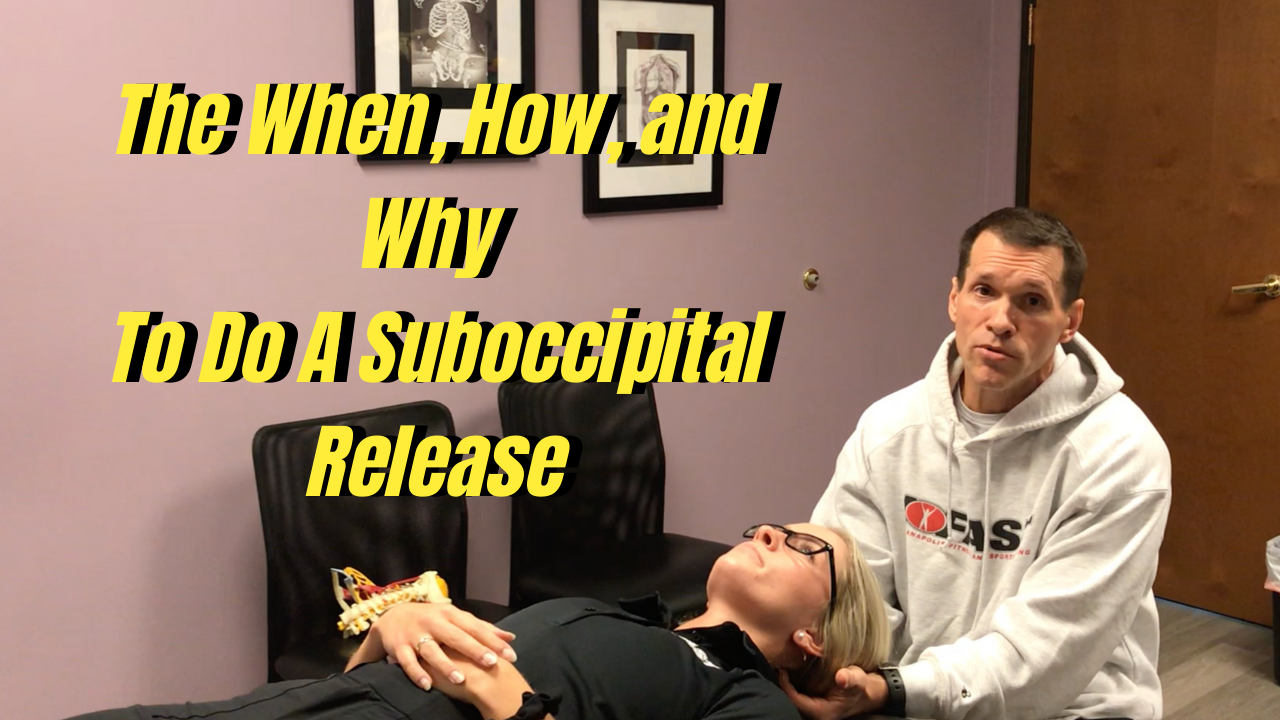
There may be multiple factors a play as to why any manual therapy may be useful. To simplify the model of application, right or wrong, we can just look at it as moving fluids in and out of a space or promoting concentric or eccentric orientation of muscles.
A suboccipital release is a commonly applied tactic for various purposes and various diagnoses. How and when to apply it has always been rather vague, but over time, I’ve put together some reasoning and signs as to when it’s best to apply.
A distracting technique can be applied if you find the following signs:
- Limited ipsilateral hip flexion
- Limited ipsilateral shoulder flexion
- Greater ipsilateral mandibular lateral trusion
- Greater ipsilateral upper cervical rotation
When these signs are unilateral, use a compressive manual strategy on the contralateral side as shown in the video.
For symmetrical presentations with the limitations mentioned above, apply the distraction manual technique bilaterally.
If you find excessive upper cervical rotation, limited lower cervical flexion, and bilateral hypermobility of mandibular lateral trusions, then apply the compressive technique bilaterally.