Tag: breathing squat

  • Q & A for The 16% – What Happens in a Deep Squat:  Mechanics and Cues for Breathing

    Q & A for The 16% – What Happens in a Deep Squat: Mechanics and Cues for Breathing

    From Zhang:

    What are the actions of musculature above the level of the trochanter, such as upper glute max and piriformis, at the bottom of a deep squat when hips are flexed above 120 degrees? Do these muscles still contribute to the internal rotation of the femurs in a deep squat, or do they change the line of pull and become external rotators again?

    From Eddy:

    How about having a band around and a ball between the knees simultanously when squatting (as a means to promote inhalation/exhalation mechanics and inhibiting compensatory mechanics), then we would start with Inhalation at the top position then exhaling and IR against the ball till about 90° of flexion, than inhaling againg with ER against the band till the bottom of the squat.  So my thoughts were to promote ER (and Supination) with band and IR (and Pronation) with ball?

    In this video:

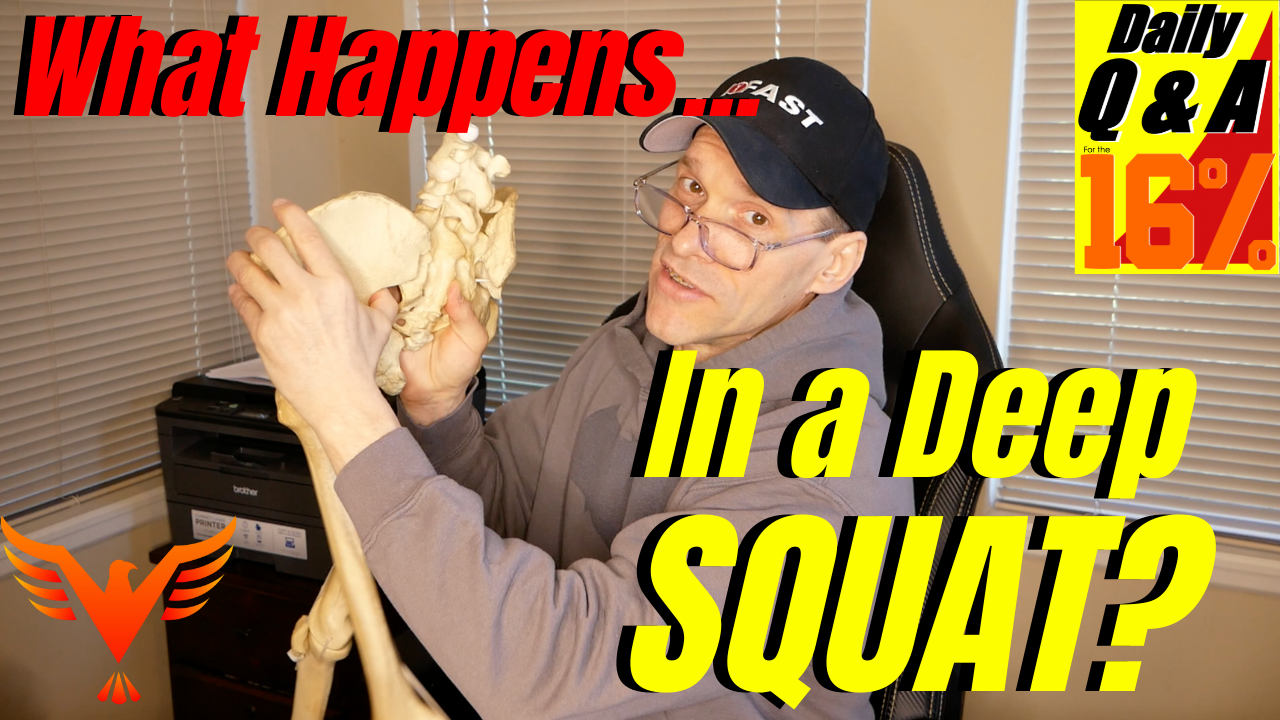
    I clarify the hip muscle orientation and behaviors in the deep squat past 120 degrees of hip flexion. Additionally, I review why I use the breathing strategy that I do for the heels-elevated squat and how to NOT overcomplicate it.

    #deepsquat #breathingexercises #billhartmanpt


    Find Bill:
    Instagram

    Facebook

    Twitter

    LinkedIn

  • Q & A for The 16% – How and Why? – Heels-Elevated Squat

    Q & A for The 16% – How and Why? – Heels-Elevated Squat

    Question: My questions are in regard to your video: Q & A for The 16% – Heels-Elevated Squat – Hip ER to Hip IR to Hip ER

    1) Is the reason for pushing through the medial heel on the ascent to promote pronation (exhalation strategy)?

    2) During the ascent, would there be any benefit to reversing the exact sequence used in the descent of the squat (instead of exhaling all the way to the top)? If so, what is an example where this would this be beneficial?

    3) What superficial compressive strategy would you be reinforcing by taking at breath you took at the top and held through the “middle-propulsion” phase during the descent of the squat?

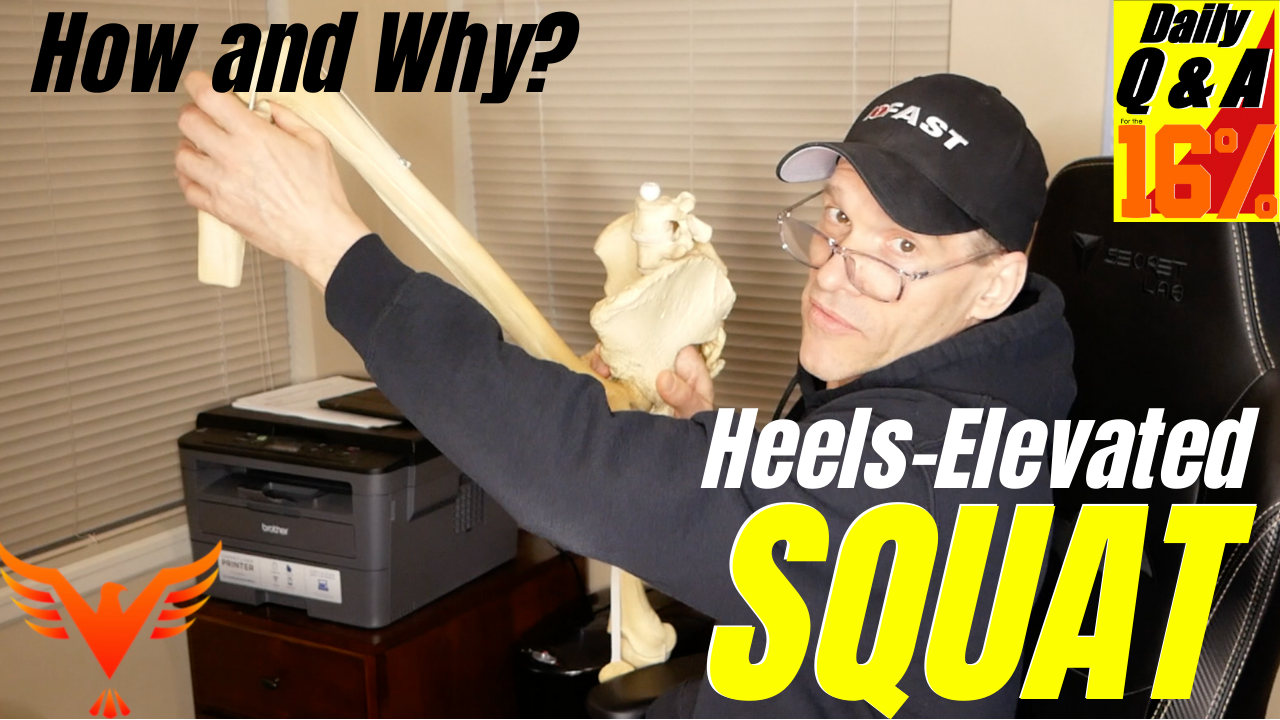
    In this video: I’ll review and clarify the cues and the rationale behind performance of the heels-elevated squat. Make sure to view the video in question here.

    #heelslelevatedsquat #breathingsquat #billhartmanpt

    Find Bill:

    Instagram

    Facebook

    Twitter

    LinkedIn

  • Q & A for The 16% – Heels-Elevated Squat – Hip ER to Hip IR to Hip ER

    Q & A for The 16% – Heels-Elevated Squat – Hip ER to Hip IR to Hip ER

    Question: Hi there, Bill!! This is Fabrizio from Italy. Hope you are fine. I would like to know what happens when you exhale on the way down of a “squatty squat” (goblet or Zercher plus heel wedge for example). Are you actually biasing an expansion/inhaled exercise variation towards a more compressed strategy in this case?? Is a pure vertical displacement on the way down still likely to happen or will the exhale make it harder for the sacrum to counternutate?? (doesn’t in fact the exhale entail sacrum nutation??)

    Thank you, Bill. Please keep up the great work!!

    Greetings from Italy. -Fabrizio

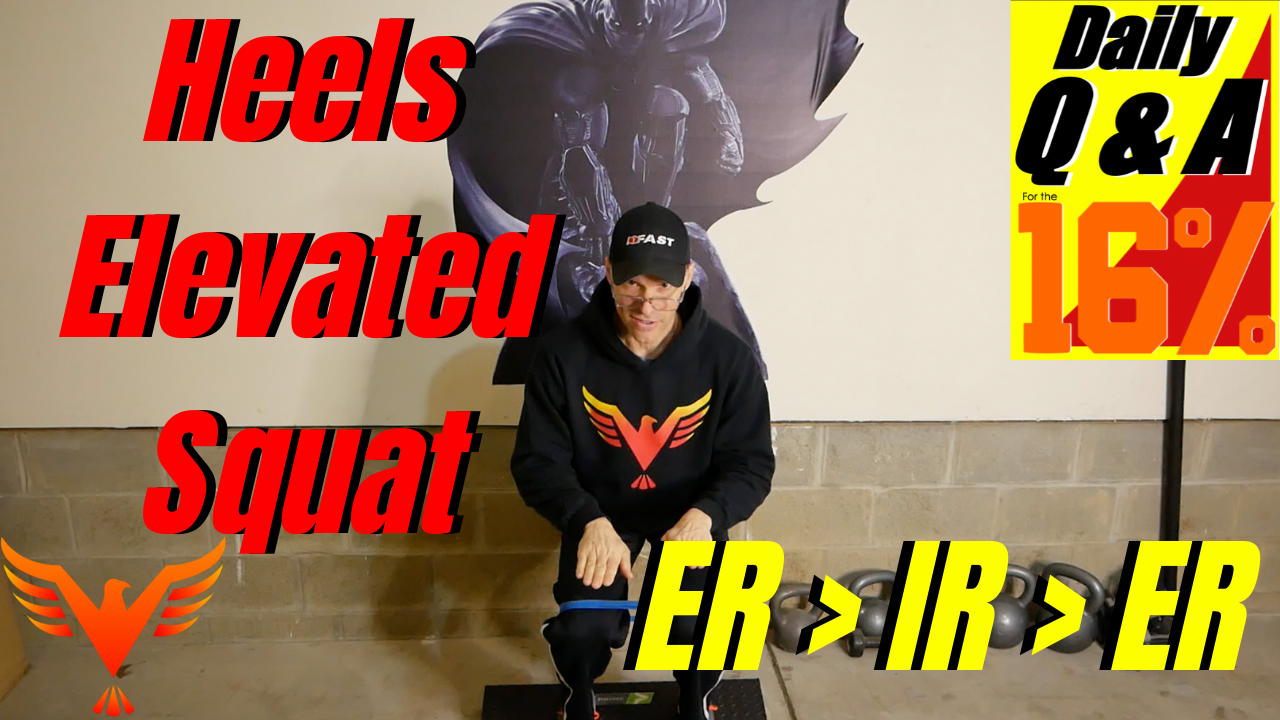
    In this video: I explain how to avoid the compensatory breathing strategy associated with superficial muscle compression that can limit movement. I also explain how you move from inhalation/external rotation to exhalation/internal rotation and back to inhalation/external rotation as you squat. Please pardon the lack of eye contact as I was working off of two cameras.

    #heelselevatedsquat #breathingexercises #billhartmanpt


    Find Bill:
    Instagram

    Facebook

    Twitter

    LinkedIn

  • Weekly Update and Q & A for November 3, 2019

    Weekly Update and Q & A for November 3, 2019

    Intensive IX is 11 days away!

    YouTube this week:


    Topics this week on Instagram:

    • The 16% Videos
    • Squat vs. Hinge and the SAID Principle
    • Delaying propulsion with pushes and pulls
    • Should you have surgery for meniscus injuries?
    • Narrow infra-pubic angle and squatting
    • Kettlebell arm bar to increase shoulder rotation

    This week’s Q & A questions answered:

    • Would love to hear you muse on heel/forefoot striking for distance running as it pertains to early/late propulsion. I.e. heel striking is typically labeled as “bad”, but seems to be a reasonable strategy to ensure we capture appropriate orientation of the hammy and pelvis. Midfoot striking seems to be “good”, but may lead to an overly concentric “push dominant” strategy.
    • What would I want to check/work on for R) handed pitchers that have a problem with missing the plate up and In or those that have a tendency to cut the ball glove side? Would this change as a lefty?
    • The pronation of glove hand let’s the front thorax compress, allowing the backside trunk to expand and rotate (in righty’s)? Also, how would you train optimal delay in pronation of back foot to keep as much of the stored energy as possible?
    • Does Narrow IPA mean a narrow ISA? Or how is the IPA measured?
    • Thank you for all the information you’ve been posting lately. I spent most of my of 20’s and 30’s training and competing in various strength sports. Now I’ve done a complete 180 and have been focusing on becoming the best golfer I can be. As someone with a wide ISA I think I understand that I need to focus on reestablishing eccentric orientation. Do you recommend doing this with exercises that can be loaded significantly like squats, presses, and chins while avoiding compressive exercises like deadlifts and bench press or should I focus more on low intensity reset type exercises?
    • I saw on Instagram some has asked about footstrike in distance running. Can you talk about how the model and propulsive phases apply to sprinting?
    • Do you have a info on a breathing pattern for Squats & Deadlifts (Sumo) – I’ve been dealing with SIJ instability for about a year now


    Find Bill:

    Instagram

    Facebook

    Twitter

    LinkedIn