Tag: Breathing exercises

  • Coaching Conversation with Andy McCloy

    Coaching Conversation with Andy McCloy

    I had a chance to speak with a great human being, Andy McCloy, about some of his training challenges and issues associated with his new hips (we have this in common). We touched on a lot of topics in a 30-minute conversation. Watch the video or listen to the podcast.

    Topics of Conversation:

    • My benefits from drinking from The Fountain of Youth (what?!)
    • The secondary consequences of hard, intense training
    • Intrathoracic, intraabdominal, and intramuscular pressure
    • Muscle hypertrophy and gym strength
    • Genetic influences on adaptation and muscle hypertrophy
    • Self-assessment of movement and adaptability in the gym
    • The difference between a deadlift and the squat for compression and expansion
    • How heavy lifting creates a compressive, concentric strategy
    • The limitations of breathing exercises for big, strong humans
    • Are leg extensions okay for muscle hypertrophy?
    • A mature mindset for training
    • The importance of KPI’s (key performance indicators) for self-assessment


    Instagram

    Facebook

    Twitter

    LinkedIn


    Find Andy McCloy:

    http://andymccloy.com/about-andy-mccloy/

  • The Best Shoes for Improving Squat Depth and Squatting More Weight

    The Best Shoes for Improving Squat Depth and Squatting More Weight

    In this Padawan Lesson video, we address many common questions associated with choosing best shoes for squatting.

    • Do you really have an ankle mobility problem?
    • Do my shoes limit my mobility?
    • How can you increase squat depth?
    • What does an Olympic weightlifting shoe with an elevated heel do?
    • Are heels elevated squats bad?
    • Why do powerlifters use Chuck Taylor’s for lifting?
    • How do my shoes influence my propulsive strategy?
    • What shoes are better for agility?
    • Do my shoes change my feet?
    • What is the best heel to toe ratio for my shoes?
    • What places me at risk for an ankle sprain?
    • Does a concentric or eccentric global strategy allow me to move better?

    Find more:

    Instagram

    Facebook

    Twitter 

    LinkedIn

  • Movement and Pressure

    Movement is pressure management. This video I shot of our local Tube Man is representative of this thought.

    He dances by altering his internal pressure.

    We create internal forces via fluid (air or water) pressure to overcome the forces that are applied against us such as training loads, ground reaction forces, and gravity. If we didn’t produce pressure internally, we’d most likely collapse and be stuck with the movement capabilities of a boneless chicken.

    The greater our ability to manipulate the internal pressures regardless of the task, the greater our tendency to move well or accomplish a task. When we fail to shift or manipulate the internal pressures, movement is restricted or biased.

    Either we simply cannot execute a task effectively or we may be limited to such a degree that we lose the ability to dissipate or distribute stress, tension, or pressure throughout the body. In this case, focal pressure and tensions may result in pain. Ask any couch potato how their back could just start hurting for no reason.

    Remember the last time you had to sit on an uncomfortable chair for an extended period of time and your butt started to hurt. Too much pressure in one place for too long. Pain can simply be the same problem.

    Performance training, or just intensive exercise training over a long period of time, can intentionally bias how we manage pressure as it may enhance the intended outcome for a specific sport. Generally speaking, this can be seen at the highest level of sport quite effectively as certain body types tend to be more effective at producing these biased pressures for a successful sports outcome.

    Olympic swimmers are built similarly as it makes them more efficient in the water. Powerlifters look the same as it enhances their stability under incredibly heavy barbells. Offensive lineman tend to be built differently from wide receivers, quarterbacks, or running backs. Form follows function.

    Before you start yanking and pulling muscles that you blame for a lack flexibility or perform some silly “activation” or isolated exercise to strengthen [insert muscle of blame], consider how we manage internal pressures first.
     

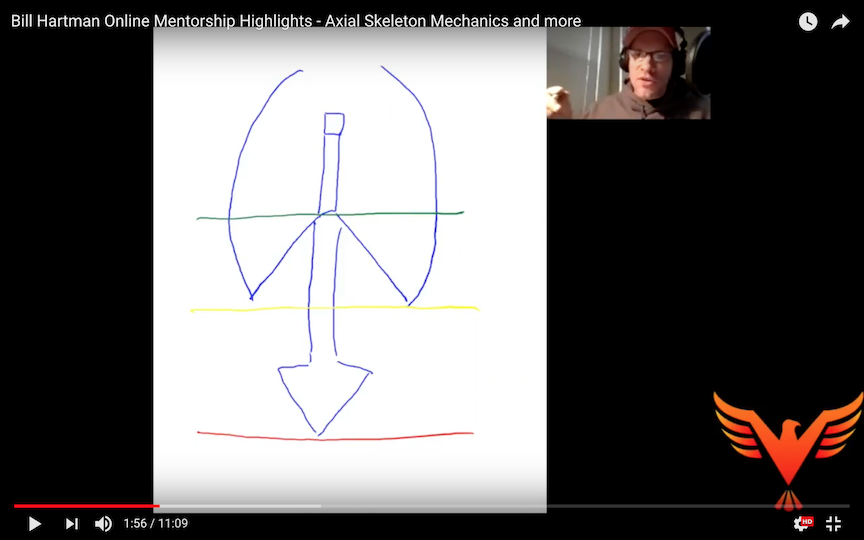
  • Mentorship Call Highlights – Thorax Mechanics, Gait, and Guts

    Mentorship Call Highlights – Thorax Mechanics, Gait, and Guts

    Here’s some highlights from a recent mentorship call with two of my favorite humans.

    You’ll be able to participate in these calls very soon.  Get signed up below.

  • A Quick and Easy Assessment You Can Use to Help Your Athletes Recover Faster and Gain Movement

    A Quick and Easy Assessment You Can Use to Help Your Athletes Recover Faster and Gain Movement

    Joel Jamieson was recently at IFAST, and we did some extensive video updates for his Certified Conditioning Coach Course.

    This update is digging deep into not only the conditioning side of things but also the importance and impact of recovery. We covered a number of concepts that we regularly apply at IFAST that you be able to implement quite easily.

    You’re going to want to take advantage of the early registration discount, so don’t wait. This expanded course will accelerate your understanding and your effectiveness as a coach

    We also provide you with some info you can get started with right now.

    This includes a video of one of the assessments that is a key to your exercise selection in recovery and movement as well as my business partner at IFAST, Mike Robertson taking you through an exercise to improve breathing and movement.

    Check out the article and video HERE and then get signed-up for the Certified Conditioning Coach Course!