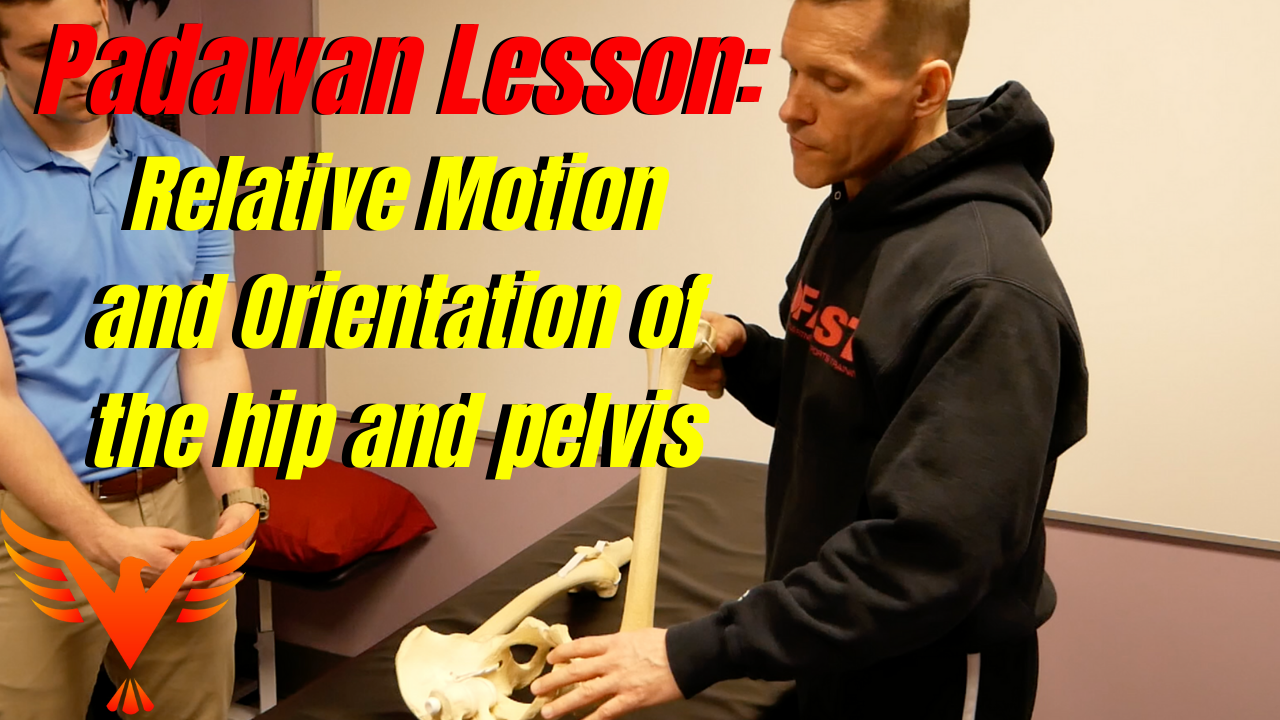
Padawan Lesson: Expand your view of what you’re measuring at the hip joint. Relative motions are occurring at all times. The pelvis should and will orient differently as you move the hip through its excursion. If we can appreciate this, we can better recognize what the body is demonstrating, and our interventions can be better targeted for success.
Question: In the newest episode of the IFAST podcast, you mentioned your daily mobility routine as part of your morning ritual. Can you talk about what you’re currently working on in that program and how it has changed for you over the last 4 years?
In this video: I demonstrate 3 exercises I’ll use to help reduce the left propulsive strategy seen in many of your clients and athletes.
You want a big chest and a big bench press to go with it. Placing progressive demands on a muscle is a requirement for strength (aka force production) and hypertrophy (muscle growth).
The consequences are bigger chest muscles and more weight on the bar. This can be a good thing. BUT there can be undesirable secondary consequences. The ability to acquire and maintain shoulder range of motion can be compromised. If the strategies that actually improve bench press strength levels are taken too far, pain or worse, a true injury, may occur. Many experience great success and may never have problems, but an unfortunate percentage will experience negative consequences.
In this video:
I discuss how these consequences arise that increase strain on a muscle, how this may be beneficial for performance, but also how this may compromise health and cause pain. While I use horizontal abduction range of motion, bench pressing, or doing dumbbell flys as examples, this type of strain applies everywhere in the body. For the record, I’m not demonizing the bench press or any exercise for that matter. My goal is to assure that you are making informed training decisions. Thanks for watching.
Question: Can inhale and exhale strategies be unilateral or more pronounced in the left or right, more specifically in unilateral sports athletes such as baseball, softball, volleyball, hockey etc..?
In this video: I show how an athlete creates rotation and how breathing and propulsive strategies can either support turning or prevent normal rotation from occurring.
Question: Why is it that increased airway resistance in a pursed-lip exhale has a facilitatory bias towards external oblique activation, while decreased airway resistance with an open, relaxed jaw exhale biases more internal oblique activation?
Is the difference in airway resistance even the mechanism driving the bias between the different muscle groups?