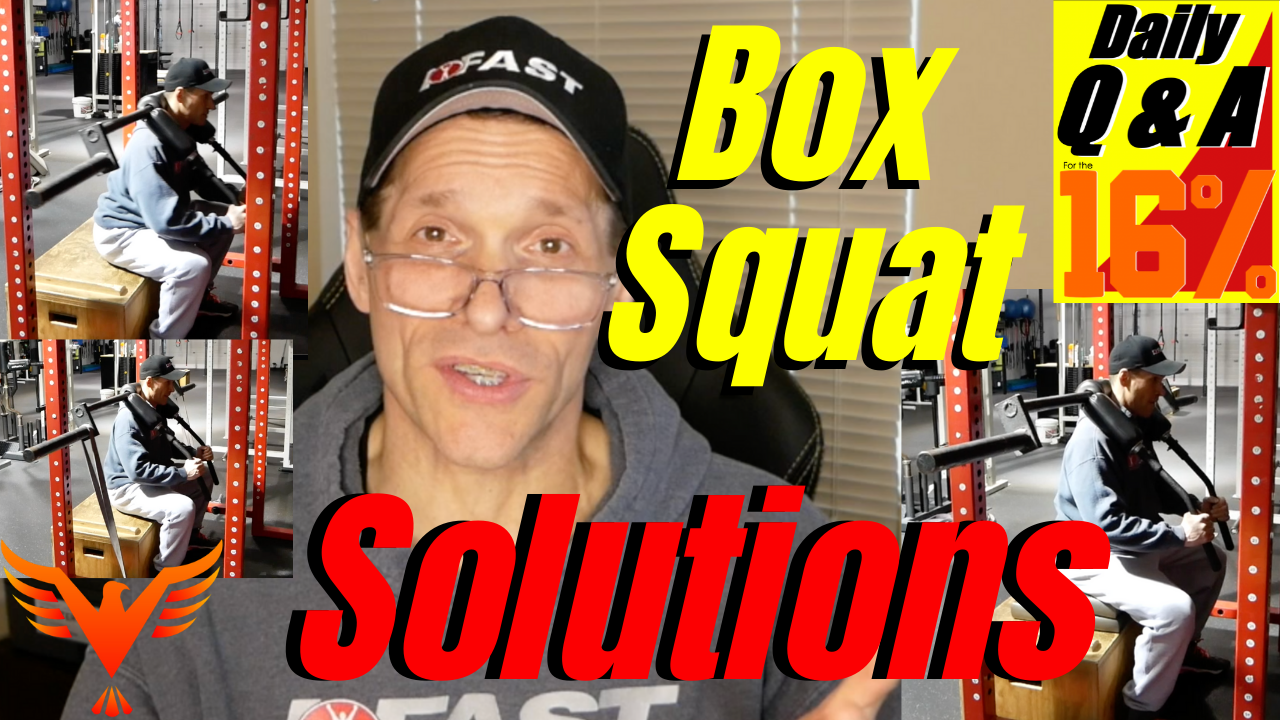
It is a versatile exercise that can be modified in technique to produce a broad variability of outcomes.
In this video: I look at how the box squat can favorably influence the internal forces that interfere with performance and rehab programs. Box squat variations are not only performance enhancing but are excellent for pelvic floor issues that are common to many pelvic floor physical therapy patients.
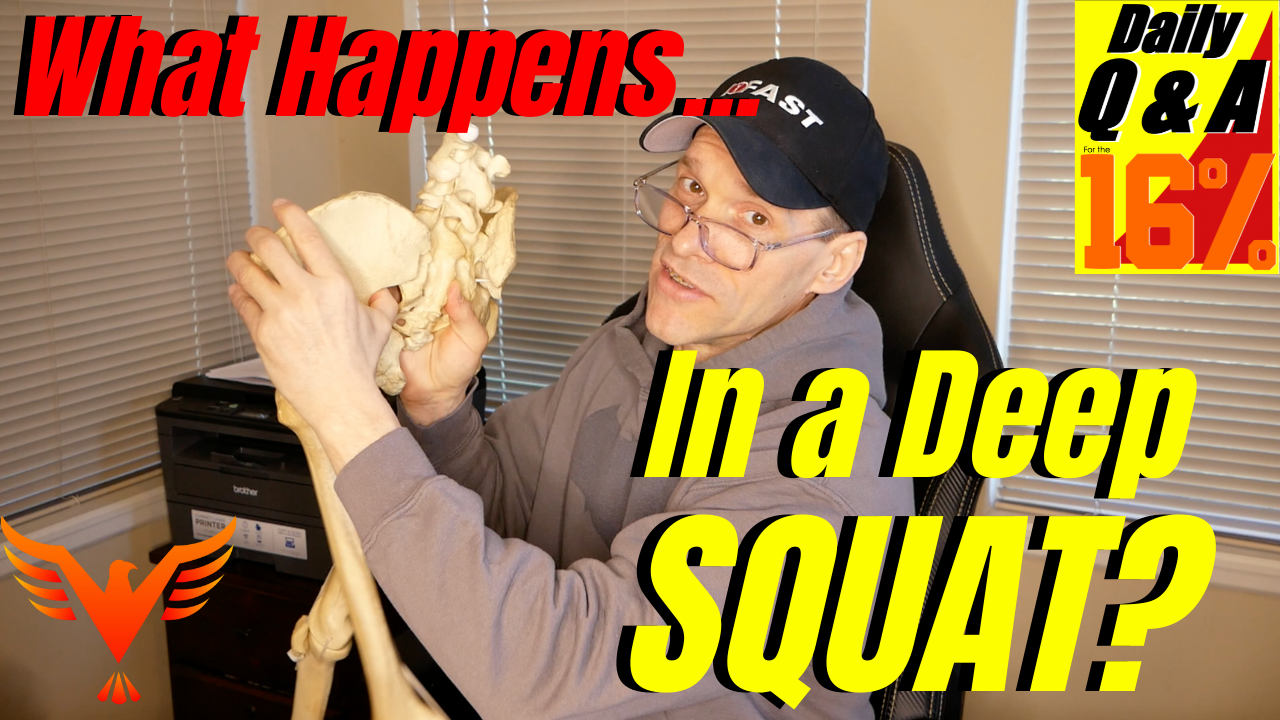
What are the actions of musculature above the level of the trochanter, such as upper glute max and piriformis, at the bottom of a deep squat when hips are flexed above 120 degrees? Do these muscles still contribute to the internal rotation of the femurs in a deep squat, or do they change the line of pull and become external rotators again?
From Eddy:
How about having a band around and a ball between the knees simultanously when squatting (as a means to promote inhalation/exhalation mechanics and inhibiting compensatory mechanics), then we would start with Inhalation at the top position then exhaling and IR against the ball till about 90° of flexion, than inhaling againg with ER against the band till the bottom of the squat. So my thoughts were to promote ER (and Supination) with band and IR (and Pronation) with ball?
In this video:
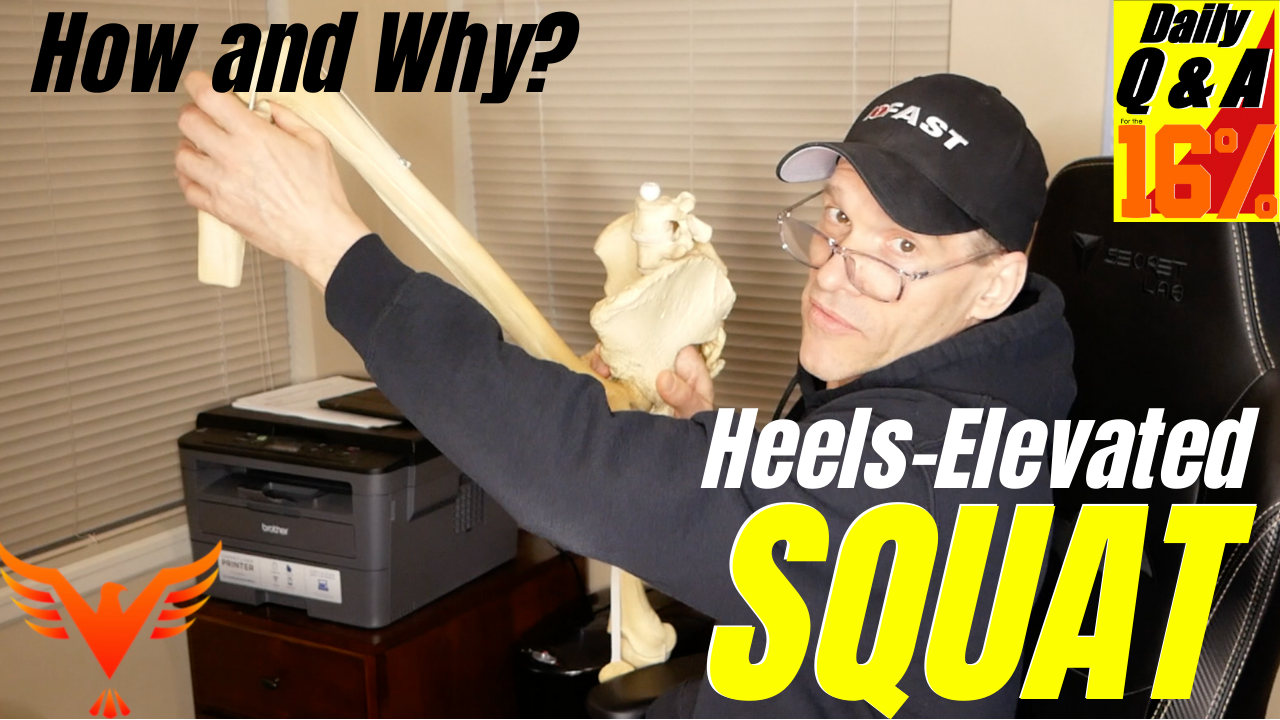
I clarify the hip muscle orientation and behaviors in the deep squat past 120 degrees of hip flexion. Additionally, I review why I use the breathing strategy that I do for the heels-elevated squat and how to NOT overcomplicate it.
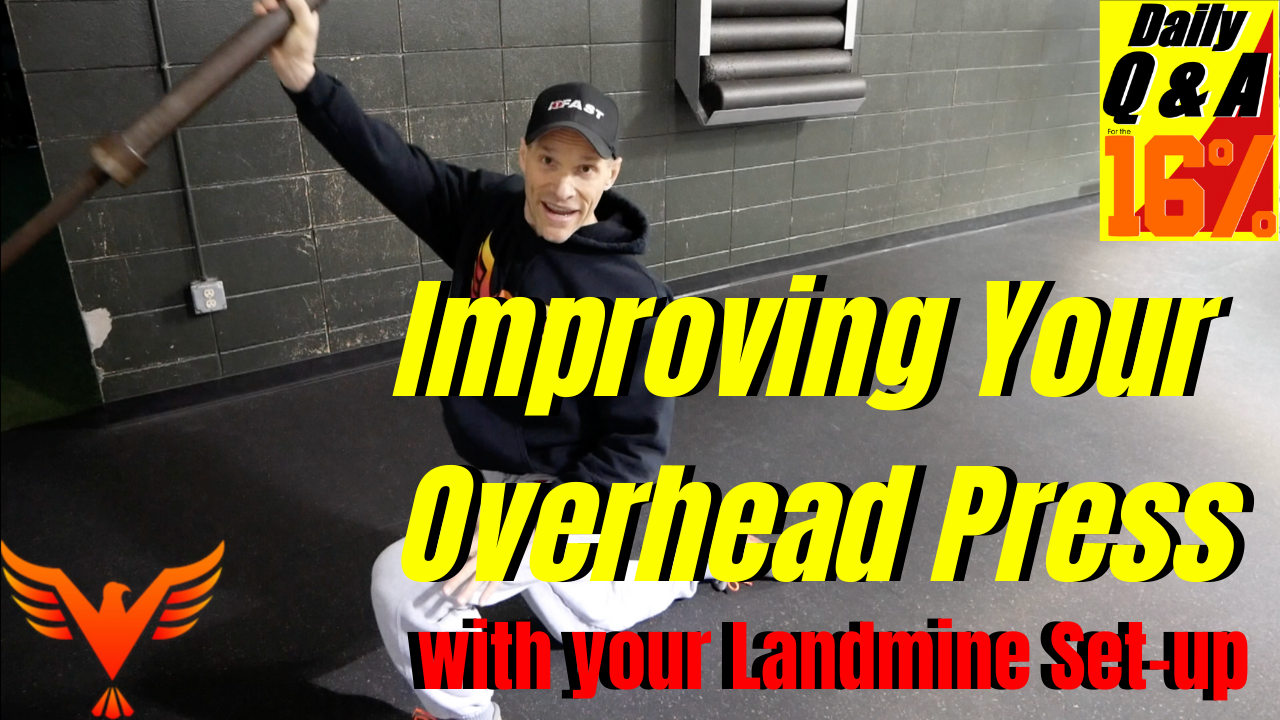
I have been thinking about your video on shoulder flexion and your comments about how it is common for individuals to use internal rotation to finish shoulder flexion. To improve shoulder flexion without this compensation what are your thoughts on: – the Viking/landmine press? – would you opt for a single arm Viking press attachment to emphasize air/fluid shifts in thorax? – would you train this with a supinated grip to avoid the internal rotation I think you are referring to?
In this video:
I explain where limitations occur that restrict the ability to press overhead without a compensation and then demonstrate a landmine press set-up to help restore the capacity required to overhead press.
On Instagram Live you mentioned flywheel training having the potential to help certain people and not others. Can you be more specific about why someone would use or avoid exercises on a flywheel?
In this video: I explain how eccentric emphasis and flywheel training may enhance performance or be detrimental to performance. What type of athlete is appropriate for training on a flywheel?
1) Is the reason for pushing through the medial heel on the ascent to promote pronation (exhalation strategy)?
2) During the ascent, would there be any benefit to reversing the exact sequence used in the descent of the squat (instead of exhaling all the way to the top)? If so, what is an example where this would this be beneficial?
3) What superficial compressive strategy would you be reinforcing by taking at breath you took at the top and held through the “middle-propulsion” phase during the descent of the squat?