I have a question from the IFAST PT fellow, so grab your @neurocoffee for this one.
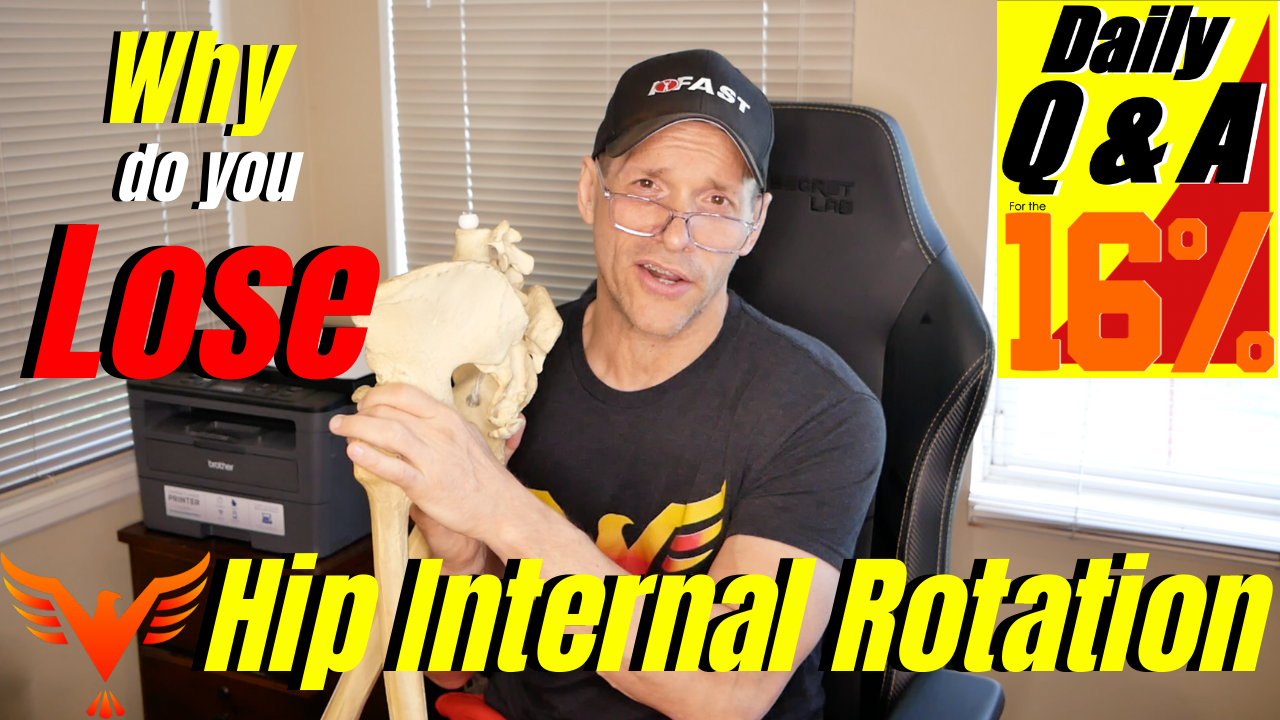
From Austin: If somebody has limited hip IR, that would indicate anterior compression, however you have mentioned a loss of IR being due to compression below the level of the trochanter posteriorly. How do you determine whether compression is from the anterior or posterior aspect of the hip and limiting the IR? Have a great weekend! The podcast will be up Sunday.
Attention IFAST University members: We have a Q & A on Monday.
Check the schedule on IFAST U. #hipmobility #hipexercises #billhartmanpt
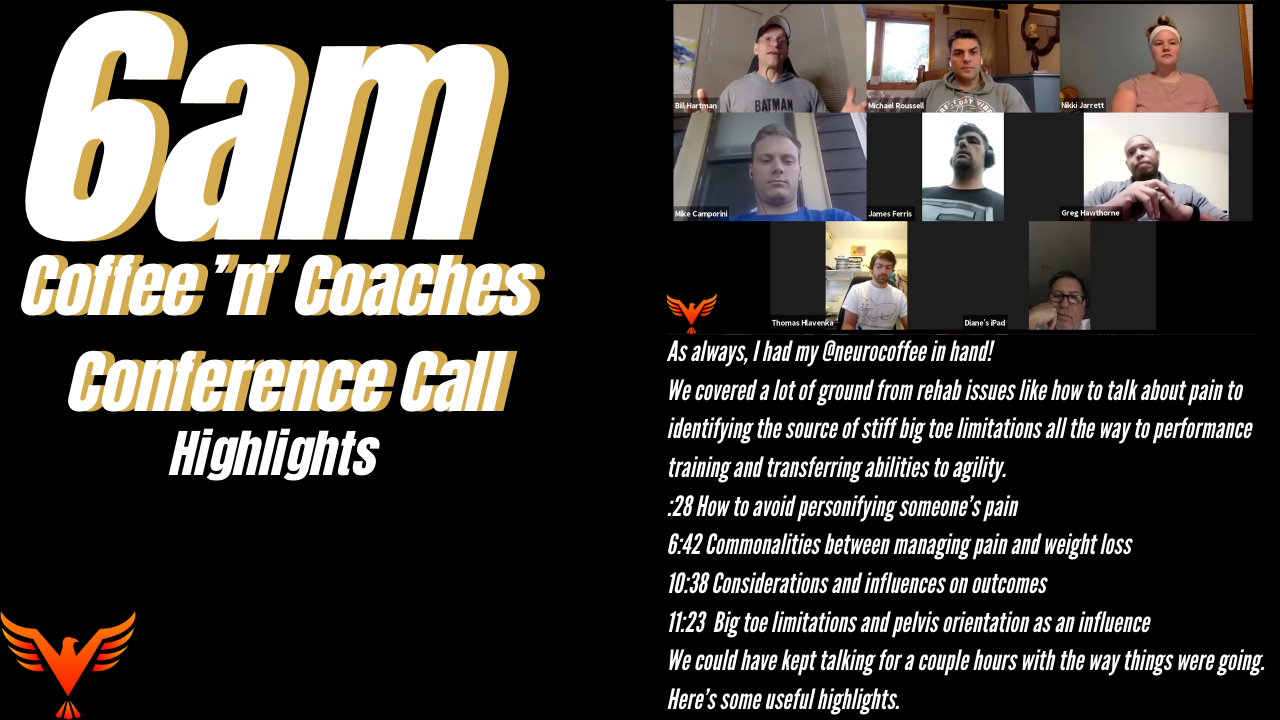
Wow! We had a great Coffee ’n’ Coaches Conference Call this morning.
As always, I had my @neurocoffee in hand!
We covered a lot of ground from rehab issues like how to talk about pain to identifying the source of stiff big toe limitations all the way to performance training and transferring abilities to agility.
:28 How to avoid personifying someone’s pain
6:42 Commonalities between managing pain and weight loss
10:38 Considerations and influences on outcomes
11:23Big toe limitations and pelvis orientation as an influence
We could have kept talking for a couple hours with the way things were going.
Here’s some useful highlights.
Have a great day! Enjoy your chips ’n’ salsa. I will certainly be enjoying mine tonight!
I have a great question concerning how we reason our way through the process of making changes stick with out clients. Grab your @neurocoffee for this one.
From Marcel:
I have been implementing your model with some good success. But there seems to be a variation in how much the changes we get “stick”. Some clients things change really nicely and stay that way, and others it seems like a ongoing battle to maintain good movement variability. Can you talk about what factors can influence things not “sticking” ( ie. Stress, upper airway, training load ) and how to go about working out what that client needs if it hard to maintain changes.